Key takeaways
- Start from the product decision, not a method list: one sentence with the user groups and a deadline.
- Score every agency on 7 weighted criteria: researchers, method fit, recruitment, synthesis, readout, data ethics and domain.
- Ask for a sample screener and a redacted readout before you sign; both expose quality faster than a portfolio.
- Normalize proposals to user groups, participants, methods, recruitment difficulty and readout before comparing price.
- The contract should give you the recordings, transcripts and repository, with written deletion dates for participant data.
A product manager has a board meeting in six weeks, an onboarding redesign on the roadmap and three pitches from user experience (UX) research agencies that all promise "interviews, usability testing and actionable insights." The pitches read the same, so the cheapest one starts to look safe. This guide shows how to choose a UX research agency on evidence instead: a 1-page brief, a weighted scorecard, a recruitment test, 12 pitch-call questions and the contract terms that protect your data.
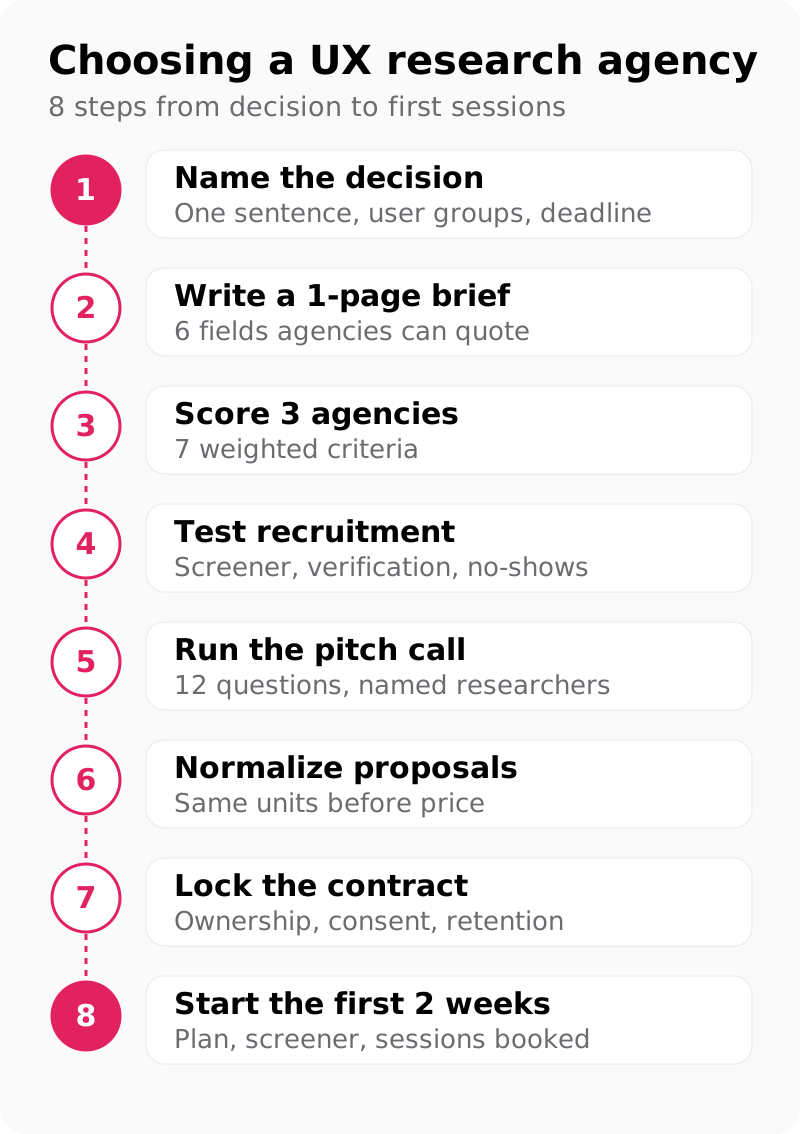
What decision should the research answer first?
Name the product decision before you contact any agency, because a UX research agency can only be judged against a decision, not against a list of methods. Build, kill, redesign or enter a market: each needs different evidence, and a good research partner shapes the study around it.
Write the decision as one sentence and attach the user groups and the deadline. For example: "By 14 November, decide whether to rebuild onboarding for finance admins or fix the three biggest drop-off points."
Then mark the research type it needs:
- Generative research answers "what should we build?", so the agency needs field time for user interviews and contextual inquiry.
- Evaluative research answers "does this design work?", so the agency needs a prototype to put in front of users through usability testing, tree tests or concept tests.
Many decisions need both modes, generative first and evaluative second, which is how our UX research services are structured.
Method-first briefs ("we need 20 interviews and a survey") produce proposals you cannot compare: every agency quotes the methods you named, and price becomes the only visible difference. When we scope engagements, the first call is usually spent turning a method list back into a decision.
How do you write a research brief agencies can quote?
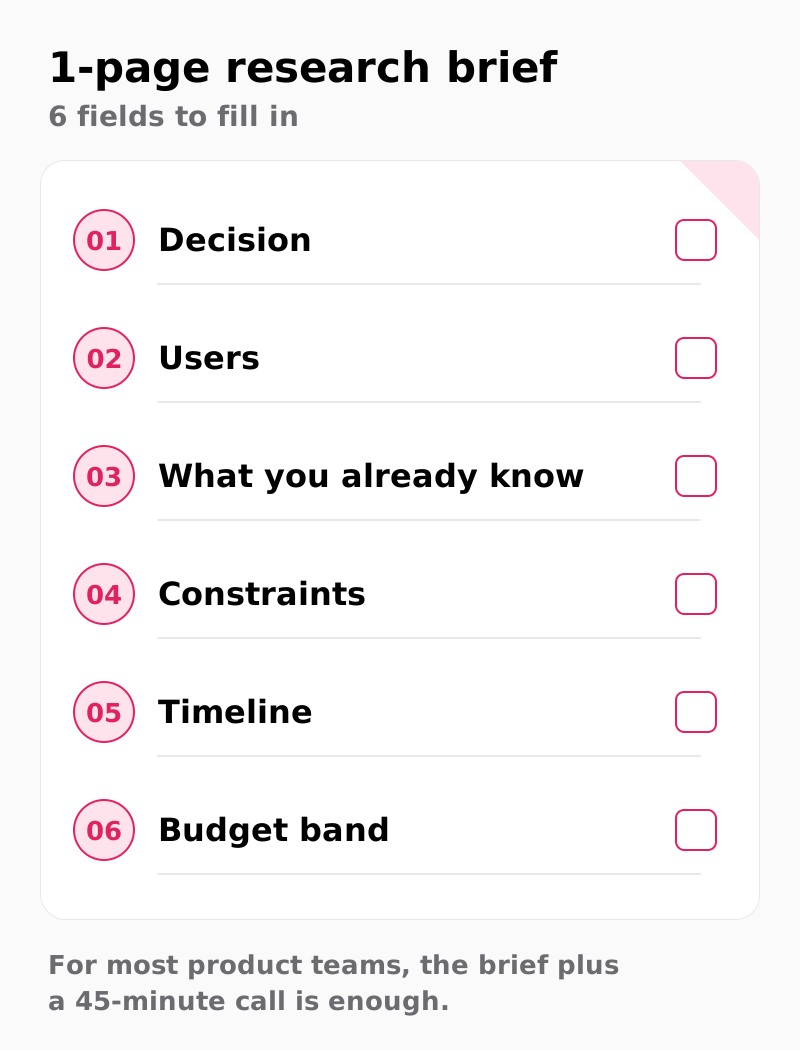
A 1-page research brief with 6 fields gets you proposals that compare like for like: the decision, the users, what you already know, constraints, timeline and a budget band.
Show as text
- Decision. The one sentence from the previous section.
- Users. Each user group and whether you can reach it through your own customer list.
- What you already know. Analytics, support tickets and past studies, so the agency does not re-buy known answers.
- Constraints. Regulated data, languages, devices and the stakeholders who must observe.
- Timeline. The date the decision gets made, not the date you want a report.
- Budget band. A range, even a wide one.
Hiding the budget wastes a round of proposals: one agency scopes a two-week sprint, another a three-month program.
A formal request for proposal (RFP) helps when procurement or public-sector rules require one. The GOV.UK user research team wrote in 2015 about getting the best out of research agencies on large survey projects; the post is old, but its premise holds: the agency runs the fieldwork, while the client still writes the brief, agrees on the objectives and keeps stakeholders bought in. For most product teams, the brief plus a 45-minute call is enough.
Which 7 criteria separate a real research agency?
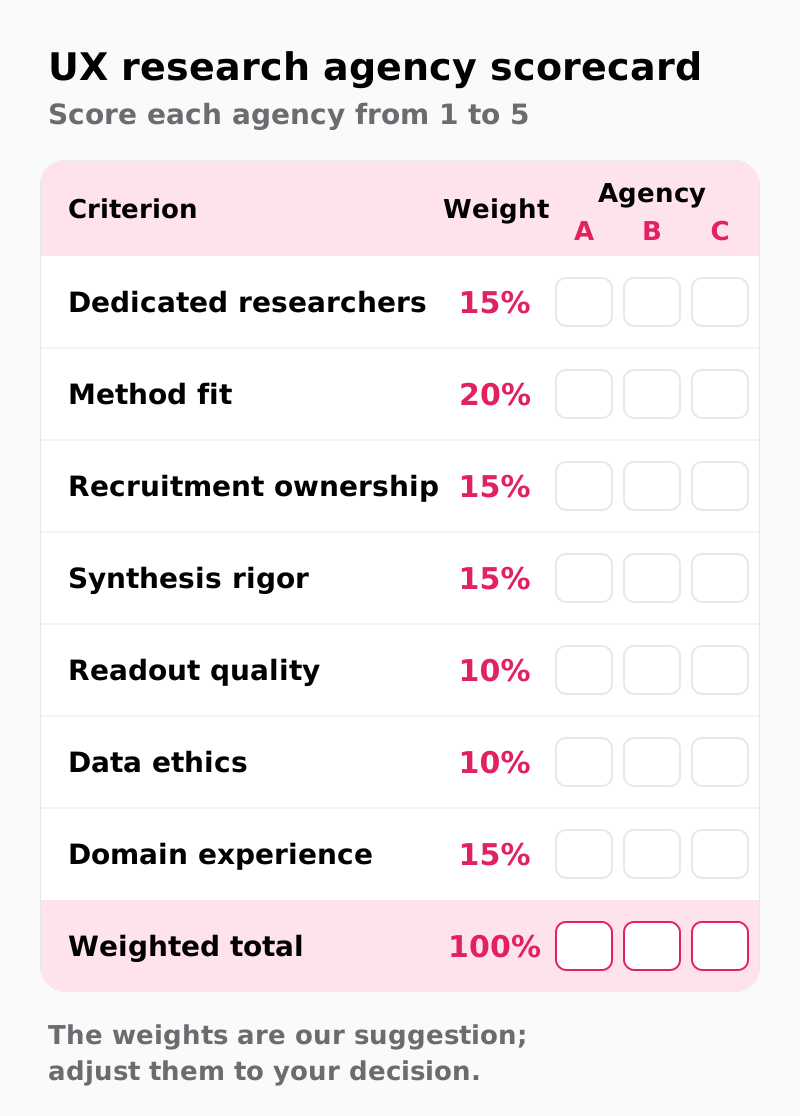
Score each UX research agency from 1 to 5 on seven criteria (dedicated researchers, method fit, recruitment ownership, synthesis rigor, readout quality, data ethics and domain experience) and weight them by what your decision needs. Many design shops list research as a service; this UX research vendor evaluation shows who practices it as a discipline.
The weights are our suggestion; adjust them to your decision.
Show as text
| Criterion | What to check | Weight | Agency A | Agency B | Agency C |
|---|---|---|---|---|---|
| Dedicated researchers | Named people who moderate and synthesize | 15% | |||
| Method fit | Methods tied to your decision; your list was challenged | 20% | |||
| Recruitment ownership | Who screens, schedules, pays incentives and replaces no-shows | 15% | |||
| Synthesis rigor | Traceability from quote to recommendation | 15% | |||
| Readout quality | Findings ranked by impact; decision owners aligned | 10% | |||
| Data ethics | Consent, personally identifiable information (PII), retention, intellectual property (IP) | 10% | |||
| Domain experience | A similar study with similar users | 15% | |||
| Weighted total | 100% |
Dedicated researchers. Ask for the names and roles of the people who run sessions and synthesis. If no one can name who moderates the sessions and who synthesizes them, research is a phase, not a practice.
Method fit. A vendor runs the methods you ordered; a UX research partner asks why you ordered them, and pushes back with a reason tied to your decision.
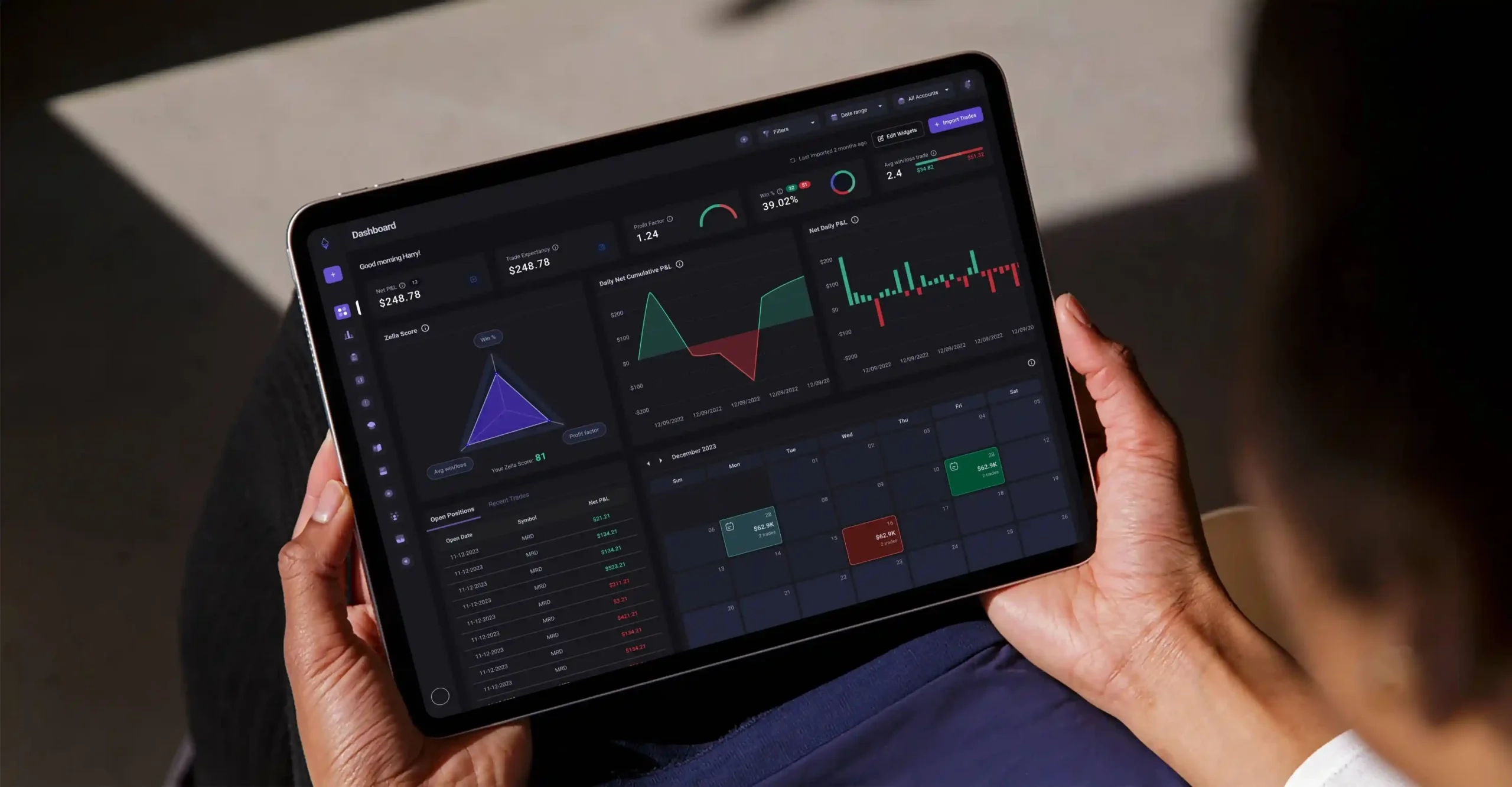
Domain experience. Users of business-to-business (B2B) software as a service (SaaS) products, clinicians and warehouse operators behave differently in sessions, which is why SaaS UI UX design research starts with how admins and end users differ. Ask for a similar study, not a similar logo: for a trading platform, we would show our TradeZella discovery and stakeholder interviews, not a list of fintech brands.
How do you test an agency's participant recruitment?
Ask the UX research agency for a sample screener, the recruitment channel, the no-show policy and who pays incentives, because participant recruitment sets the ceiling on research quality. Twelve user interviews with the wrong people produce confident, wrong answers.
| Channel | Strength | Trade-off |
|---|---|---|
| Research panel | Fast for consumer and broad professional profiles | Experienced testers; weak fit for niche roles |
| Your customer list | Real users at low cost | Skews toward engaged customers; needs consent to contact |
| Specialist recruiter | Reaches clinicians, operators and finance users | Longer lead time and higher incentives |
Hard-to-reach groups such as clinicians, warehouse operators or finance admins take longer than our standard 3–6 days of recruitment; ask what lead time the agency expects.
Fit and fraud checks to ask about:
- Screener survey logic that hides the qualifying answer, so applicants cannot guess their way in.
- Live verification at the start of each session: role, tools used, a recent task.
- Over-recruiting by 1–2 participants per user group to absorb no-shows.
On participant counts, our standard is 10–15 interviews per user group. For qualitative usability rounds, Nielsen Norman Group's guidance is that testing with 5 users finds most usability problems, with 3–4 users per group when you test two distinct user groups and at least 3 per group for three or more. If your decision is mostly evaluative, compare dedicated usability testing services too.
What should a sample research readout show you?
A redacted sample research readout should trace every recommendation back to observed evidence and rank findings by their impact on your decision. Ask for a readout, not a portfolio case study: case studies show outcomes, readouts show thinking.
Pick three recommendations from the sample deliverable and follow each one back:
Quote or clip → insight → recommendation → owner
No evidence behind it means opinion; no owner means it never ships.
Then ask which deliverables outlive the project: a tagged research repository (for example in Dovetail), personas, journey maps and an opportunity map. The repository matters most, because your next study starts from it.
A finding that changes a roadmap looks like ToolsGroup's: 30+ stakeholder interviews showed that 75% of sales losses traced to the user interface rather than to feature gaps, and that insight reframed the product strategy. Read how 30+ stakeholder interviews reframed a supply chain product.
12 questions to ask on the pitch call
The questions to ask a UX research agency cover people, method, recruitment, synthesis, delivery and data; a strong answer is specific to your product, your users and your decision.
| Question | A strong answer includes |
|---|---|
| People: Who will moderate the sessions, and can I meet them before we sign? | Named researchers, similar past participants, a meeting offered |
| People: Does the moderator also do the synthesis? | Yes, with no hand-off to someone who never heard the sessions |
| Method: What would make you recommend fewer interviews than I asked for? | Saturation logic tied to user groups and the decision |
| Method: Which method would you drop from my brief? | A reasoned challenge, not polite agreement |
| Recruitment: Can I see a screener you wrote for a similar audience? | A redacted screener with disqualifying questions |
| Recruitment: What happens when a participant no-shows or is a poor fit? | Over-recruiting, free replacement, a written policy |
| Synthesis: How do you get from 12 transcripts to 5 findings? | Tagging, clustering, an evidence trail per finding |
| Synthesis: How do you keep findings independent of the design work? | Evidence shown before solutions; a second reviewer checks each finding against the session clips |
| Delivery: What does the readout look like, and who attends? | Ranked findings, clips, a live session with decision owners |
| Delivery: What will I have at the end of week 2? | A signed research plan, a live screener, booked sessions |
| Data: Who owns recordings, transcripts and the repository? | You do, within consent terms, written into the statement of work (SOW) |
| Data: How do you store and delete participant PII? | Named storage, limited access, a deletion date |
Ask us these 12 on a free consultation call, before you receive our fixed-scope proposal.
Red flags that mean you should walk away
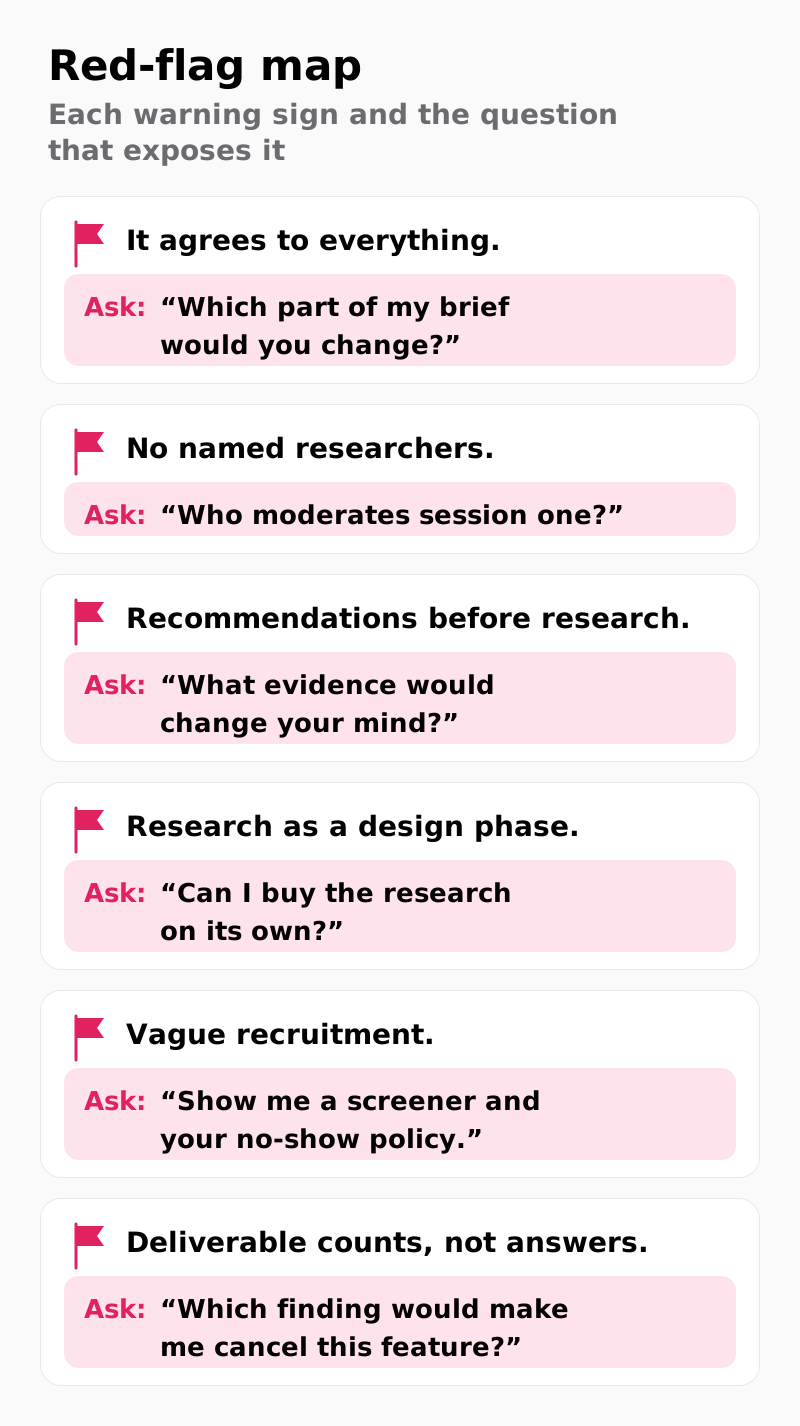
Walk away when a UX research agency agrees to every method you list, cannot name its researchers, recruits vaguely or sells deliverable counts instead of answers. Each of these UX research agency red flags has a question that exposes it.
Show as text
- It agrees to everything. Ask: "Which part of my brief would you change?"
- No named researchers. Ask: "Who moderates session one?"
- Recommendations before research. The pitch says what to redesign before any user has been interviewed. Ask: "What evidence would change your mind?"
- Research as a design phase. Research is week one of a design retainer, with no separate research plan. Ask: "Can I buy the research on its own?"
- Vague recruitment. "We have a panel," but no screener sample. Ask: "Show me a screener and your no-show policy."
- Deliverable counts, not answers. "Four personas and two journey maps," unlinked to your decision. Ask: "Which finding would make me cancel this feature?"
How do you compare research proposals on price and scope?
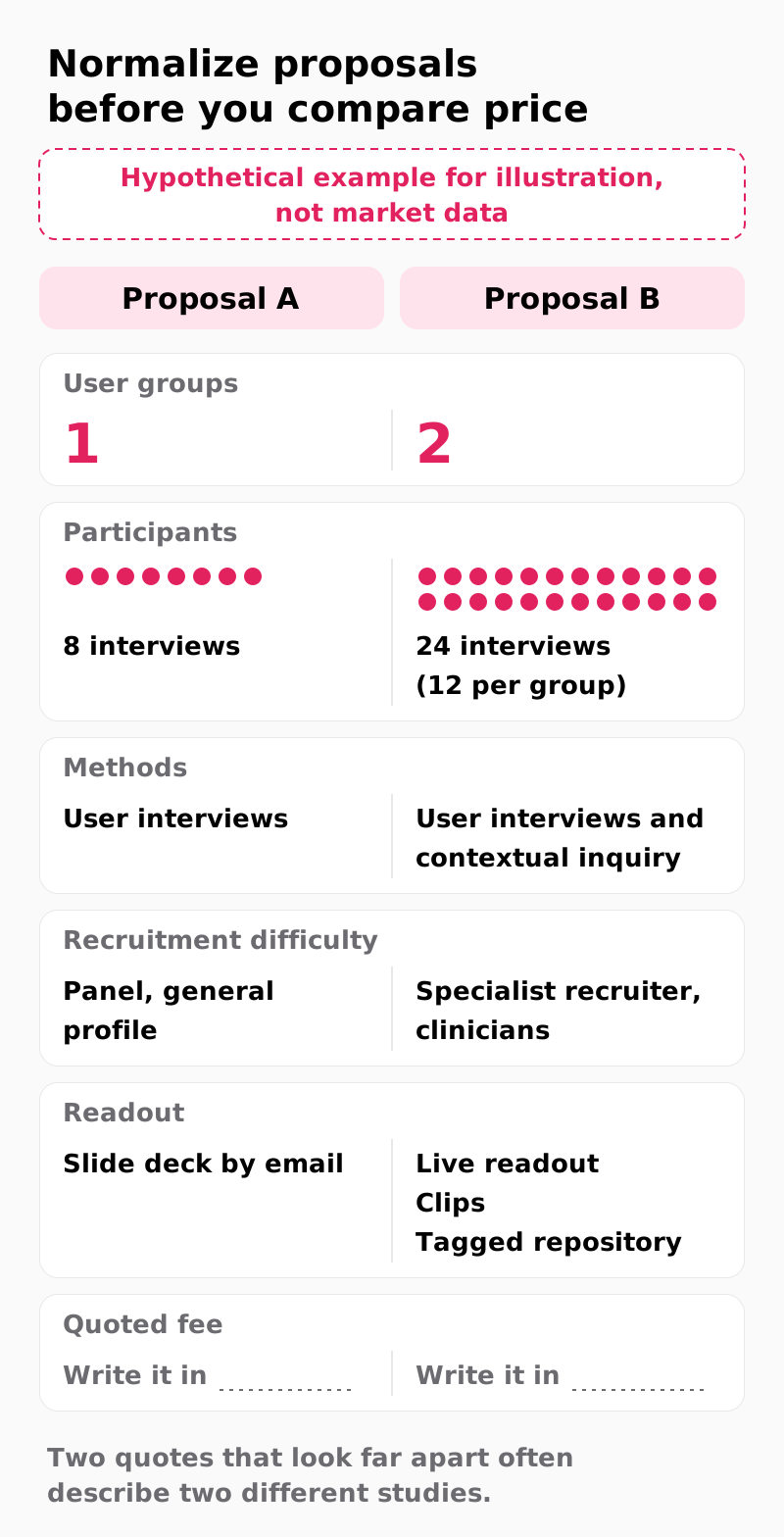
Normalize every proposal to the same 5 units (user groups, participants, methods, recruitment difficulty and readout) before you compare price. In a UX research proposal comparison, two quotes that look far apart often describe two different studies.
Hypothetical example for illustration, not market data:
Show as text
| Unit | Proposal A | Proposal B |
|---|---|---|
| User groups | 1 | 2 |
| Participants | 8 interviews | 24 interviews (12 per group) |
| Methods | User interviews | User interviews and contextual inquiry |
| Recruitment difficulty | Panel, general profile | Specialist recruiter, clinicians |
| Readout | Slide deck by email | Live readout, clips, tagged repository |
| Quoted fee | Write it in | Write it in |
Fixed fee suits research with a signed research plan; time and materials suits open-ended discovery. Scope creep hides in extra rounds, re-recruiting, translation and extra readouts, so ask each agency what triggers a change order. A low proposal usually leaves out recruitment and incentives, synthesis days or a live readout.
Our own UX research program runs 4–8 weeks and $25,000–$60,000, priced on four of these units (user groups, participants, methods and recruitment difficulty); the price drivers are broken down on our UX research program and pricing page.
Which contract terms protect your research data?
The SOW should state who owns recordings and findings, how PII is stored and deleted, and how participant consent is collected. Agree these before the first session.
- Ownership. Recordings, transcripts, notes and the research repository transfer to you at handover, with the IP in the findings.
- Consent. Written informed consent covers recording, viewers and retention. The Insights Association Code of Standards sets consent, transparency and protection of personal data as baseline duties toward research participants.
- Health products. When sessions on healthcare products can expose protected health information (PHI), for example a clinician sharing a screen with patient records, and your company is a HIPAA covered entity or business associate, the agency signs a Health Insurance Portability and Accountability Act (HIPAA) business associate agreement (BAA). The sample BAA provisions from the U.S. Department of Health and Human Services (HHS) include returning or destroying PHI when the contract ends.
- Retention. A written deletion date for recordings and participant contact details.
- Confidentiality. A non-disclosure agreement (NDA) for participants who see unreleased designs.
What should the first 2 weeks look like after signing?
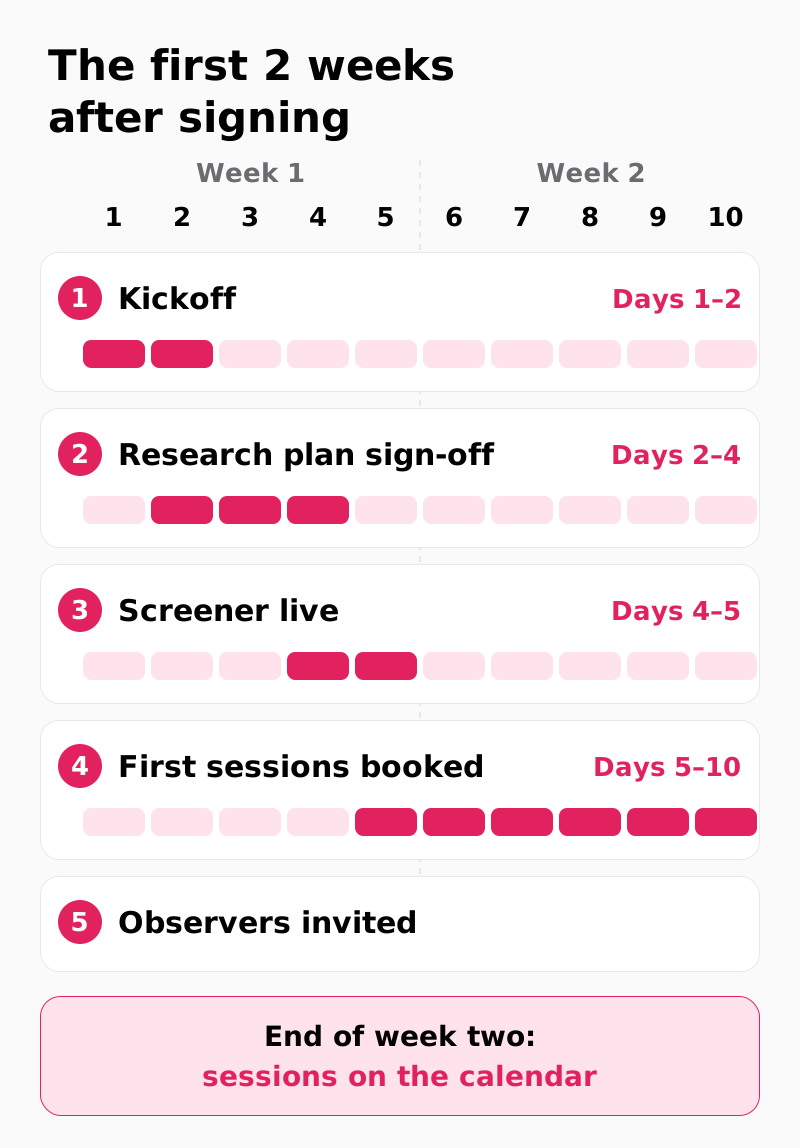
In the first 2 weeks a good UX research agency agrees on the research questions, finalizes the screener, starts recruitment and books the first sessions. No session on the calendar by the end of week two means the timeline is slipping.
Show as text
- Kickoff (days 1–2). Confirm the decision, research questions, user groups and decision owner.
- Research plan sign-off (days 2–4). Methods, participant criteria and the discussion guide outline.
- Screener live (days 4–5). Recruitment starts through the agreed channel.
- First sessions booked (days 5–10). Over-recruited by 1–2 per group.
- Observers invited. Product, engineering and sales leads get session links.
How to hire a UX research agency well includes your side of the deal: prototype access, a customer list you have consent to contact, one decision owner at the readout, and sign-offs within a day or two. Our process follows the human-centered design framework of ISO 9241-210.
Send us your research brief for a free consultation and a fixed-scope proposal, so you can score us on the same rubric as every other agency.
FAQs
How many UX research agencies should I shortlist?
Shortlist three. Three proposals give you a real comparison on the scorecard; more than five slows the decision. That is our working rule, not an industry statistic.
Should the UX research agency also do the design?
No, it does not have to. One team keeps insight continuous from interview to screen, but research can bend to justify a design the team already likes. If you hire one team for both, ask how findings stay independent of the designers.
Do I need an RFP to hire a UX research agency?
No. A 1-page brief plus a call works for most product teams. Use an RFP when procurement or public-sector rules require one.
Who owns the recordings from a UX research study?
Whoever the SOW names. Insist that you own recordings, transcripts and the repository, within participant consent terms.
How fast can a UX research agency start fieldwork?
Recruitment sets the start date: in our process, 3–6 days of recruitment follow 2–4 days of research framing, so first sessions land in week two. Hard-to-recruit groups take longer.