2–4 days
Test planning
We agree the tasks, user groups, success criteria and the prototype or live build to test.

Real users, real tasks, real feedback. We test concepts, prototypes, and live products before development and before launch.





Get a free consultation
Free consultation · reply within one business day
In shortUsability testing services measure how real users complete tasks on a prototype or live product through moderated sessions, unmoderated studies and System Usability Scale (SUS) scoring, before a user experience (UX) team ships the design. Our usability testing engagement takes 4–8 weeks, costs $25,000–$60,000, and runs 2–3 test rounds with design fixes between rounds.
Usability testing is a research method in which representative users attempt realistic tasks on a product while a researcher observes where the users succeed, hesitate and fail. Each usability test measures task success rate, time on task and errors, the effectiveness and efficiency measures of ISO 9241-11.
Usability testing differs from UX audit services in one way: recruited users evaluate the product, not designers. Nielsen Norman Group guidance sets 5 users per round for a qualitative usability test, so a UX team runs several small rounds instead of 1 large round.
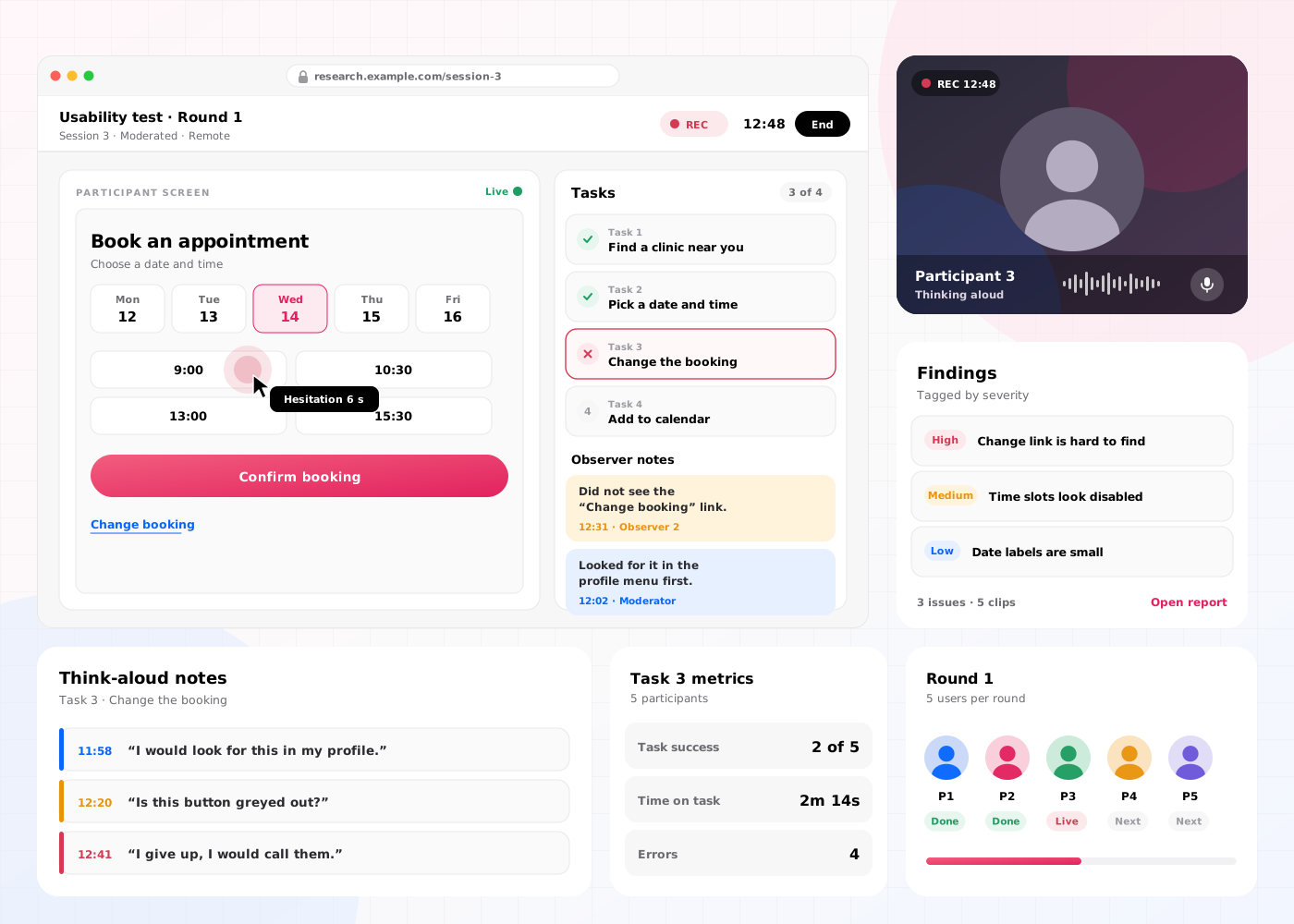
Our usability testing services include 6 deliverables: a test plan, participant recruitment, moderated usability sessions, unmoderated usability studies, SUS and Single Ease Question scoring, and a usability test report.
Tasks, success criteria and participant profiles are written for each round, for example "find and book a 30-minute appointment".
5–8 participants per round are screened to match real user groups, for example first-time buyers and repeat buyers.
A researcher runs 45–60-minute think-aloud sessions over Lookback or Zoom, for example on a clickable Figma prototype.
Maze or UserTesting runs task-based studies with 20–50 participants, for example a first-click test on a new navigation.
Every participant answers the 10-item System Usability Scale and the 7-point Single Ease Question (SEQ), for example a SUS score out of 100 per round.
Every finding gets a video clip, a severity rating from 1 to 4 and a recommended design fix.
The usability testing process takes 4–8 weeks (20–40 working days) and runs in 6 steps, from the test plan to the final report.
We agree the tasks, user groups, success criteria and the prototype or live build to test.
We screen and schedule 5–8 participants per user group for the first round.
Moderated and unmoderated sessions run on the prototype, and every session is recorded.
Findings are rated by severity, and designers fix the highest-severity issues in Figma.
A second round with new participants tests the fixed design against the round 1 task success rate.
We present the usability test report and video highlights in a 60-minute session.
Usability testing has 4 benefits: usability testing increases task success rate, improves design quality before launch, reduces post-launch rework and develops a usability benchmark.
Fixing observed failures between rounds increases the share of participants who complete each task without help.
Testing prototypes improves interaction patterns, labels and error messages before any code ships.
Catching usability issues in a Figma prototype reduces the development days spent fixing live code.
SUS scores from each round develop a benchmark that shows usability change release after release.
Usability testing explains why users fail a task through observed sessions; A/B testing measures which of 2 live versions converts better through a traffic split. Teams run usability testing first to find the fix, then A/B testing to measure the fix at scale.
| Criterion | Usability testing | A/B testing |
|---|---|---|
| Question answered | Why users fail a task | Which version converts better |
| Participants | 5–8 recruited users per round | Live visitors split between 2 versions |
| Main output | Task success rate, SUS score and observed failures | Conversion rate difference and statistical significance |
| Timeline | 4–8 weeks for 2–3 rounds | 2–6 weeks of live traffic |
| Price on this site | $25,000–$60,000 | Part of the same $25,000–$60,000 sprint |
Usability testing costs $25,000–$60,000 and takes 4–8 weeks. The price depends on 4 factors: the number of test rounds, the number of participants per round, the number of platforms and the recruitment difficulty.
An engagement of 2 moderated rounds with 5 participants each on 1 web prototype sits near $25,000. An engagement of 3 rounds on web and mobile, with 8 participants per round, unmoderated Maze studies and hard-to-recruit participants, for example physicians, sits near $60,000. Teams that need broader discovery before testing start with UX research services.
A product team should run usability testing in 5 situations:
Book a 45-minute UX audit session. We review your product and identify the top three friction points.
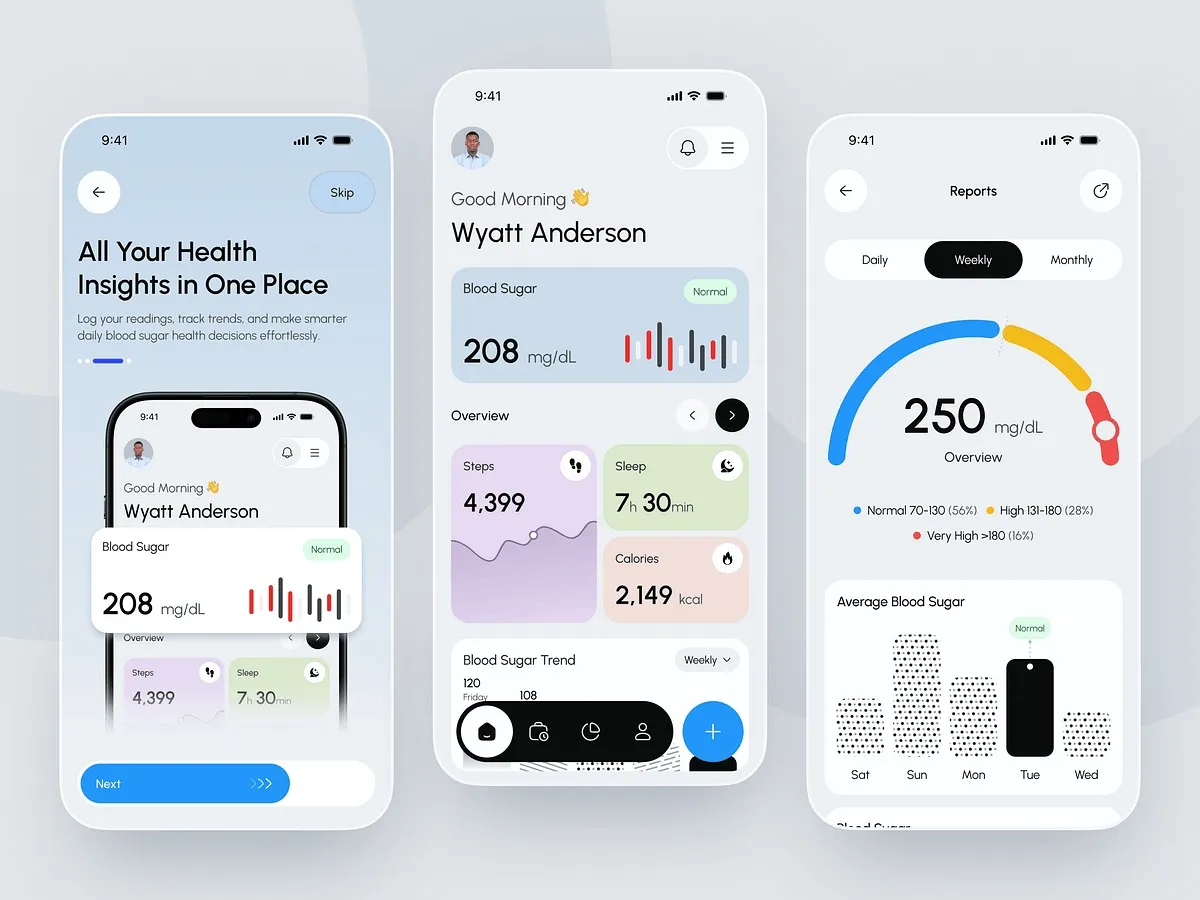
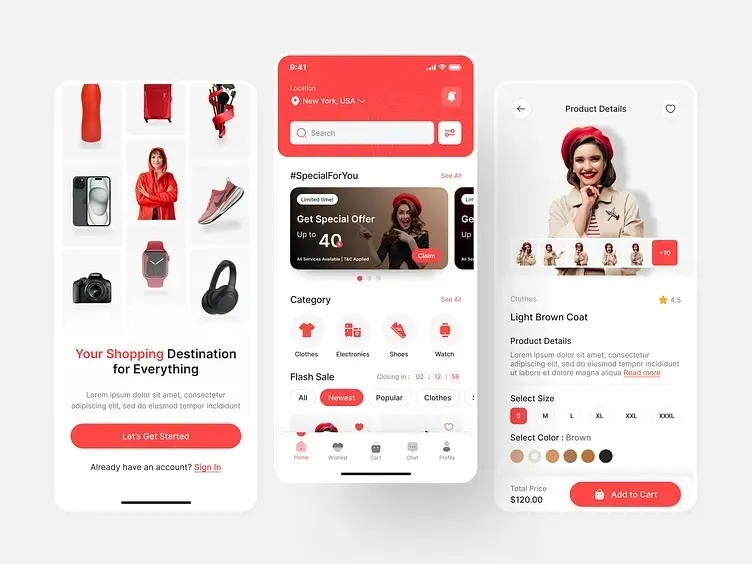
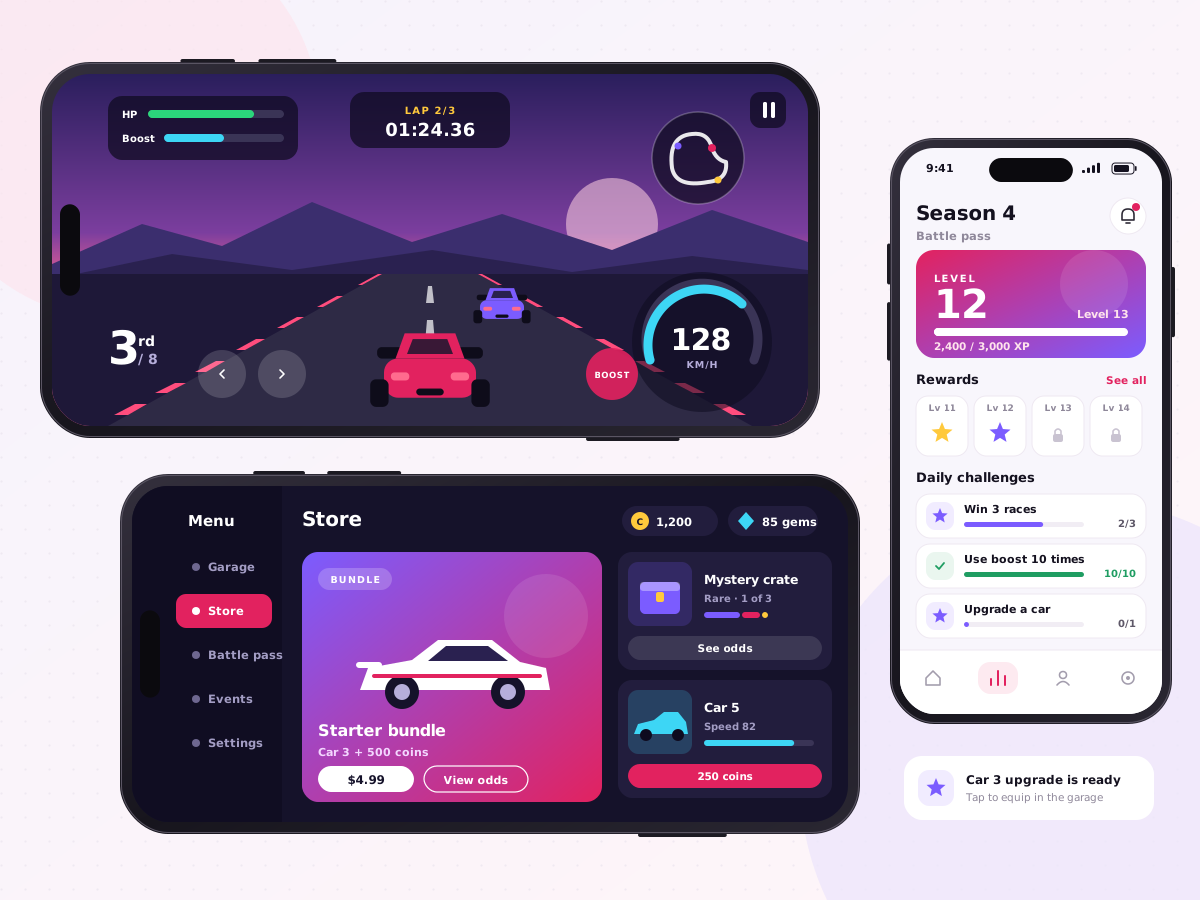
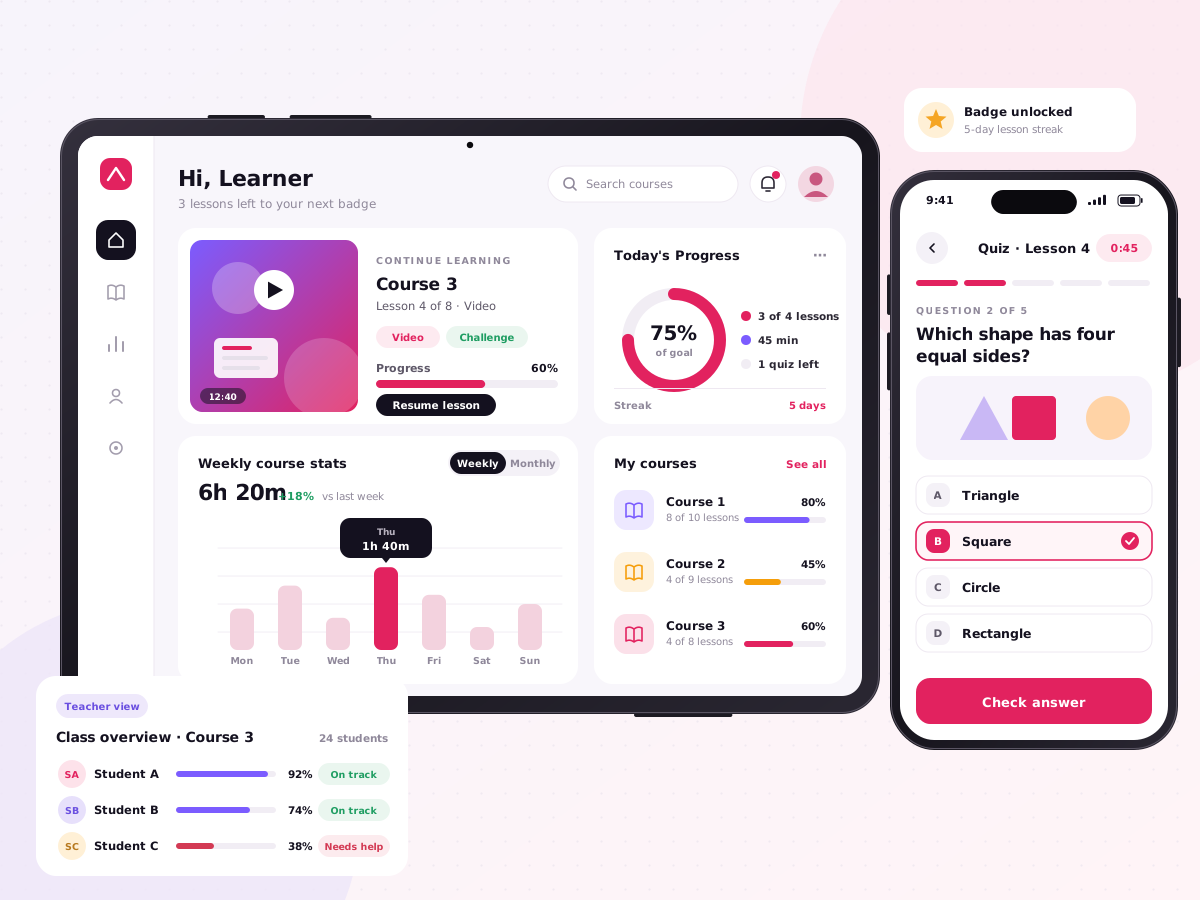
Book a UX auditWe design UI and UX for Healthcare, E-commerce, Gaming and EdTech products.
Send us your project. A design lead reviews it and schedules a call within one business day. We sign an NDA before the first technical discussion if you prefer.
These answers cover the 5 questions buyers ask most about usability testing services.
Still have a question?
A design lead answers every message within one business day.
Talk to a design leadUsability testing needs 5 users per round for a qualitative test and 40 users for a quantitative test, per Nielsen Norman Group guidance.
Moderated usability testing has a researcher present to ask follow-up questions, while unmoderated usability testing runs on tools such as Maze without a researcher and reaches more participants in less time.
Yes. Usability testing on a clickable Figma prototype finds usability issues before development starts.
Yes. Our usability testing services include A/B testing plans and analysis for live products with enough traffic to reach statistical significance.
Usability testing takes 4–8 weeks, which equals 20–40 working days, for 2–3 test rounds; a single usability testing round takes 1–3 weeks.