




AI product UI/UX design

AI design agency for LLM apps, copilots and AI SaaS products

As an AI design agency, we design the interfaces where people prompt an AI, review what it returns and decide whether to trust it, in generative AI editors, AI copilots for software as a service (SaaS), conversational interfaces and large language model (LLM) apps. We test them with users before your engineers connect the AI model, and a single senior team stays on the work from discovery through Figma files ready for development.

200+ products designed · in business since 2017
Trusted by teams at
  • NBCUniversal
  • 7-Eleven
  • Groupon
  • Sterne Kessler
  • Nitro League
  • Senior designers only
  • NDA before the first call
  • Reply within 1 business day

Get a free consultation

Free consultation · reply within one business day

In shortAn AI design agency plans what people see while artificial intelligence (AI) writes, scores or acts for them: generative AI editors, AI copilots, conversational interfaces, AI agent workflows and AI scoring dashboards. We deliver it within our digital product design services, at $60,000–$180,000 over 8–16 weeks for a full product, ending in user-tested screens your engineers build.

Case studies

AI UI UX case studies

35%
increase in overall workflow efficiency Vocable reports
200+
products designed since 2017
Definition

What is an AI design agency?

An AI design agency shapes the user interface (UI) and user experience (UX) of AI products, where an AI model writes, scores or acts and people must trust the result.

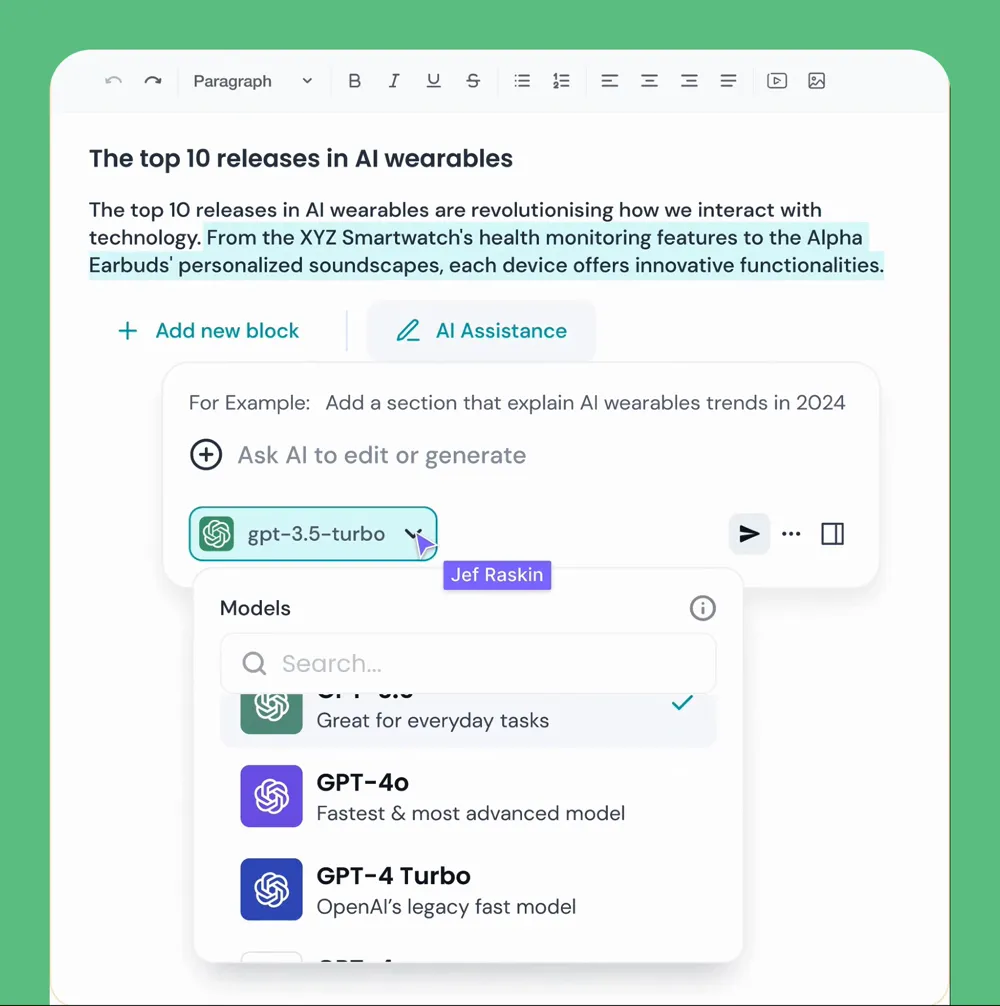
The term has two readings: an agency that designs AI products, or one that makes graphics with AI tools; we are the first kind. We draw every AI output state and test the core user flows with users before engineers build. The work runs inside our digital product design services, a branch of our UI UX design services, while your engineers keep the AI model, data and integrations. The image shows a writer picking from AI models in the Vocable editor.

Vocable editor: a writer opens AI Assistance and picks a model from a list including GPT-4o, Gemini 1.5 Pro, Claude 3 Opus and Llama 3
One editor, multiple AI models
Timeline
8–16 weeks
Investment
$60,000–$180,000
Deliverables
6 included
What's included

Which AI products does our AI design agency design?

Our AI product design agency designs six kinds of AI products, and every AI output is drawn in all its output states: loading, streaming, answer, partial answer, refusal and error. Two items are published work, the editor and the scoring dashboard; the other four are services we offer, with no published project yet.

Generative AI editors

Writers ask the AI to draft or edit inside the document and choose which AI model answers without leaving the page, as on Vocable. Logged-in editors like this follow our web app design services.

AI copilots in SaaS

An AI copilot is an assistant panel, an AI-infused UI inside a SaaS workflow, that suggests the next step and shows what data it used, so the user can check it before acting. This work follows our SaaS UX design.

Conversational interfaces

Conversational AI in chat or voice needs a clear first message with an AI disclosure, follow-up questions when the prompt is vague, and a handoff to a person when the AI cannot help.

AI agent workflows

An AI agent is software that takes multi-step actions for a user. In the flows we design, each step waits for the user's approval before it runs, a human-in-the-loop pattern that keeps people in charge of anything that cannot be undone.

AI scoring dashboards

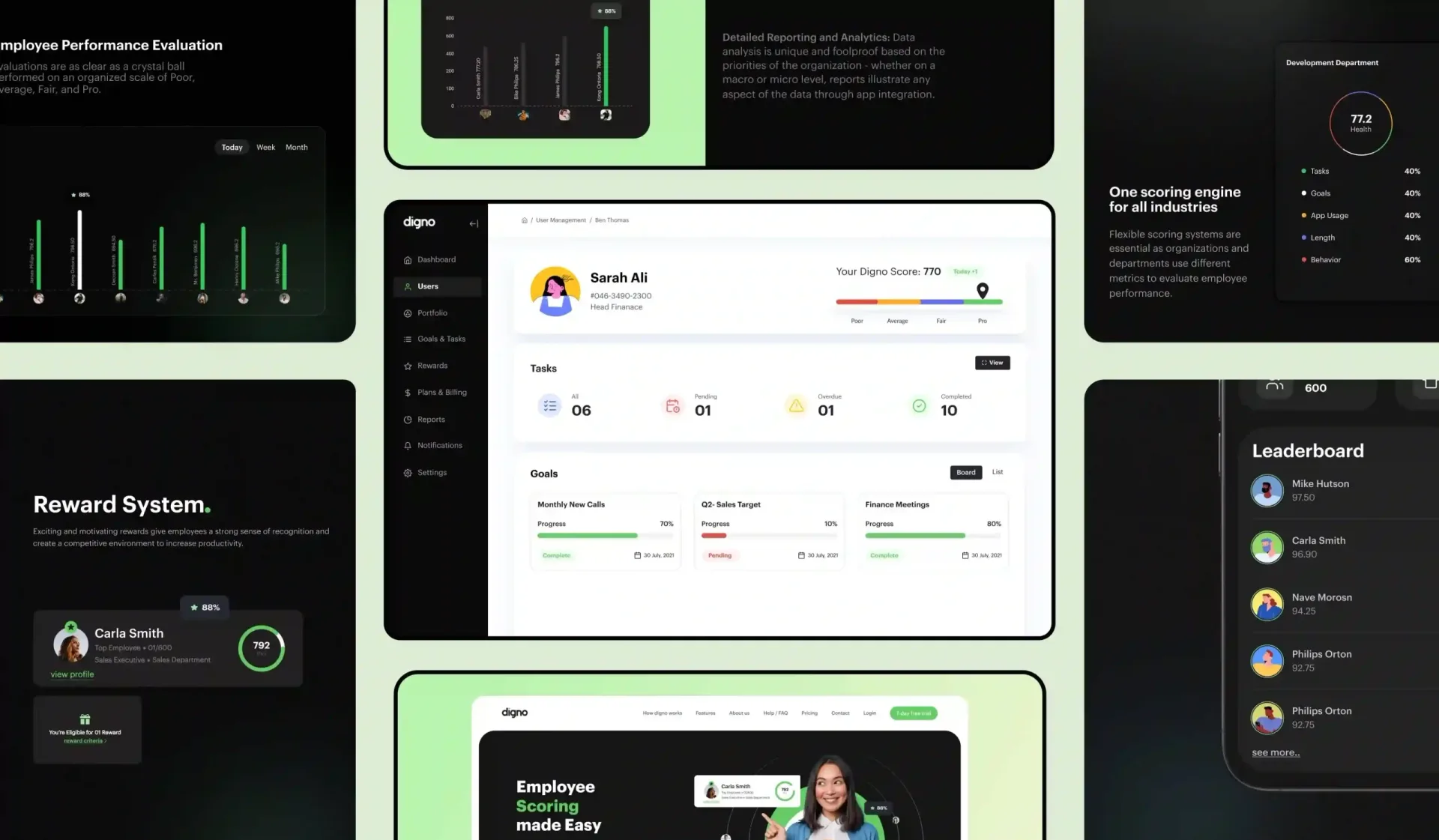
An AI score, its range and the factors behind it share one screen, as on Digno. Our dashboard UX design work limits each view to 5–7 metrics and adds a drill-down path to the detail.

AI-native MVPs

AI-native products put an AI model at the core from the first release, so an AI-native minimum viable product (MVP) on a large language model (LLM) needs screens for checking and correcting each answer. Early-stage teams can also read our startups UI UX design page.

Benefits

What makes UX design for AI products different?

As an AI UX design agency, we design for answers that change between runs and can be wrong, so every screen must earn the user's trust. AI experience design answers three questions: how users know the AI is right, what the system is doing and what to do next. If your users ignore or doubt your AI features, a design sprint can focus on that one surface, after a UX audit when the feature is already live.

Answers vary and can be wrong

The same prompt can return a different answer on the next run, and a hallucination reads as confidently as a fact, so screens show the sources or inputs behind each answer and a quick way to check it.

Every state needs a screen

Loading, streaming, partial answer, refusal and error each get their own design and a next step, the same state discipline our interaction design agency applies to every UI state.

Users keep control

User control means each generated answer can be accepted, edited or rejected before it is saved or sent, and nothing irreversible runs without the user's approval.

Scores explain themselves

Explainable scores show the factors behind a number and how it moves over time, as Digno does for each employee's score. Trust signals like these tell users why the AI scored them that way.

Overview

What did our AI design agency deliver for Vocable?

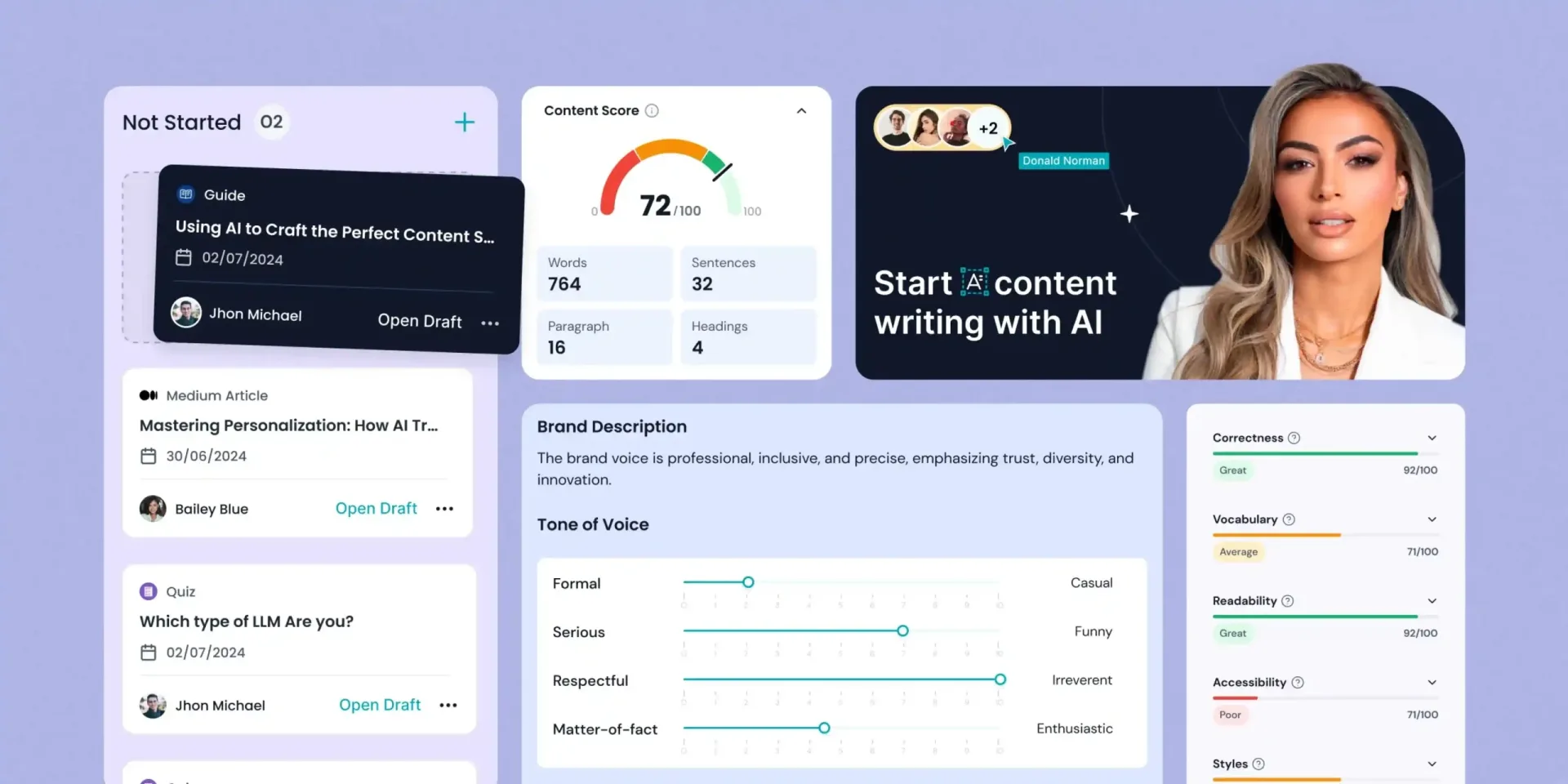
For Vocable, an AI content marketing SaaS, our AI product design agency designed a generative AI editor with model choice, and Vocable reports a 35% increase in overall workflow efficiency.

Scope ran from idea to product, MVP launch strategy included. Inside the editor, a writer picks an AI model from OpenAI, Google, Anthropic or Meta without leaving the draft, and an idea generator turns a prompt such as "headlines for a blog post about AI and design" into ready-to-use suggestions. The content score and search engine optimization (SEO) checks sit beside the draft. Details are in the Vocable case study.

Overview

How did AI scoring design work for Digno?

AI experience design for Digno, a performance-evaluation SaaS, put its AI scoring engine's employee score, rated from Poor to Pro, on an AI scoring dashboard beside its factors.

The AI scoring engine rates each employee on completed tasks, consistency and engagement. We gathered the requirements of stakeholders and users to define how the employee score is calculated, then designed views for the organization, each department and each employee. Each employee also sees how their score changes over time. The Digno case study shows these screens.

Process

How does our AI design agency take a project to handoff?

Our AI UX design agency takes AI products through 5 steps in 8–16 weeks (40–80 working days), from discovery to a developer handoff your engineers build from.

5–10 days

Discovery and product strategy

Stakeholder workshops put AI strategy before screens: what the AI decides, what the user decides and what the screen shows when the AI is wrong. Our article on whether a discovery phase is worth it covers what this step settles.

5–15 days

User research

Researchers run user interviews with 5–8 users per user group, such as writers and editors, to find where they check AI output and where they stop trusting it. These sessions run through our UX research services.

5–10 days

Information architecture and flows

Designers map the prompt, review, approve, retry and error paths, so every AI answer has a next step and a way back.

10–20 days

Prototype and validation

Prototype rounds put 5 users per round through the clickable prototype on Maze, with scripted AI answers in place of the live AI model, for example fixing a generated draft. Every round closes with a System Usability Scale (SUS) score.

15–25 days

UI design and handoff

Every screen meets Web Content Accessibility Guidelines (WCAG) 2.2 level AA, the accessibility level we design to. Our AI product design services end with a developer handoff of annotated Figma files, design tokens and component specs, and our designers stay with your engineers through launch.

Comparison

AI design agency vs AI development company

An AI design company decides what users see, check and approve on each screen of AI products; an AI development company builds, connects and evaluates the AI model. We do not sell AI-generated artwork or logos, and behavioral science consulting and AI transformation programs sit with consulting and engineering firms. The table sets design work against engineering work on AI-powered products, row by row.

Comparison of interface design work and engineering work on AI products
CriterionInterface design (us)AI engineering
Main questionWhat does the user see, check and approve while the AI works, answers or fails?How is the AI model connected, prompted, fed with data and kept reliable?
OutputsFlows, a clickable Figma prototype, UI screens for every output state and component specsModel integration, prompts, data pipelines, application programming interface (API) integration and workflow automation
Validation5 users per prototype round on Maze, each round ending in a SUS scoreAI model evaluation, bias audits and red-teaming
When to hireUsers ignore, distrust or cannot correct the AI outputThe design is tested and the AI model, data and integrations need building
Who does itOur senior designers; we write no AI model code and run no model evaluation or bias auditYour engineers, machine learning engineers or a development company
Pricing

How much does an AI design agency cost?

Full AI product design with our AI design company costs $60,000–$180,000 over 8–16 weeks; a $25,000–$60,000 design sprint (4–8 weeks) can cover one surface, such as an AI copilot panel.

Four factors set the full product design price: platforms (web app, mobile), user groups such as writers and editors, core user flows such as prompt-to-draft and review-and-publish, and validation rounds. A UX audit of a live AI feature takes 2–3 weeks and costs $5,000–$15,000 through our UX audit services. Building an AI agent is engineering work we do not price. Compare AI design agencies on published prices and named AI work, not on the tools they use.

Typical investment$60,000–$180,0008–16 weeks
  • Generative AI editors
  • AI copilots in SaaS
  • Conversational interfaces
  • AI agent workflows
Get a free quoteEstimate your scope with the free website design cost calculator →
Standards & compliance

Which standards shape AI product design?

Four standards, laws and guidelines shape our AI experience design by changing what users see, so they can judge how far to trust the AI. Legal review of AI rules stays with your counsel.

  • WCAG 2.2 level AA: 4.5:1 contrast for normal-size text, visible focus and full keyboard access, including for streamed answers and score charts, not only static screens.
  • In the European Union (EU), the EU AI Act Article 50 requires providers to make sure people are told when they interact with an AI system, unless that is obvious, and this duty applies from 2 August 2026. Our screens carry an AI disclosure label at the start of a chat and mark which content the AI generated.
  • From the National Institute of Standards and Technology (NIST), the voluntary NIST AI Risk Management Framework groups its guidance into Govern, Map, Measure and Manage. On screen, that means stating what the AI cannot do and letting users report a wrong answer.
  • Microsoft's 18 Guidelines for Human-AI Interaction are grouped by phase: initially, during interaction, when the AI is wrong and over time. They shape the output states and correction controls we draw.

Not sure where your design problems actually start?

Book a 45-minute UX audit session. We review your product and identify the top three friction points.

Book a UX audit
FAQ

Questions to ask an AI design agency

Seven answers settle how our AI design company works: AI tools in our own process, the 30% rule, AI-made designs, AI agent cost, design software, AI model code and live redesigns.

Still have a question?

A design lead answers every message within one business day.

Talk to a design lead
Do you use AI to make the designs, or design AI products?

Yes to both, in different roles: we design AI products, and AI tools speed up production steps in our own design workflow. The term AI design agency also describes studios that make graphics with AI tools, and we do not sell AI-generated artwork or logos. Our process stays human-first: research with users and what we learned designing 200+ products decide what we design.

What is the 30% rule in AI?

The 30% rule is an informal rule of thumb, not a standard or a law, and no official body defines it. One common reading says AI handles routine work while people keep roughly 30% that needs judgment; in schools, it sometimes caps AI-written content at 30%. We design to the same idea: the user makes the final call on each AI answer.

Is it legal to sell designs made by AI?

No blanket answer fits, because it depends on the AI tool's terms and on copyright law, so ask your lawyer; we do not give legal advice. The US Copyright Office report Copyright and Artificial Intelligence, Part 2: Copyrightability (29 January 2025) says copyright protects human authorship, so material generated entirely by AI is not protected, while human selection, arrangement or changes can be. Our designers decide and review everything we deliver.

How much does it cost to get an AI agent?

Building an AI agent is engineering work, priced by your developers or a development company, and we publish no build figure. Designing the AI agent's interface, meaning what it asks, what it shows and where the user approves each step, costs $25,000–$60,000 as a 4–8 week sprint, or $60,000–$180,000 within a full 8–16 week product design.

What is the best AI program for design?

No single AI program is best, because the right tool depends on the task, such as images, copy or layout drafts, and we do not rank tools. Our design files live in Figma and our prototypes are tested on Maze; AI tools speed up production, while research with users decides what to design.

Do you build, train or connect the AI model?

No. Your engineers, machine learning engineers or a development company build, connect and evaluate the AI model, and we hand them annotated Figma files, design tokens and component specs. Our designers stay with your engineers through launch to answer questions on each output state.

Can you redesign an AI feature that is already live?

Yes. Start with a 2–3 week UX audit ($5,000–$15,000) of the live AI feature's prompt, output and error screens; its prioritized fix list then shows the weakest surface, and a $25,000–$60,000 design sprint can redesign that surface. For advice on a live AI feature, our UX consulting services review its trust, transparency and actionability.

Ready to launch faster and convert more users?

Send us your project. A design lead reviews it and schedules a call within one business day. We sign an NDA before the first technical discussion if you prefer.