5–10 days
Discovery and product strategy
Stakeholder workshops settle who signs, who pays the gas fees and who holds the keys in each flow. Our article on what a discovery phase settles before screens uses Nitro as its example.
As a blockchain design agency, we design the screens people use to connect a crypto wallet, sign a transaction in a decentralized application (dApp), buy a non-fungible token (NFT) or read a token launch page. We test them with users before your engineers and smart contract developers build, and one senior team carries each product from discovery to developer-ready Figma files.





Get a free consultation
Free consultation · reply within one business day
In shortA blockchain design agency designs the user interface (UI) and user experience (UX) of Web3 products: wallet onboarding, transaction signing flows, NFT marketplaces, token launch pages and decentralized finance dashboards. The work is part of our digital product design services. A full project runs 8–16 weeks at $60,000–$180,000 and ends with tested Figma files your engineers build.
A Web3 design agency plans the user experience (UX) and user interface (UI) of Web3 products, blockchain apps where people hold assets in a crypto wallet and sign on-chain actions.
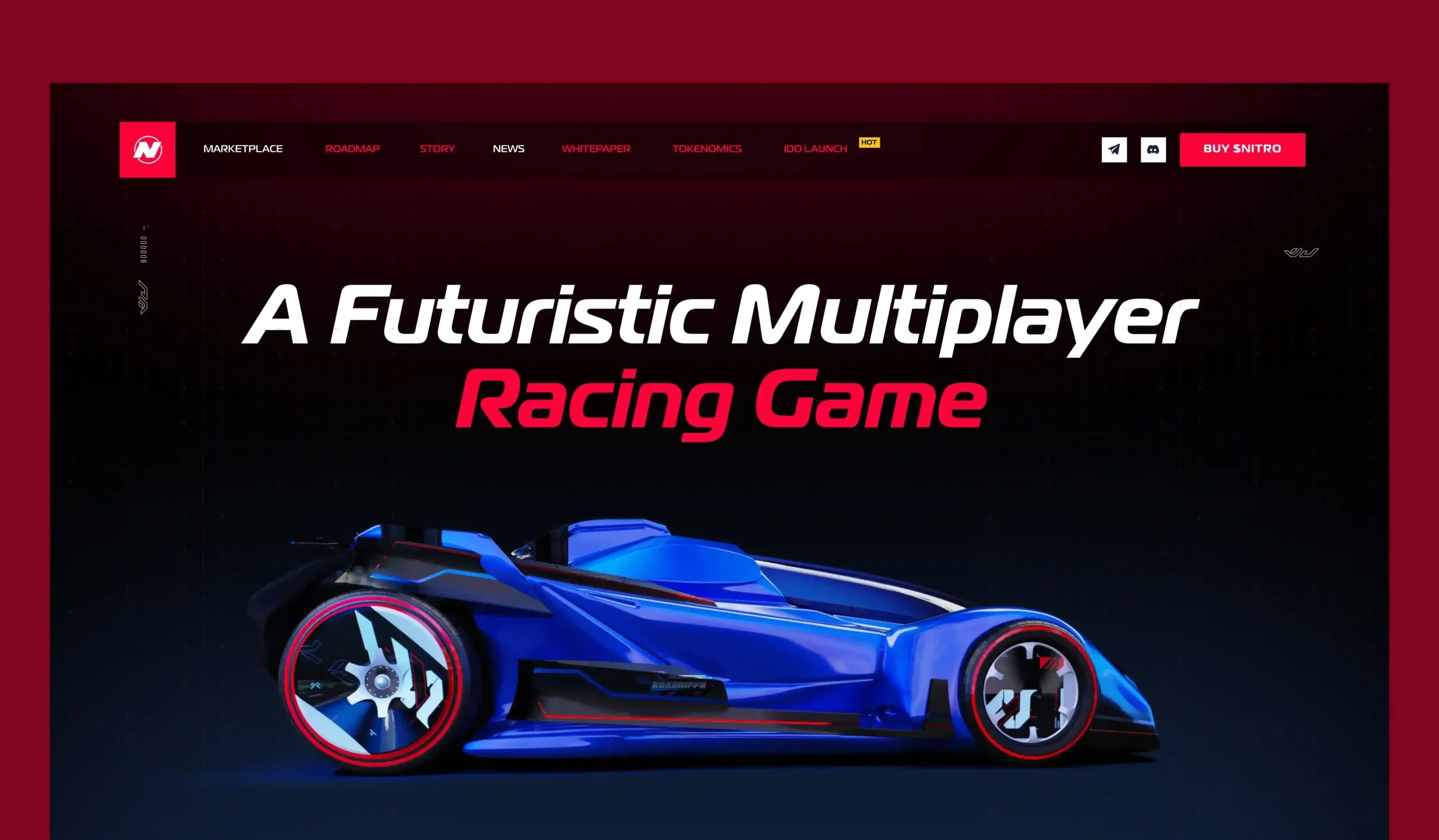
Web3 is the part of the web built on blockchains, where people own their assets and log in with a crypto wallet; it is not the semantic web that Tim Berners-Lee called Web 3.0. This design work belongs to our digital product design services, one of our UI UX design services. Your developers write the smart contracts and wallet integrations. The image shows the Nitro League marketing website we designed.
Blockchain UI/UX design covers six Web3 products, from wallet onboarding to decentralized finance dashboards, and every transaction screen is drawn in each state: pending, confirmed and failed. Only the Nitro items are published work; the others are services we offer.
Web3 UX design starts the moment a user meets a crypto wallet: the user creates an embedded wallet or connects an existing one, and recovery is explained before it is needed, including the seed phrase when the wallet uses one. Mobile wallets follow our mobile app UI UX design services.
Each signing request states what the user approves, the network and the gas fees in plain words before confirmation, for example a crypto token swap that shows its fee before the wallet opens.
The price, the fee and the current owner show before a buyer signs. The Nitro website leads players and investors into its NFT marketplace.
Token launch pages lay out a crypto token's supply, release schedule and allocation, so investors can check them before a token launch, as the Nitro tokenomics screens did. Public launch sites belong to our UI UX web design practice.
Decentralized finance (DeFi) dashboards show positions, rewards and risk in 5–7 metrics per view with a drill-down path, the rule our dashboard UX design follows.
In-game screens belong to our game UI/UX design services; this page covers the wallet, crypto token and marketplace layer around a game.
Crypto UX design has to earn trust for actions that cannot be undone, carry a fee and depend on a crypto wallet the product does not control. That is what UX in crypto means. If users stall at the seed phrase or the signing prompt, a design sprint can focus on that one surface, after a UX audit when the product is already live.
No support desk reverses a confirmed transaction on a blockchain, so review screens come before the signature, and the pending, confirmed and failed transaction states each get a screen with a next step.
Gas fees rise and fall with network load, so the fee and the network show before confirmation, and a fee the app sponsors carries a label that says so.
Without the seed phrase or private keys, a self-custody wallet cannot be recovered, so onboarding explains recovery first. Under ERC-4337 account abstraction, each smart account sets its own signature rules, so an account can accept passkeys or limited session keys, and the screens say what each key can approve.
When Nitro League came to us, investors doubted whether crypto products were authentic, so whitepaper, roadmap and tokenomics pages work as trust signals, not decoration. Each of these differences needs a screen that explains it, because ethereum.org calls the barrier to entry to Web3 currently too high.
Our Web3 design agency took Nitro League, a play-to-earn game, from idea to product while investors did not yet trust crypto, and Nitro reports $5M in funding within 3 months.
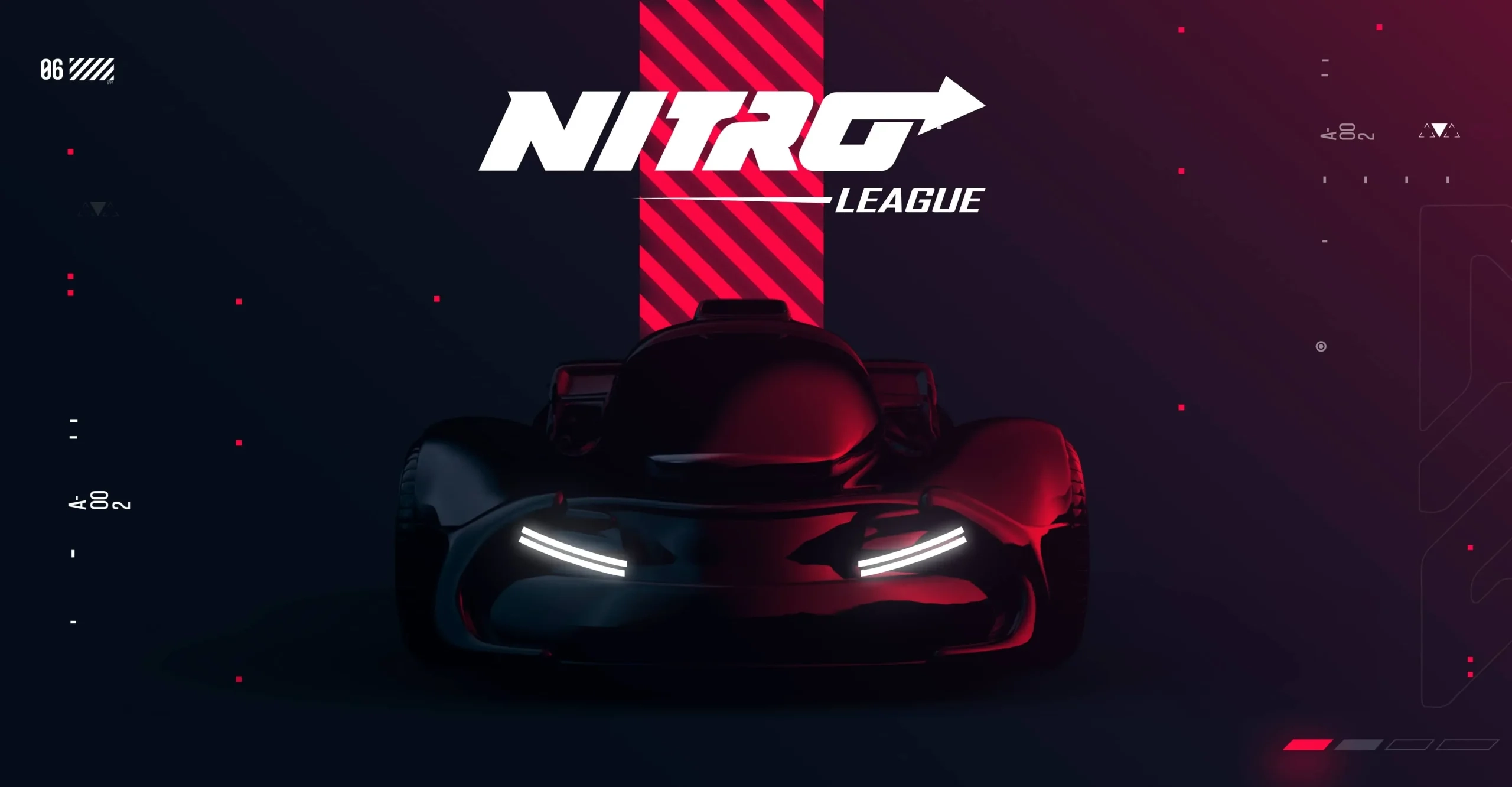
Nitro is a racing game built on upgradeable NFTs and the Nitro token, and while investors doubted whether crypto products were authentic, the racing experience had to earn trust. We mapped its user flows, wrote a detailed whitepaper, designed the website that explains its roadmap and tokenomics, and drew the tokenomics and initial decentralized exchange offering (IDO) launch screens. Read the Nitro League case study.
As a Web3 design studio that hands developer-ready Figma files to your engineers, we take Web3 products through 5 steps in 8–16 weeks (40–80 working days).
Stakeholder workshops settle who signs, who pays the gas fees and who holds the keys in each flow. Our article on what a discovery phase settles before screens uses Nitro as its example.
Researchers interview 5–8 users per user group, such as NFT collectors and first-time wallet users. Our UX research services carry out these user interviews.
Designers map the wallet connect, signing, confirmation and failure paths, so every flow has a way back when a transaction fails.
In prototype rounds, 5 users per round complete tasks in the clickable prototype on Maze, such as connecting a crypto wallet and approving a first purchase, and each round ends with a System Usability Scale (SUS) score.
Screens meet Web Content Accessibility Guidelines (WCAG) 2.2 level AA. The developer handoff gives your engineers and smart contract developers annotated Figma files, design tokens and component specs, and our designers stay with them through product launch.
Crypto UX design decides what users see and trust before they sign; a Web3 development company writes the smart contracts and wallet connection, and security auditors review that code. We do not sell NFT art collections or standalone branding. The table compares the two kinds of work on blockchain products by question, output, validation, timing and team.
| Criterion | Design agency (us) | Development company |
|---|---|---|
| Main question | What do users see, read and approve on each screen before they sign? | How do the smart contracts, wallet connection and nodes work, and are they secure? |
| Outputs | User flows, a clickable Figma prototype, UI screens and component specs | Smart contract code, wallet integrations, back end and node infrastructure |
| Validation | Prototype tests with 5 users per round on Maze | Smart contract security audits and testnet runs |
| When to hire | Users drop at wallet connect, the seed phrase or signing prompts | The design is tested and the smart contracts need writing and testing before a security audit |
| Who does it | Our senior designers; we write no smart contract code and run no security audits | Your engineers, smart contract developers and security auditors |
Full blockchain product design with our Web3 design studio costs $60,000–$180,000 over 8–16 weeks; a $25,000–$60,000 research and design sprint (4–8 weeks) can cover one surface, such as wallet onboarding.
Four factors set the price: platforms such as web and mobile, user groups such as collectors and investors, core user flows such as signing, and validation rounds. An audit of a live wallet or dApp costs $5,000–$15,000 over 2–3 weeks with our UX audit services. Published ranges let you compare blockchain design agencies before a call; every project begins with a free consultation and a fixed-scope proposal. Teams designing a minimum viable product (MVP) can use our UI UX design services for startups.
Four standards shape our crypto UX design, and each one changes what users see, so they can trust what they sign. Legal disclosures and know your customer (KYC) checks stay with your legal team.
Each option below draws on our core UI UX design services, from user research to usability testing, scoped to the users and workflows of your product.
Heuristic review, analytics, and usability findings turned into a prioritized fix list.
02Strategy, UX, UI, and validation from one team that stays through launch.
03Website UX and UI built around clear structure and conversion.
04Research-led UX and polished UI for iOS and Android apps.
05Dashboards designed around the decisions users make, not every metric at once.
06Design sprints, MVPs, and investor-ready products built fast and validated.
Book a 45-minute UX audit session. We review your product and identify the top three friction points.
Book a UX auditSeven answers cover what to check before you trust a team with crypto UX design: UX in crypto, Web3 itself, smart contract work, live redesigns, fintech, past token launches and chains.
Still have a question?
A design lead answers every message within one business day.
Talk to a design leadUX in crypto is the design of wallet-based actions so people understand them before they sign: what they approve, the gas fees, the network and what happens if the transaction fails. Crypto UX design puts those details in plain words, because no support team can reverse a confirmed transaction.
Web3 is the blockchain-based part of the web, where users keep their assets and identity in their own crypto wallet and approve on-chain changes with a signed transaction. For product teams, the hard screens move from login and checkout to wallet connection, signing requests and gas fees, the work this page covers.
No. Smart contract code and its security audit stay with your developers and auditors, and we hand over annotated Figma files, design tokens and component specs. A UX audit from us checks the usability of a live wallet or dApp, never the security of its contract code.
Yes. Start with a UX audit of the live wallet or dApp's signing, onboarding and fee screens, at $5,000–$15,000 over 2–3 weeks. Its prioritized fix roadmap then shows where users drop, such as the signing prompt, and a $25,000–$60,000 research and design sprint can redesign that surface.
Fintech UX is the design of regulated money products such as banking, lending and trading apps with KYC identity checks, the work our finance UI UX design page covers; a centralized crypto exchange with KYC sits closer to that work than to this page. Blockchain UX designs self-custody wallets, signatures and on-chain fees, where users hold their own keys.
Yes, one: Nitro League. We designed the screens that present its tokenomics and its IDO token launch, and a website that explains the roadmap and whitepaper and leads players and investors into the NFT marketplace; read the Nitro League case study. Wallets, dApps, decentralized finance dashboards and decentralized autonomous organization (DAO) voting screens are part of what we design, with no published project yet.
No. Connect, sign, confirm and fail are the same flows in decentralized applications on every chain, so the flow design carries across, and the specs add each chain's own wallet names and fee wording. We name no past work on a specific chain, because Nitro is our one blockchain project.
Send us your project. A design lead reviews it and schedules a call within one business day. We sign an NDA before the first technical discussion if you prefer.