1–2 days
Scoping call
We map the users, the workflow under pressure and the metric you want to move, then confirm budget and dates in writing.
Research-led UX and UI design for trading platforms, insurance portals, freight software and B2B SaaS built in Chicago and across Illinois. Remote-first, on Central Time overlap, with senior designers from day one.





Get a free consultation
Free consultation for Chicago teams · reply within one business day
In shortWe are a remote-first UX design agency headquartered in Reston, Virginia, working with Chicago product teams on user research, interface design, prototyping and usability testing. Chicago engagements focus on dense, data-heavy software: order entry, claims, dispatch and analytics. Projects start at $5,000 for a UX audit, and our Eastern Time base sits one hour ahead of Chicago, so almost the whole workday is shared.
Chicago product teams bring in a UX design agency when complex workflows, such as trade entry, claims handling or shipment tracking, cost users time and the in-house design bench is too thin to fix them quickly. An agency adds researchers and designers for a defined scope, then hands the work back to your team.
Much of the software built in Chicago is operational: traders watching prices tick, adjusters moving a claim through review, dispatchers rerouting loads around a rail delay. These users repeat the same tasks all day and notice every extra click. A UX design agency Chicago teams can lean on studies those routines first, then redesigns the screens around them. The full scope is on our digital product design services page. We do not have a Chicago office, and we say so up front: the team works remotely and travels for workshops when a project needs a room.
Four Chicago industries account for most of the product types we design for: trading and fintech, insurance, logistics and freight, and B2B SaaS.
A typical Chicago UX engagement delivers six outputs: workflow research, an expert audit, an information architecture, high-fidelity UI, a component library and tested prototypes.
Shadowing and interviews with 5–12 people per role, for example underwriters and independent agents using the same quoting tool.
A heuristic and WCAG 2.2 review of the flows that matter most, for example an order ticket and its confirmation screen.
Card sorting and tree testing to restructure navigation, for example a carrier portal that grew one menu item per release.
Figma screens for desktop and mobile with dense tables, filters and alerts designed for scanning rather than reading.
Tokens, components and usage notes that let several squads ship screens that look and behave alike.
Clickable prototypes validated with five participants per round before engineering commits sprint capacity.
Most Chicago projects run 4–8 weeks across five stages, starting with a scoping call and ending with a developer handoff your engineers can build from.
We map the users, the workflow under pressure and the metric you want to move, then confirm budget and dates in writing.
Researchers observe real sessions, for example a dispatcher's shift or a trader's market open, and review analytics and support tickets.
Product, engineering and compliance agree on priorities in remote sessions on Central Time; we travel to Chicago for in-person workshops when the scope justifies it.
Designers build flows, UI and a working prototype, with two review sessions a week so stakeholders steer early.
We run usability rounds, fix what fails, and deliver annotated specs and components to your developers.
An agency sprint suits a defined problem with a deadline, while a full-time hire suits a permanent, ongoing design need. Many Chicago teams use a sprint first to prove the value of design, then hire.
| Factor | Agency sprint (us) | Full-time in-house hire |
|---|---|---|
| Time to start | 1–2 weeks after sign-off | Several months of sourcing and interviews |
| Skills covered | Research, UX, UI and testing in one team | Depends on the one person hired |
| Time zone | Eastern Time base, one hour ahead of Chicago | Local |
| Commitment | Fixed scope, fixed fee | Salary, benefits and management time |
| Best for | A redesign, audit or new product with a launch date | Continuous design across many releases |
A UX design agency Chicago engagement costs $5,000–$15,000 for a 2–3 week audit and $25,000–$60,000 for a 4–8 week research and design sprint. Scope drives the price: how many workflows, how many user roles, how much research and whether a component library is included.
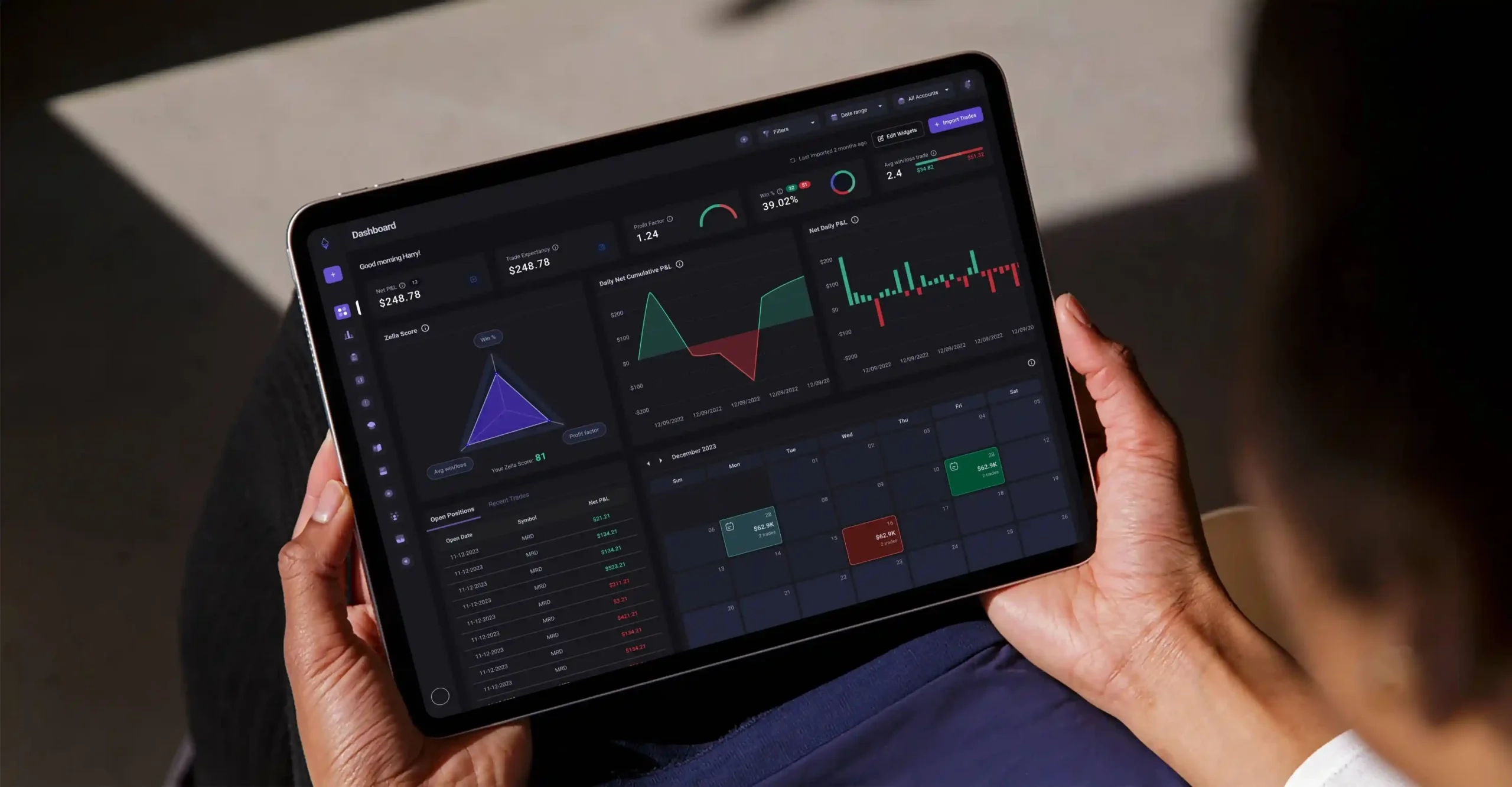
End-to-end product design with a design system runs $60,000–$180,000 over 8–16 weeks. Teams that want a designer embedded in their squads month to month pay $15,000–$40,000 per month. Each proposal is fixed-scope, so the figure you approve is the figure you pay. If your product is a trading or analytics tool, see how we approached a similar problem in our trading journal case study, and for warehouse and freight workflows, the warehouse error-resolution case study.
A research-led redesign changes four things for Chicago users and the teams behind them: fewer errors in high-stakes tasks, faster task completion, quicker onboarding and a consistent interface across products.
Clear confirmations, sensible defaults and readable states reduce mistakes such as a wrong order size or a misfiled claim.
Keyboard paths, saved views and tighter layouts cut the seconds that add up across a full trading day or dispatch shift.
New agents, brokers and admins reach competence sooner when navigation follows the way they already think about the work.
A shared design system keeps legacy modules and new features aligned.
Senior UX guidance, product reviews, and a prioritized roadmap your team can act on.
02Interviews, observation, journey maps, and Jobs-to-be-Done analysis that ground every design decision in evidence.
03Heuristic review, analytics, and usability findings turned into a prioritized fix list.
04Moderated studies, concept validation, and A/B testing that catch problems before they ship.
05Strategy, UX, UI, and validation from one team that stays through launch.
06Flows, micro-interactions, states, and motion that make every action clear.
Book a 45-minute UX audit session. We review your product and identify the top three friction points.
Book a UX auditFive questions Chicago teams raise most often before they sign with a UX design agency.
Still have a question?
A design lead answers every message within one business day.
Talk to a design leadNo. We are a remote-first UX design agency headquartered in Reston, Virginia. Our Eastern Time hours overlap almost entirely with Chicago's Central Time, and we travel for on-site workshops when a project calls for it.
Yes. We design within your compliance requirements, involve your legal and risk reviewers in workshops, and document disclosures, warnings and audit-relevant states in the handoff.
We use short contextual observation, screen recordings with consent and unmoderated tests that fit around shifts, so traders, adjusters and dispatchers give 20–30 minutes instead of an hour.
A UX design agency Chicago teams sign with today can usually start 1–2 weeks after the scoping call, once the proposal is approved.
Yes. Designers stay available for implementation questions and design QA during the build, and documentation lives in Figma and Storybook.
Send us your project. A design lead reviews it and schedules a call within one business day. We sign an NDA before the first technical discussion if you prefer.
“The designers who did our research were the same ones who stayed through engineering and launch. That is the only reason the design survived contact with development.”
— Director of Product, ToolsGroup