3–5 days
Discovery and metrics
We review product funnels in Amplitude or Mixpanel, interview 5–8 customers with the Jobs to be Done method and set 1 target metric per lifecycle stage.

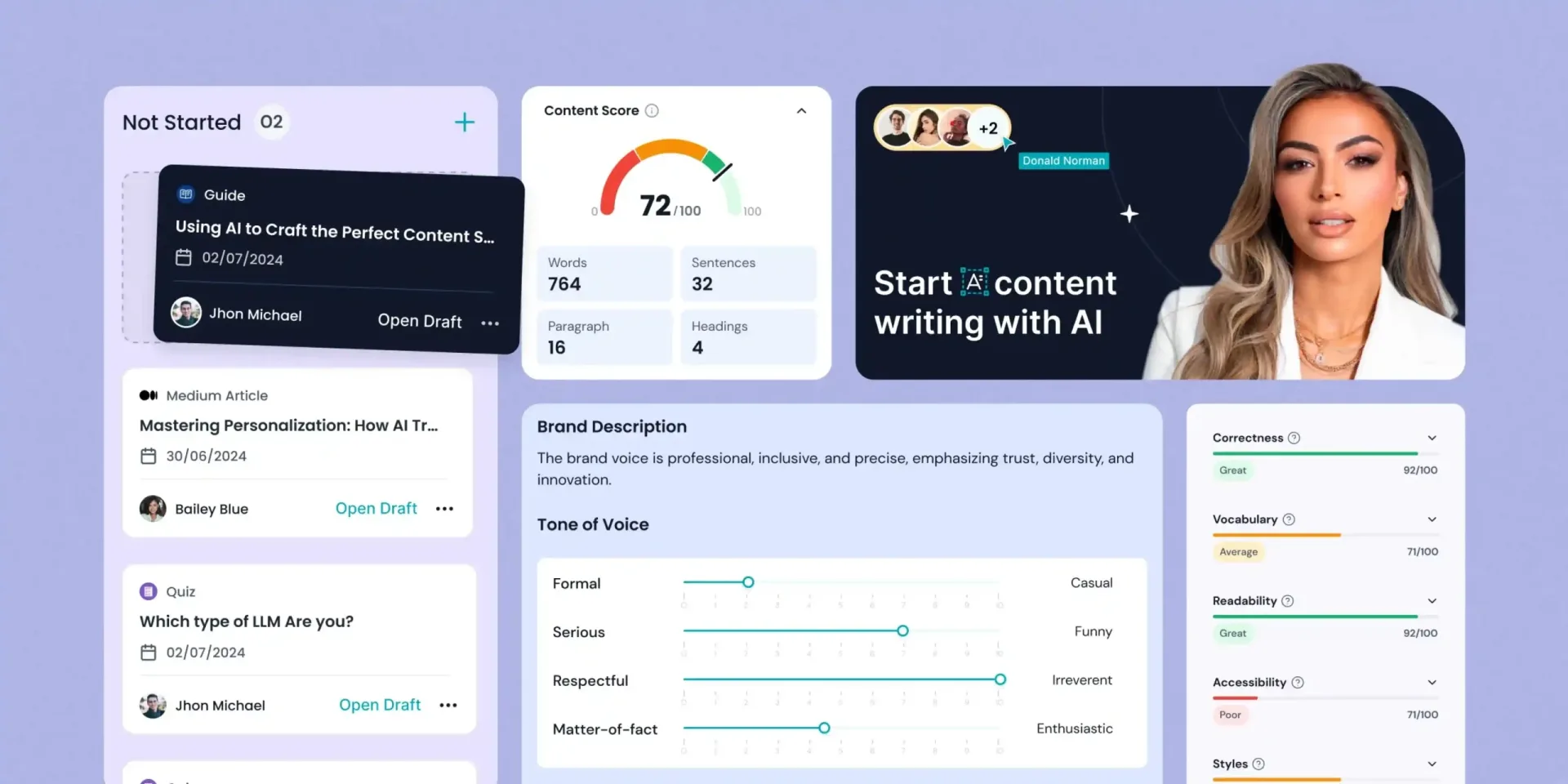
Onboarding, core workflows, settings, and admin experiences designed to get users to value fast and keep them there.





Get a free consultation
Free consultation · reply within one business day
In shortSaaS UX design services shape the user experience (UX) of software-as-a-service (SaaS) products across onboarding, activation, retention and in-app upgrades. Our SaaS UX design engagement takes 4–8 weeks, costs $25,000–$60,000, and ends with tested onboarding flows, core workflows and a pricing page ready for development.
SaaS UX design is the design of the user experience of a subscription software product across the customer lifecycle, from sign-up and onboarding to activation, retention and plan upgrades. Designers map each lifecycle stage to a product metric, for example the activation rate of new accounts in week 1.
SaaS UX design differs from web app design services in scope: web app design covers logged-in workflows, while SaaS UX design adds the lifecycle moments that decide subscription revenue, for example the trial-to-paid upgrade and the cancellation flow. Each SaaS UX design project defines metrics with the Google HEART framework: happiness, engagement, adoption, retention and task success.
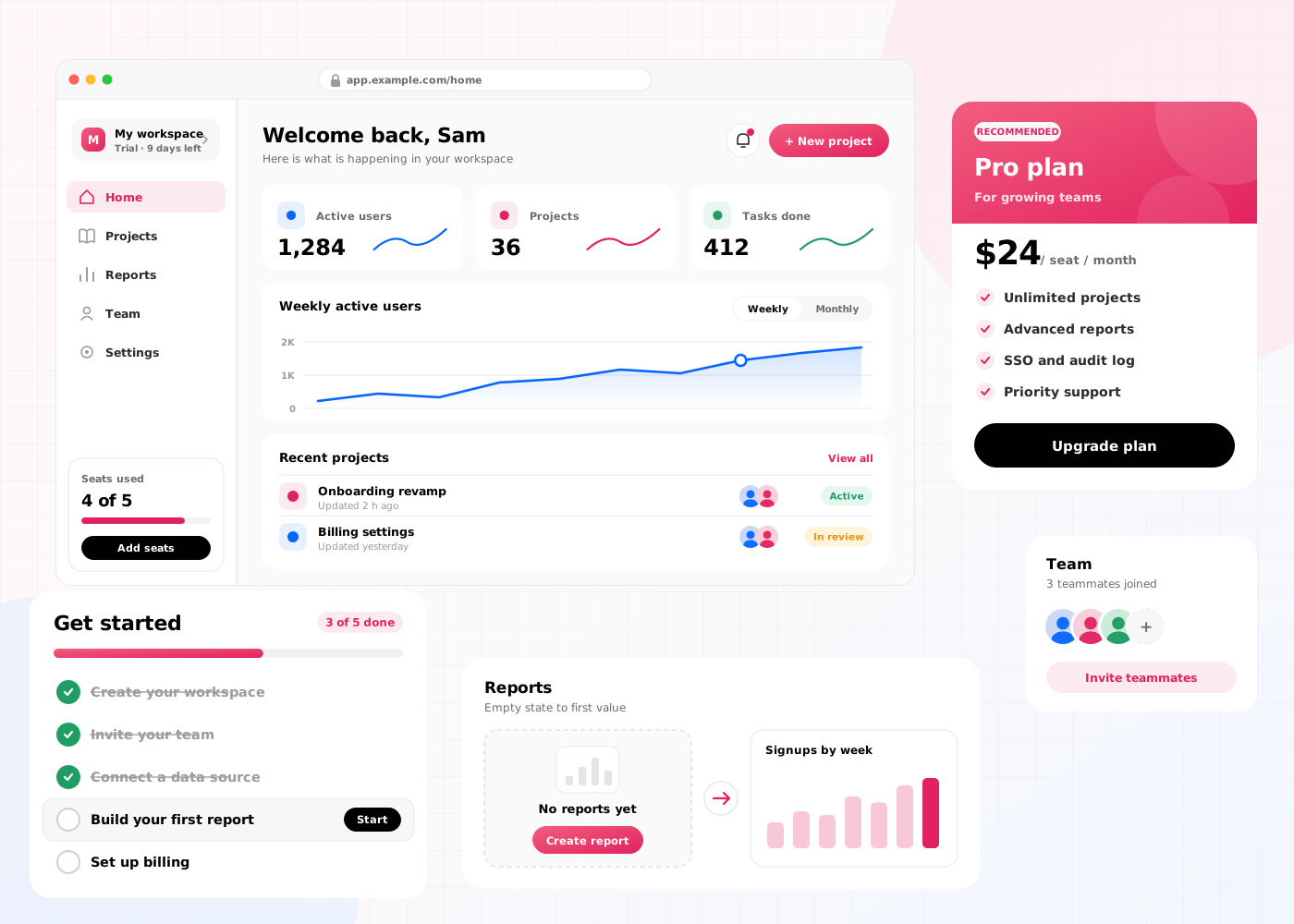
Our SaaS UX design services include 6 deliverables: onboarding flows, activation checklists, core workflow designs, pricing and plan pages, retention and cancellation flows and a tested Figma prototype.
Sign-up, setup and first-session screens guide each new user to the first value moment, for example connecting a data source or inviting a teammate.
In-app checklists and empty states show the next action, for example the 3–5 setup tasks a new account completes in week 1.
The 3–5 workflows users repeat every week are redesigned, for example creating a report, approving a request or exporting data.
The pricing page, the plan comparison table and in-app upgrade prompts are designed together, for example a usage-limit banner that links to the plan comparison.
Account settings, billing and cancellation screens are redesigned, for example a pause-subscription option before the cancel confirmation.
A clickable prototype is tested with 5 users per round in Maze, for example the full path from free trial to paid plan.
The SaaS UX design process takes 4–8 weeks (20–40 working days) and runs in 5 steps, from discovery to the Figma handover.
We review product funnels in Amplitude or Mixpanel, interview 5–8 customers with the Jobs to be Done method and set 1 target metric per lifecycle stage.
We map every stage from sign-up to renewal and mark the drop-off points, user roles and upgrade moments.
Designers produce onboarding flows, core workflows and plan pages as a clickable Figma prototype.
2 rounds of 5 users test the prototype in Maze, and each round ends with a System Usability Scale (SUS) score and a fix list.
Developers receive annotated Figma files, interaction states and a Web Content Accessibility Guidelines (WCAG) 2.2 level AA checklist for every screen.
SaaS UX design has 4 benefits: it increases activation rate, increases retention rate, reduces support cost and develops a product-led growth motion.
Guided onboarding flows shorten time-to-value, so more new accounts reach the first value moment in the first session.
Redesigned core workflows and cancellation flows give paying users fewer reasons to leave at renewal.
Clear empty states, settings and error messages answer setup questions inside the product instead of in support tickets.
In-app upgrade prompts and a clear pricing page develop a self-serve path from free trial to paid plan, quarter after quarter.
SaaS UX design covers the subscription lifecycle and its revenue metrics; web app design covers the logged-in workflows of any web application. Subscription products with an activation or churn problem start with SaaS UX design.
| Criterion | SaaS UX design | Web app design |
|---|---|---|
| Focus | Onboarding, activation, retention and upgrades | Workflows, tables, forms and permissions |
| Main metrics | Activation rate, retention rate and churn | Task success rate and time on task |
| Key screens | Sign-up, checklists, pricing page and billing | Dashboards, data tables and settings |
| Timeline | 4–8 weeks | 8–16 weeks |
| Price on this site | $25,000–$60,000 | $60,000–$180,000 for full design |
SaaS UX design costs $25,000–$60,000 and takes 4–8 weeks. The price depends on 4 factors: the number of lifecycle stages, the number of user roles, the number of core workflows and the number of usability testing rounds.
An onboarding and activation redesign for 1 user role with 1 testing round sits near $25,000. A full lifecycle redesign with onboarding, 5 core workflows, the pricing page and 2 user roles sits near $60,000. A SaaS product that also needs a component library moves to a full design and design system engagement of $60,000–$180,000 over 8–16 weeks. Market context for subscription software sits on the SaaS industry page.
A SaaS company should invest in SaaS UX design in 5 situations:
Book a 45-minute UX audit session. We review your product and identify the top three friction points.
Book a UX auditWe design UI and UX for SaaS, Startups and AI products.
Send us your project. A design lead reviews it and schedules a call within one business day. We sign an NDA before the first technical discussion if you prefer.
These answers cover the 5 questions buyers ask most about SaaS UX design.
Still have a question?
A design lead answers every message within one business day.
Talk to a design leadYes. SaaS UX design includes sign-up, setup and first-session screens, plus the in-app checklists that guide new accounts to activation.
No. SaaS UX design works without product analytics, but Amplitude, Mixpanel or Pendo access adds funnel and feature-usage data to the discovery step.
Yes. SaaS UX design covers the pricing page, the plan comparison table and the in-app upgrade prompts.
Yes. SaaS UX design defines flows, lifecycle stages and metrics, while SaaS user interface design defines the visual layer, for example typography, colour and components. Our SaaS UX design engagements deliver both layers. When a product only looks dated, our guide to telling a UI refresh from a SaaS product redesign shows which layer to change first.
SaaS UX design takes 4–8 weeks, which equals 20–40 working days, from discovery to the Figma handover.