Media UI/UX design

Media UI/UX design services for ad sales, campaign and content platforms

Our media UI/UX design services shape the tools media and marketing teams open every working day, from order management and media sales packages to campaign reporting, audience dashboards and content workflow. A single senior team carries a media platform from the discovery workshop to tested Figma designs your developers can build.

200+ products designed · in business since 2017
Trusted by teams at
  • NBCUniversal
  • 7-Eleven
  • Groupon
  • Sterne Kessler
  • Nitro League
  • Senior designers only
  • NDA before the first call
  • Reply within 1 business day

Get a free consultation

Free consultation · reply within one business day

In shortMedia UI/UX design services cover the user experience (UX) and user interface (UI) of the logged-in tools media companies sell and report with: order management, campaign reporting, audience dashboards and content workflow. The work sits inside our digital product design services. A full media platform design project takes 8–16 weeks at $60,000–$180,000, and your engineers build from the tested Figma files.

Case studies

Media UI UX case studies

30%
increase in order processing efficiency for Mass Media Co.
35%
increase in overall workflow efficiency for Vocable
200+
products designed since 2017
Definition

What are media UI/UX design services?

Media UI/UX design services shape how media and marketing teams move orders, campaigns and content through their workflow, and design the screens those teams and their clients use.

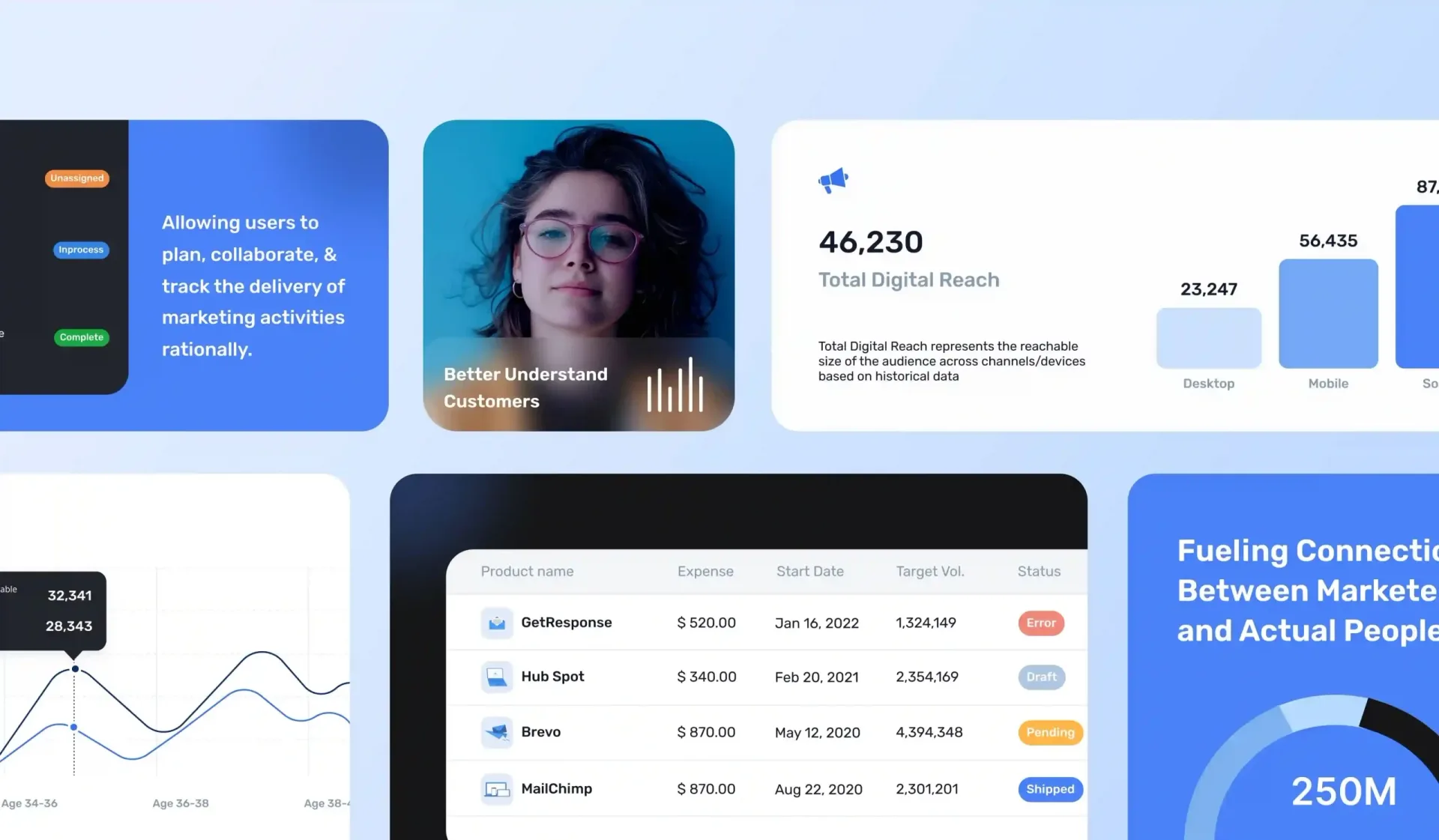
UI UX design for media companies covers the logged-in tools behind the campaigns, not the ad creative. It sits under our digital product design services, run by the senior team that delivers our UI UX design services. We hand over annotated Figma files, design tokens and component specs, and the code stays with your engineers. The image shows the platform we designed for Mass Media Co.

Mass Media Co. platform screens: campaign planning, a reach report, an audience chart, a product table and a 250M audience figure
The Mass Media Co. platform
Timeline
8–16 weeks
Investment
$60,000–$180,000
Deliverables
6 included
What's included

Which media platform screens do our media UI/UX design services cover?

Media platform design covers 6 parts of the tools media companies run on, with every screen drawn in its empty, loading, error, default and completed states.

Order management

Order takers build a media order from data products, digital channels and data processing services, with the estimated cost shown as the order grows. Our web app design services cover such logged-in tools, including data tables, filters and permission states.

Media sales packages

For social media sales, sales teams package social campaigns, such as Facebook marketing, as clear offers with goals attached, so a buyer knows what each package delivers.

Campaign reporting

Campaign sales show revenue, cost, total and order count at a glance, and client-facing audience engagement reports break campaign reach down by device, age group and media channel.

Audience dashboards

Role-based views turn audience data and audience segmentation into dashboard metrics, 5–7 per view with a drill-down path, the pattern our dashboard UX design work follows.

Content workflow

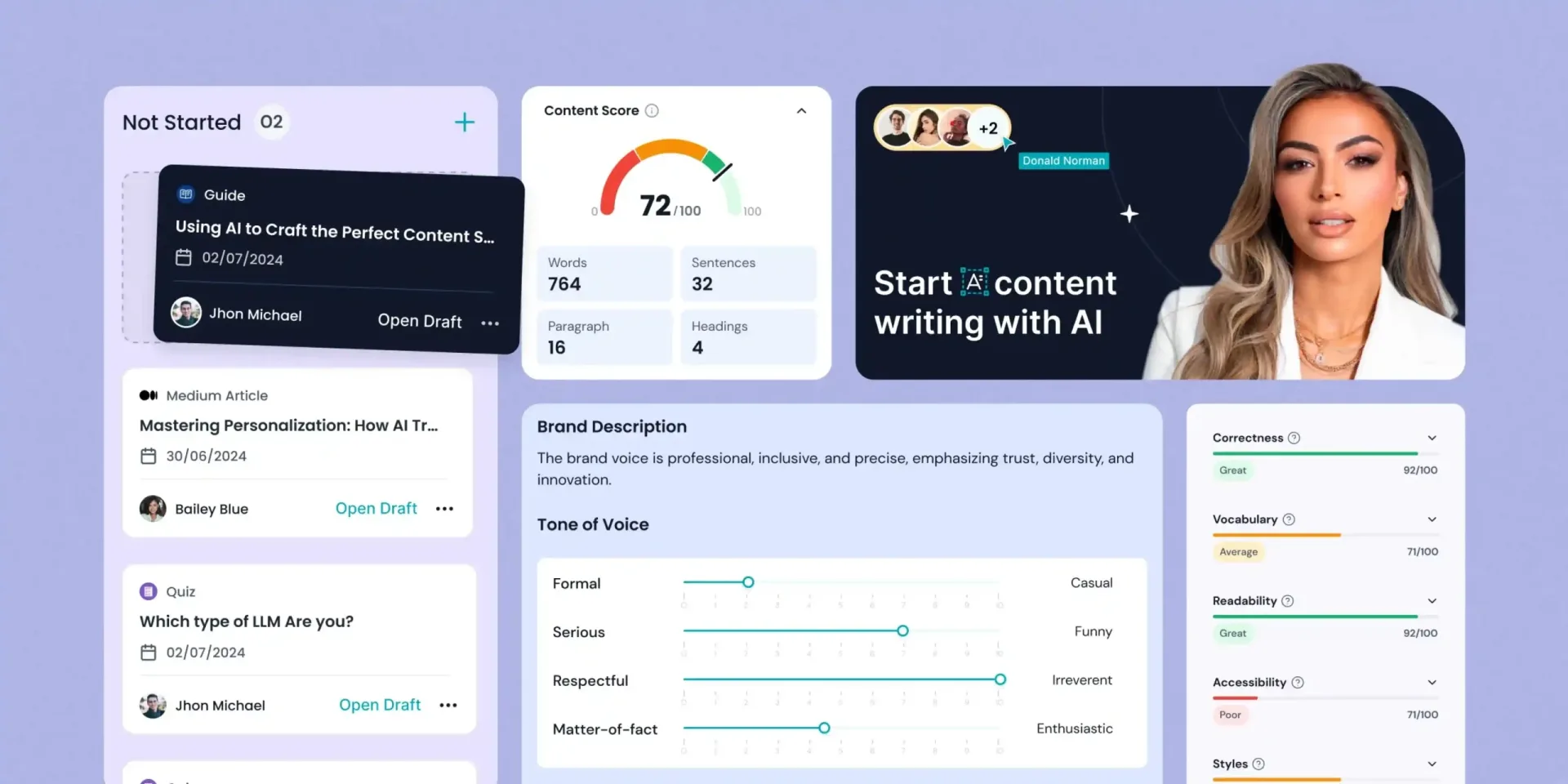
The content lifecycle runs from idea to publishing in one place, with content templates, artificial intelligence (AI) writing help and an editor that shows a content score and readability checks, as on Vocable.

Task management

Every creative task carries an owner, a due date and its progress, and a task management dashboard shows sales operations, open tasks and task flow by client.

Benefits

What makes UX design for media companies different?

UI UX design for media companies has to join tools that grew up separately, serve internal teams and their clients in one workflow, and handle audience data with care.

Disconnected systems

On the marketing services platform in our case study below, order takers moved between separate systems to fulfill one customer order, and the process would not scale. The answer was one order workflow, not a new look for each tool.

Internal teams and clients on one platform

On a media platform, order takers, sales teams and creative teams work inside the tool, while clients read audience engagement reports. Each of these user roles needs its own view and permission states, so clients open their reports, not the order screens.

Audience data with personal information

That platform's audience database holds verified personally identifiable information (PII). Screens for data like this need to show segments and reach instead of raw personal records, plus each segment's opt-out status. Customer relationship management (CRM) and customer data platform integrations stay with your engineers.

Content at deadline speed

Content marketers lose hours to trend research and to measuring performance across tools, the problem Vocable set out to solve. AI content tools with one editor, templates and built-in checks shorten that loop. Content platforms delivered online as software as a service (SaaS) follow patterns from our SaaS UI UX design work.

Overview

What did media UI/UX design deliver for Mass Media Co.?

For Mass Media Co., media UI/UX design defined one omnichannel platform and order workflow in place of separate systems, and the company reports a 30% increase in order processing efficiency.

The company sells data-driven digital marketing services. Scope: "product revamp, user interviews, information architecture (IA), UI and UX design, and web and mobile app design." After a discovery workshop with stakeholders and users, the platform took shape around five experiences: social media sales, campaign sales creation, audience engagement reports, task management, and product and order management. It also reports a "53% increase in audience engagement." Read the Mass Media Co. case study.

Overview

How did content platform design work for Vocable?

For an AI content marketing platform, marketing platform UX design took Vocable from idea to minimum viable product (MVP), and it reports a 35% increase in overall workflow efficiency.

This client is a content platform, not a media company. Scope: "idea to product, stakeholder interviews, MVP launch strategy, UI and UX design, web app, and product enhancements." Stakeholder interviews mapped the creator journey: planning, drafting, optimizing and publishing. Writers switch between AI models from OpenAI, Google, Anthropic and Meta in one editor. The platform reports a "20% improvement in content quality and consistency." Read the Vocable case study.

Process

Which steps does media UI/UX design follow?

Media platform design runs in 5 steps over 8–16 weeks (40–80 working days), from the discovery workshop to developer handoff, around the workflow your media and marketing teams follow.

5–10 days

Discovery and product strategy

A discovery workshop with stakeholders and users sets the user roles (order takers, sales teams, creative teams and clients), the core workflow and success metrics such as order processing time. Our discovery guide lists what a discovery phase hands to your designers.

5–15 days

User research

Researchers talk to 5–8 users per user group, such as order takers and sales teams, and the user interviews show where orders, campaigns and audience reports break between tools. Our UX research services run this step.

5–10 days

Information architecture and flows

Designers build the sitemap and user-flow diagrams for products, orders, campaigns and audience reports, including the order flow and the content workflow, ahead of the first screen.

10–20 days

Prototype and validation

Prototype rounds are usability testing on a clickable Figma prototype: 5 users per round complete tasks on Maze, such as building a media order, and each round ends with a System Usability Scale (SUS) score.

15–25 days

UI design and handoff

Every screen state is finished to one accessibility level, Web Content Accessibility Guidelines (WCAG) 2.2 level AA. The developer handoff gives your engineers annotated Figma files, design tokens and component specs, and the designers stay with them through launch.

Comparison

Media UI/UX design vs ad creative design

Media UX design for ad sales and content tools decides how media and marketing teams run orders, campaigns and audience reports; ad creative design makes the ads audiences see. Graphic media design, the career sense of the term, sits on the creative side. The table sets the two disciplines side by side.

Comparison of media UI/UX design and ad creative design
CriterionMedia UI/UX designAd creative design
Main questionHow do teams take orders, sell campaigns and report on audiences in one platform?What should the ad or brand asset look and sound like?
UsersOrder takers, sales teams, creative teams and clientsThe audience that sees the ad
OutputsUser flows, wireframes, a clickable Figma prototype, UI screens and component specsAd units, banners, video spots and brand assets
Validation5 users per round complete tasks in a Maze prototype testCampaign metrics such as click-through rate
When to hireOrders, campaigns or audience reports are slow or error-prone across separate toolsA marketing campaign needs new creative
Who does itOur senior designers, as for the marketing services platform aboveYour creative team or ad agency; we do not produce ad campaigns
Pricing

How much do media UI/UX design services cost?

Media UI/UX design services cost media companies $60,000–$180,000 for a full media platform design across 8–16 weeks, or $25,000–$60,000 for a 4–8 week design sprint.

A full media platform design, with a reusable design system, needs 3–6 designers, while a design sprint for one surface, such as the audience dashboard, needs 2–4. Four factors move the price: target platforms (web app and mobile app), user groups such as order takers and clients, core user flows such as order taking, and validation rounds. A UX audit of live media tools runs 2–3 weeks at $5,000–$15,000 with our UX audit services.

Typical investment$60,000–$180,0008–16 weeks
  • Order management
  • Media sales packages
  • Campaign reporting
  • Audience dashboards
Get a free quote
Standards & compliance

Which privacy and advertising standards shape media UI/UX design services?

Four accessibility, privacy and advertising standards shape media platform design, and each one changes what media and marketing teams and their clients see on screen. Our designers apply them in the screens; legal sign-off and compliance remain your company's responsibility.

  • WCAG 2.2 level AA: 4.5:1 contrast for normal-size text, keyboard operation with a visible focus indicator, and, under success criterion 1.4.1, color is never the only visual means of conveying information, so audience charts and campaign status also carry text labels.
  • California Consumer Privacy Act (CCPA): consumers can ask businesses to stop selling or sharing their personal information, including through a user-enabled Global Privacy Control signal that covered businesses must honor, so audience data tools show privacy choices such as each segment's opt-out status and keep opted-out records out of campaign builds.
  • Federal Trade Commission (FTC) guidance on native advertising: an ad must be identifiable as an ad, with the disclosure as close as possible to it, so sponsored content labels sit next to the content, in plain words, on every screen and template where it appears.
  • CAN-SPAM Act: commercial email needs a clear way to opt out and a valid physical postal address, and opt-outs must be honored within 10 business days, so the email channel in order and campaign builders adds the unsubscribe line and sender details by default.

Not sure where your design problems actually start?

Book a 45-minute UX audit session. We review your product and identify the top three friction points.

Book a UX audit
FAQ

FAQs about media UI/UX design services

Six answers help media companies judge a media UI UX design agency before work starts: past media work, code, live redesigns, timing, reader apps and audience engagement.

Still have a question?

A design lead answers every message within one business day.

Talk to a design lead
Have you designed software for a media company?

Yes. For Mass Media Co., a data-driven digital marketing services company, we designed one omnichannel platform for social media sales, campaign sales, audience reports, task management and order taking in place of separate systems. It is our one published media project, and Vocable, a content marketing platform, is the closest related work.

Do you build the platform or write the code?

No. We stop at design, and your developers build the platform, including ad-tech, CRM and data integrations, from the annotated Figma files, design tokens and component specs we hand over. Our designers stay available to them through launch.

Can you redesign media tools that are already in use?

Yes. A 2–3 week UX audit of the live media tools comes first, with a heuristic evaluation, an analytics review and a WCAG 2.2 level AA check that end in a prioritized fix roadmap. A phased redesign then starts with the highest-traffic workflow, for example the order flow, and ships one workflow per release.

How long does media platform design take?

A UX audit of live media tools takes 2–3 weeks, and a design sprint for one surface, such as the audience dashboard, takes 4–8 weeks. A full media platform design takes 8–16 weeks, or 40–80 working days.

Do you design reader or subscriber apps for media publishers?

Yes. Publishing UX design for reader apps, subscription flows and video or audio players runs through our mobile app UI UX design services, a 5-step process of 4–8 weeks. None of that is published work yet: our media case study is an order, campaign and reporting platform for a marketing services company, whose scope covered web and mobile app design, and we list no reader app, paywall or newsroom tool among our projects.

Can better UX design increase audience engagement on a media platform?

Yes, as one factor among several. The marketing platform in our media case study reports a 53% increase in audience engagement alongside a 30% increase in order processing efficiency. The platform also brought advanced data analytics, real-time performance tracking and dedicated client support, so we never credit audience engagement or monetization gains to design alone.

Ready to launch faster and convert more users?

Send us your project. A design lead reviews it and schedules a call within one business day. We sign an NDA before the first technical discussion if you prefer.