2–4 days
Regulatory and risk scoping
We list required disclosures, KYC data points and the compliance sign-offs each flow needs.

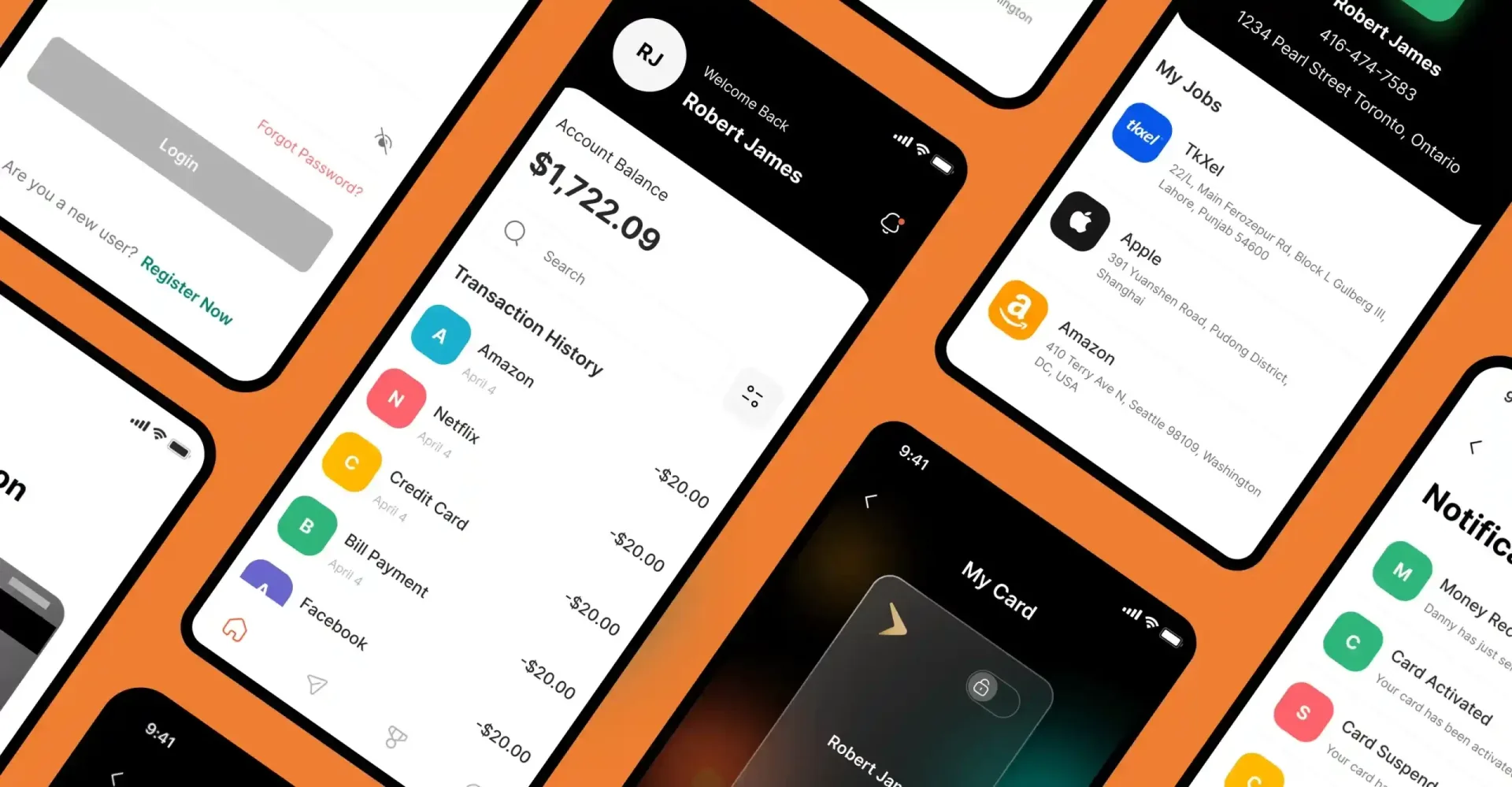
Financial services need interfaces that are secure, transparent, and simple even when the underlying data is complex.





Get a free consultation
Free consultation · reply within one business day
In shortFinance UI UX design plans the user experience (UX) and user interface (UI) of banking, lending, payments and investing software, from know your customer (KYC) identity checks to trading dashboards. Our finance design sprints take 4–8 weeks, cost $25,000–$60,000, and produce tested flows for onboarding, money movement and error prevention.
Finance UI UX design is the research, interaction design and visual design of software that moves, lends, invests or reports money for consumers and businesses. The work centres on identity verification, transaction confirmation, fee disclosure and dashboards that show balances, positions and risk without ambiguity.
A misplaced decimal, an unclear pending state or a hidden fee becomes a support ticket, a chargeback or a regulatory complaint. Designers therefore specify every amount, date and status as content. Products that put balances, positions and cash flow on one screen follow our dashboard UX design method.
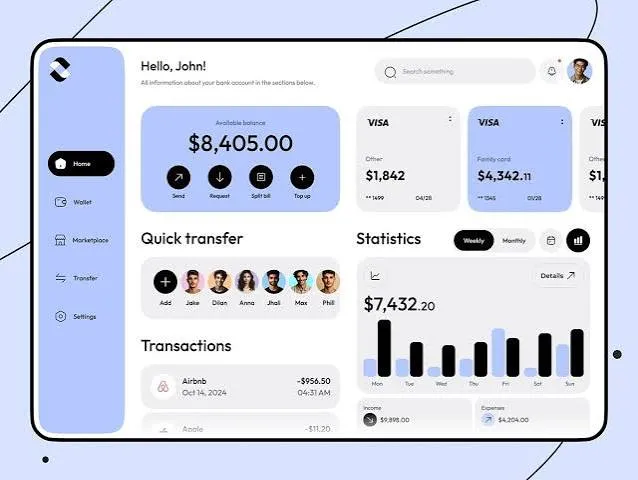
We design 6 types of finance products: digital banking apps, lending platforms, payments products, wealth and trading apps, trading journals and back-office tools.
Customers move money, freeze cards and dispute charges, for example a transfer screen that shows the arrival date before confirmation.
Borrowers upload documents and track status while underwriters review files, for example a tracker that names each missing document.
Merchants handle cards, Automated Clearing House (ACH) transfers and instant payments, for example a payout screen that separates pending, settled and failed transactions.
Investors place orders and monitor positions, for example an order ticket that previews total cost, fees and buying power before submission.
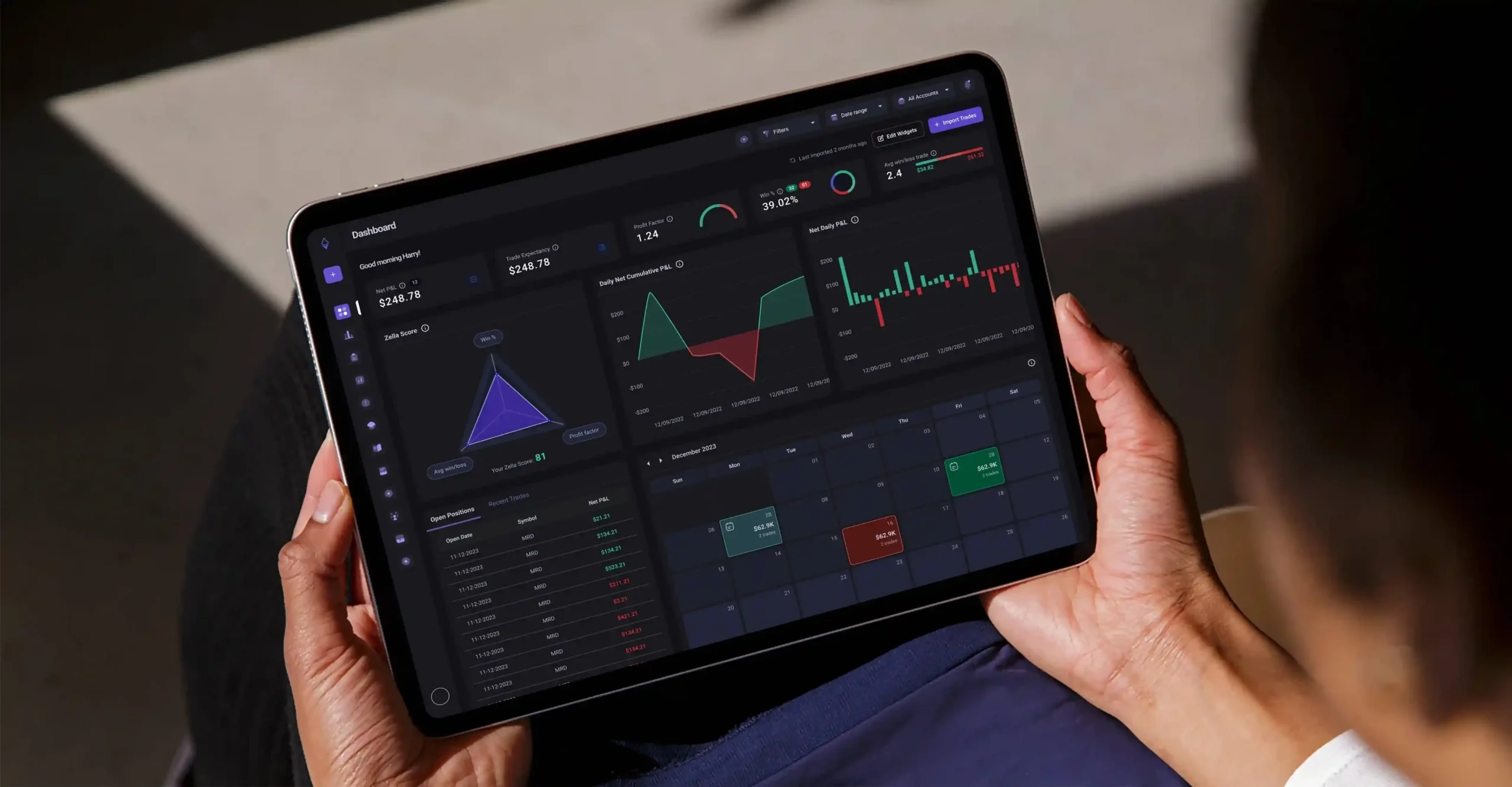
Active traders review past trades and patterns, for example the TradeZella journal, where we redesigned net daily profit and loss (P&L) and win-rate views across web and mobile.
Fraud and compliance teams work queues of flagged items, for example a suspicious-activity screen with case history and escalation.
Finance UX faces 4 specific challenges: KYC friction, irreversible payments, fraud pressure on trust and data density for professional users.
Customer identification rules require 4 data points before an account opens, so forms explain why each field is collected and offer retry paths for failed document scans.
Wires and instant payments are final once sent, so confirmation screens repeat payee, amount and account ending digits and flag first-time payees.
Scammers copy bank screens and call scripts, so designs use consistent verification language and warn before any transfer to a new payee.
Traders and analysts compare many figures at once, so tables use tabular numerals, right-aligned decimals, fixed column order and a +/− sign next to every gain or loss colour.
Our finance design process takes 4–8 weeks (20–40 working days) and runs in 4 steps, with compliance reviewers involved from the first day.
We list required disclosures, KYC data points and the compliance sign-offs each flow needs.
Researchers interview customers and back-office staff, and review complaint logs and dispute reasons.
Designers build onboarding, transfer and dashboard flows with error, pending and declined states, plus disclosure placement.
5–8 users per segment test the prototype with realistic balances, legal reviewers mark up disclosure wording, and developers receive annotated Figma files.
Finance UX designs for regulated money movement and measures error-free completion; general product UX designs for engagement and measures growth.
| Criterion | Finance UX | General product UX |
|---|---|---|
| Users | Customers, traders, underwriters and compliance officers | 1–2 primary personas |
| Constraints and regulation | KYC/AML rules, PCI DSS, Regulation E and SOC 2 buyer reviews | Privacy policy and app store rules |
| Testing | Realistic balances, failed payments and fraud scenarios | Happy-path task tests and A/B tests |
| Accessibility | Web Content Accessibility Guidelines (WCAG) 2.2 AA with screen reader support for statements and charts | WCAG 2.2 AA where contracts require it |
| Success metrics | Onboarding completion, failed-transfer rate and dispute volume | Activation, conversion and retention |
A finance research and design sprint costs $25,000–$60,000 over 4–8 weeks. The price depends on 4 factors: the number of regulated flows, the number of customer segments, dashboard data density and the number of compliance review rounds.
A consumer budgeting app with KYC onboarding and 1 segment sits near $25,000. A lending platform with borrower, broker and underwriter views sits near $60,000. A banking product that needs a shared component library across web and mobile moves to $60,000–$180,000 over 8–16 weeks with our design system services.
5 standards and regulations shape finance UX: PCI DSS, KYC/AML rules, Regulation E, SOC 2 and WCAG 2.2 with the ADA.
Each option below draws on our core UI UX design services, from user research to usability testing, scoped to the users and workflows of your product.
Information architecture, workflows, and UI for complex web applications.
02Dashboards designed around the decisions users make, not every metric at once.
03Analytics, operations, and admin dashboards with clean layouts and readable charts.
04Charts, interactive reports, and visual stories that make complex data clear.
Book a 45-minute UX audit session. We review your product and identify the top three friction points.
Book a UX auditThese answers cover 5 questions banks and fintech teams ask before a design engagement.
Still have a question?
A design lead answers every message within one business day.
Talk to a design leadNo. A design agency stores no cardholder data. We design card entry, masking, audit logs and admin permissions that support the PCI DSS and SOC 2 controls your engineering and security teams own.
Yes. KYC onboarding design covers field order, ID document capture, selfie liveness checks, retry paths and the manual-review state shown when automated identity verification fails.
Yes. TradeZella, a trading journal and analytics platform, is a published case study covering net daily P&L, win-rate dashboards and trade journaling on web and mobile.
Yes. Disclosure wording, fee display and consent screens need legal or compliance sign-off, so review rounds sit inside the sprint and approved copy lands in the final screens.
A finance research and design sprint takes 4–8 weeks, which equals 20–40 working days. A full banking or trading product with a design system takes 8–16 weeks.
Send us your project. A design lead reviews it and schedules a call within one business day. We sign an NDA before the first technical discussion if you prefer.