Key takeaways
- Provider type changes what a UX audit finds: in Nielsen's studies, single evaluators found 20–51% of usability problems and 3–5 usability specialists found 74–87%.
- A senior freelancer fits one platform, 2–3 key flows and an in-house owner for the fixes.
- Choose an agency when the audit spans several platforms or user roles, needs analytics plus a WCAG 2.2 AA check, or decides a redesign budget.
- Use AI tools as a pre-scan to verify, never as findings: Baymard's 2023 test put GPT-4 at 20% accuracy.
- Send six inputs (flows, platforms, roles, analytics access, accessibility target, deadline) to get comparable quotes.
Before you settle the UX audit agency vs freelancer question, weigh one number from user experience (UX) research: in Baymard Institute's 2023 test of 12 webpages, GPT-4 found only 14% of the usability issues that human experts found on the live pages. Provider type changes what an audit finds, not only what it costs. Hire a senior freelancer for one platform with 2–3 flows and an owner for the fixes; hire an agency when the audit spans several platforms or user roles, combines analytics with a Web Content Accessibility Guidelines (WCAG) 2.2 AA check, or will decide a redesign budget. Keep your own team for sweeps between releases, and treat artificial intelligence (AI) tools as a pre-scan.
UX audit agency vs freelancer: what actually changes?
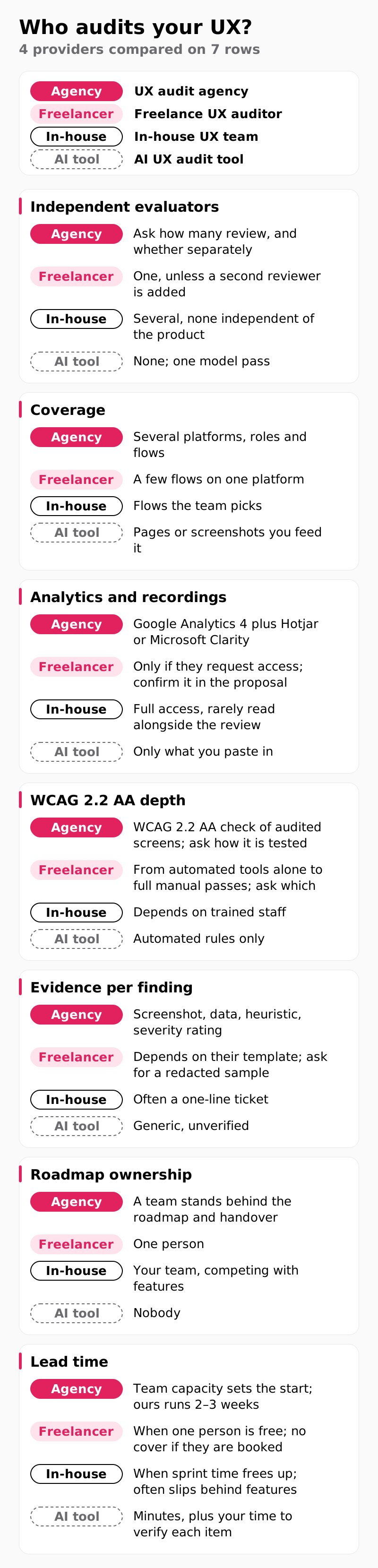
Four things change between an agency, a freelancer, your team and an AI tool: independent evaluators, coverage, data and accessibility depth, and who stands behind the fix roadmap.
A freelance UX audit is one expert's judgment; an agency audit can merge several. Your team knows the product best, which is its weakness, and an AI tool has no stake in the outcome. Our UX audit services sit in the agency column; this post says plainly where the other three are the better buy.
Show as text
| Row | UX audit agency | Freelance UX auditor | In-house UX team | AI UX audit tool |
|---|---|---|---|---|
| Independent evaluators | Ask how many review, and whether separately | One, unless a second reviewer is added | Several, none independent of the product | None; one model pass |
| Coverage | Several platforms, roles and flows | A few flows on one platform | Flows the team picks | Pages or screenshots you feed it |
| Analytics and recordings | Google Analytics 4 plus Hotjar or Microsoft Clarity | Only if they request access; confirm it in the proposal | Full access, rarely read alongside the review | Only what you paste in |
| WCAG 2.2 AA depth | WCAG 2.2 AA check of audited screens; ask how it is tested | From automated tools alone to full manual passes; ask which | Depends on trained staff | Automated rules only |
| Evidence per finding | Screenshot, data, heuristic, severity rating | Depends on their template; ask for a redacted sample | Often a one-line ticket | Generic, unverified |
| Roadmap ownership | A team stands behind the roadmap and handover | One person | Your team, competing with features | Nobody |
| Lead time | Team capacity sets the start; ours runs 2–3 weeks | When one person is free; no cover if they are booked | When sprint time frees up; often slips behind features | Minutes, plus your time to verify each item |
Why do independent evaluators matter more than the logo?
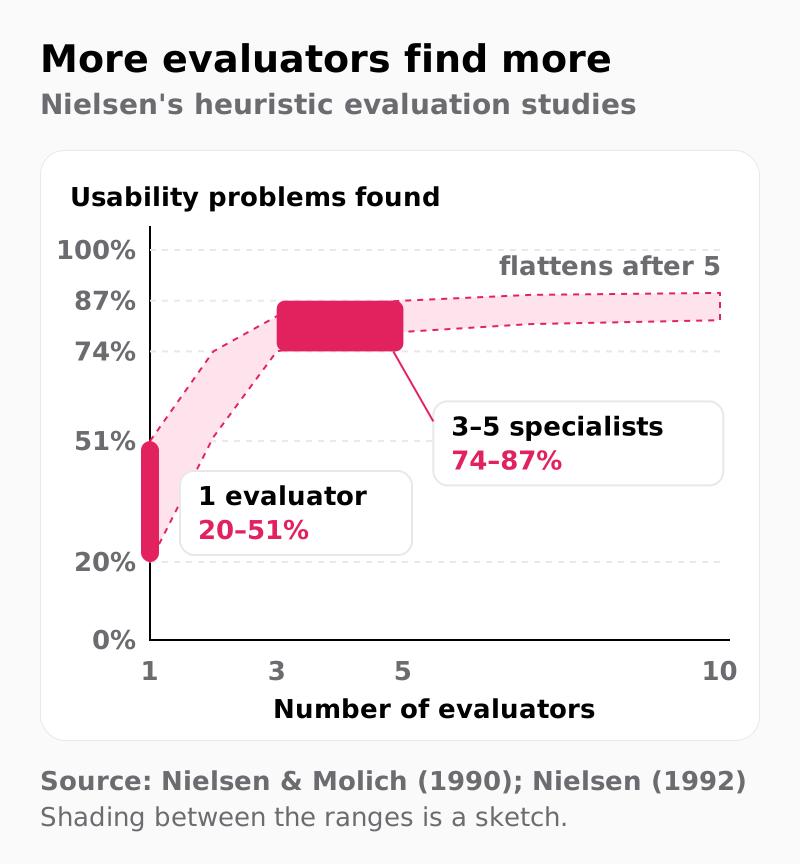
In Jakob Nielsen's heuristic evaluation studies, single evaluators found 20–51% of usability problems and 3–5 usability specialists found 74–87%, so a solo review misses issues by design.
The single-evaluator range comes from Nielsen and Molich (1990) and the 3–5 specialist range from aggregated evaluations in Nielsen (1992), which is why Nielsen Norman Group recommends 3–5 evaluators who review independently before comparing notes. Hertzum and Jacobsen call this the evaluator effect: in the 11 studies they reviewed, the average agreement between any two evaluators who evaluated the same system with the same method ranged from 5% to 65%. A keyboard-first reviewer catches a focus trap in the date picker; a reviewer on a phone catches the Pay button hidden behind the keyboard.
Whoever runs your audit, ask how the findings are merged. In a sound merge, duplicates collapse into one entry, a finding only one reviewer flagged gets a second look against the evidence, and severity is agreed together.
Hiring a UX audit freelancer? Ask whether a second reviewer checks the findings, and who. A named second reviewer narrows the gap; a "no" means you buy one evaluator's share.
When is a freelance UX auditor the right choice?
A senior freelance UX auditor fits a single-platform product with 2–3 key flows, a known problem area and a product manager who turns findings into tickets.
A freelancer is the better buy for:
- A small surface. A marketing site plus a sign-up flow: few enough screens that one expert can walk every state, error messages and mobile breakpoints included.
- One known drop-off. A Google Analytics 4 funnel shows most trials stop at plan selection, and you want that step explained; the question is narrow, so a second reviewer adds little.
- A strong team needing outside eyes. A product manager and designer who ship weekly want a fresh heuristic evaluation; they already own severity and tickets, so they need a reviewer, not a roadmap owner.
Vet the freelancer on the audit, not the portfolio:
- Ask for a redacted UX audit report; a good one shows the four parts from the sample-finding section below in every finding.
- Ask which severity rating scale they use; a good answer is a named numeric scale applied to each finding, not high, medium or low by feel.
- Ask how they test WCAG 2.2 AA: tools plus keyboard and screen-reader passes, or tools alone.
- Ask whether they read analytics and session recordings; a good answer names the tools, such as Google Analytics 4 funnels and Hotjar or Microsoft Clarity recordings, and shows one finding a recording explained.
The limits are structural: one set of eyes, availability gaps, and no team to absorb scope growth when 3 flows become 8. If scope stays small, add a second reviewer and you have a sound buy.
Can your in-house team audit its own product?
Yes, for routine heuristic sweeps between releases, but not as the audit that decides a redesign, because the people who built the flows stop seeing their friction.
Call it familiarity blindness. Your team knows the export hides under the three-dot menu and the date field wants MM/DD/YYYY; users hit the wall your team routes around.
An in-house UX audit works when you design for that bias:
- Borrow reviewers from a squad that did not build the flow, because they do not know the builders' workarounds.
- Score with a fixed sheet built on Jakob Nielsen's 10 usability heuristics, so scores stay comparable from one sweep to the next.
- Timebox to one flow per session, with a written severity rating per finding, because reviewers tire and the last screens of a long session get the thinnest look.
Internal audits stall when nobody gets sprint time or owners argue findings away. What holds up: an outside UX audit yearly or before a redesign, with internal sweeps in between.
What can an AI UX audit tool catch and miss?
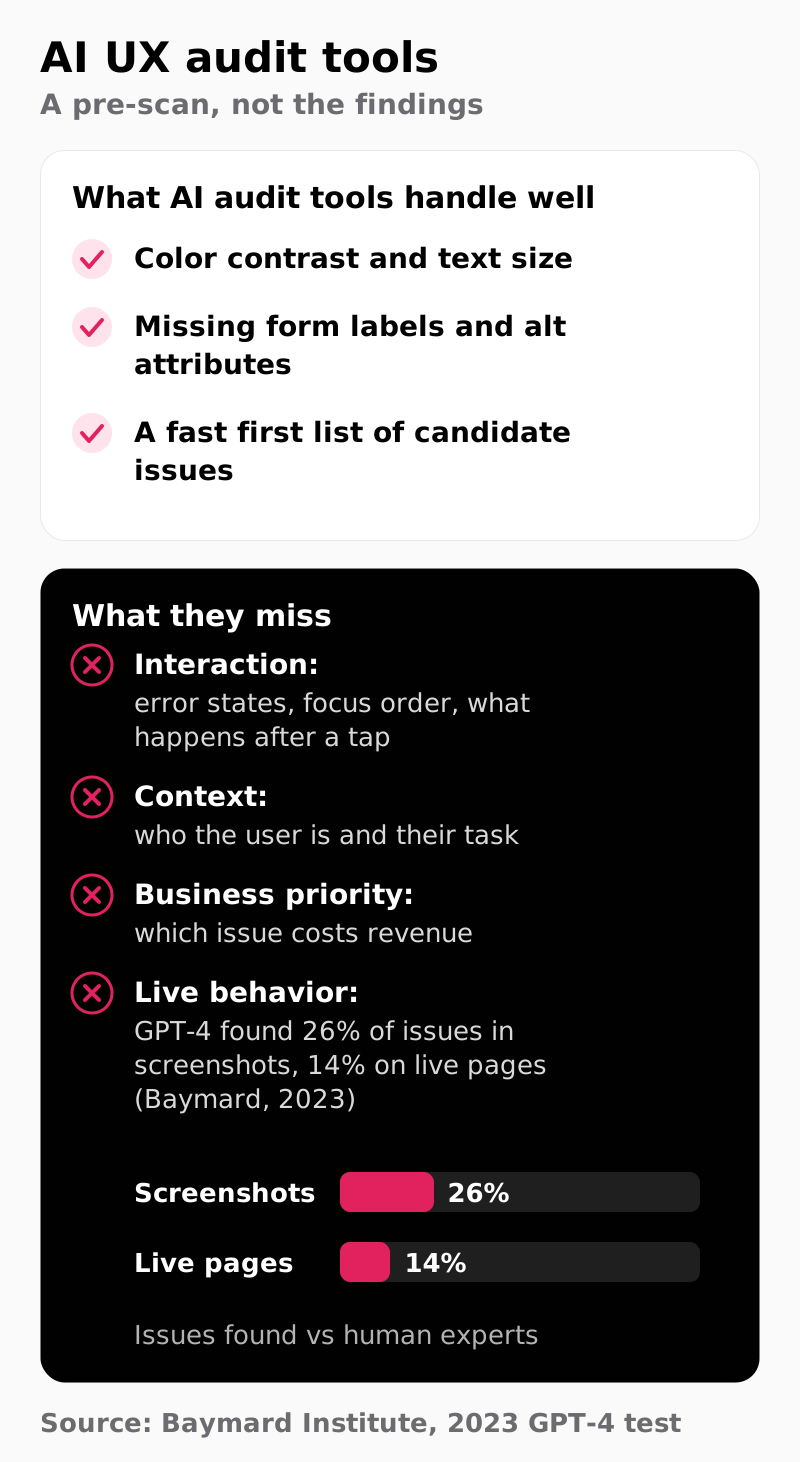
AI UX audit tools handle fast rule-based checks such as contrast and missing labels, and miss interaction, context and business priorities; Baymard measured GPT-4 at 20% accuracy.
In Baymard's 2023 test on 12 webpages, scored against its own UX benchmarkers, GPT-4 reached 20% accuracy with an 80% false-positive rate. Per page, it found 2.9 correct issues on average, missed 18.5 issues on the live page and made 1.3 suggestions likely to harm the experience. It found 26% of the issues visible in a screenshot but only 14% on the live page, because a screenshot cannot show error handling or what happens after a tap.
That test measured GPT-4 in 2023, not today's models. Baymard's later article on AI heuristic evaluations reports 50–75% accuracy in public tests of generative AI tools and premade prompts, and 95% for UX-Ray, its own ecommerce tool, against human expert auditors. That 95% is Baymard's own claim for its own product.
The buyer rule: ask any AI UX audit vendor for its published accuracy rate against human experts and how it was measured, the same demand Nielsen Norman Group's conversation with Baymard's cofounders makes.
Show as text
What AI audit tools handle well
- Color contrast and text size
- Missing form labels and alt attributes
- A fast first list of candidate issues
What they miss
- Interaction: error states, focus order, what happens after a tap
- Context: who the user is and their task
- Business priority: which issue costs revenue
- Live behavior: GPT-4 found 26% of issues in screenshots, 14% on live pages (Baymard, 2023)
Use AI as a pre-scan, alongside automated accessibility checkers such as axe DevTools, WAVE or Lighthouse. None of them can judge whether alt text or link text makes sense in context; manual keyboard and screen-reader testing covers that.
When does a UX audit need an agency team?
Choose a UX audit agency when the audit spans several platforms or user roles, must combine analytics, recordings and a WCAG 2.2 AA check, or will decide a redesign budget.
Each trigger maps to a capability one reviewer struggles to supply:
- Business-to-business (B2B) software as a service (SaaS) with admin and end-user roles. Evaluators cover each role, then merge into one list, because SaaS UI UX design breaks when one role's flow is skipped.
- An ecommerce store with app and web checkout. E-commerce UI UX design spans iOS, Android and web conventions; one audit covers all three, so a fix to the web checkout does not break the app flow.
- A contract-driven accessibility deadline. A WCAG 2.2 AA check of the audited screens inside the audit, not a second project.
- A redesign that needs approval. Each finding carries the screenshot, data and heuristic a finance lead accepts.
- An inherited product. A new product owner gets every key flow swept in weeks.
Outside these cases, an agency is not automatically better. If two or more lines above describe your product, that is the scope our audit is built for: 2–3 weeks, a heuristic evaluation, an analytics review, a session-recording review and an accessibility check, ending with a prioritized fix roadmap ranked by impact and effort.
How do you judge audit quality before you pay?
Ask each provider for one sample finding and check it for four parts: evidence, the heuristic or criterion broken, a severity rating, and a fix with an effort estimate.
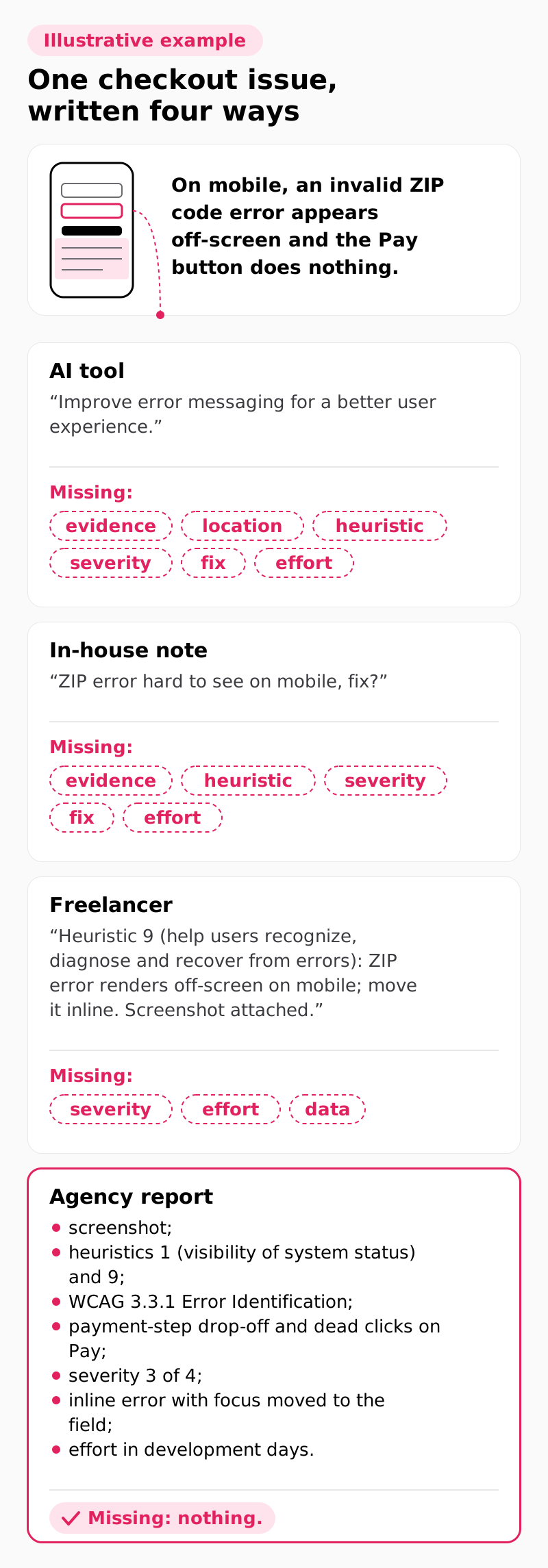
Take one illustrative checkout issue, not a client finding: on mobile, an invalid ZIP code error appears off-screen and the Pay button does nothing. Four provider types write it like this.
Show as text
- AI tool: "Improve error messaging for a better user experience." Missing: evidence, location, heuristic, severity, fix, effort.
- In-house note: "ZIP error hard to see on mobile, fix?" Missing: evidence, heuristic, severity, fix, effort.
- Freelancer: "Heuristic 9 (help users recognize, diagnose and recover from errors): ZIP error renders off-screen on mobile; move it inline. Screenshot attached." Missing: severity, effort, data.
- Agency report: screenshot; heuristics 1 (visibility of system status) and 9; WCAG 3.3.1 Error Identification; payment-step drop-off and dead clicks on Pay; severity 3 of 4; inline error with focus moved to the field; effort in development days. Missing: nothing.
The fourth version costs more because someone opened the analytics and agreed on severity, which makes it schedulable. Ask every shortlisted provider for one redacted finding before you sign.
How do you combine AI, your team and an expert audit?
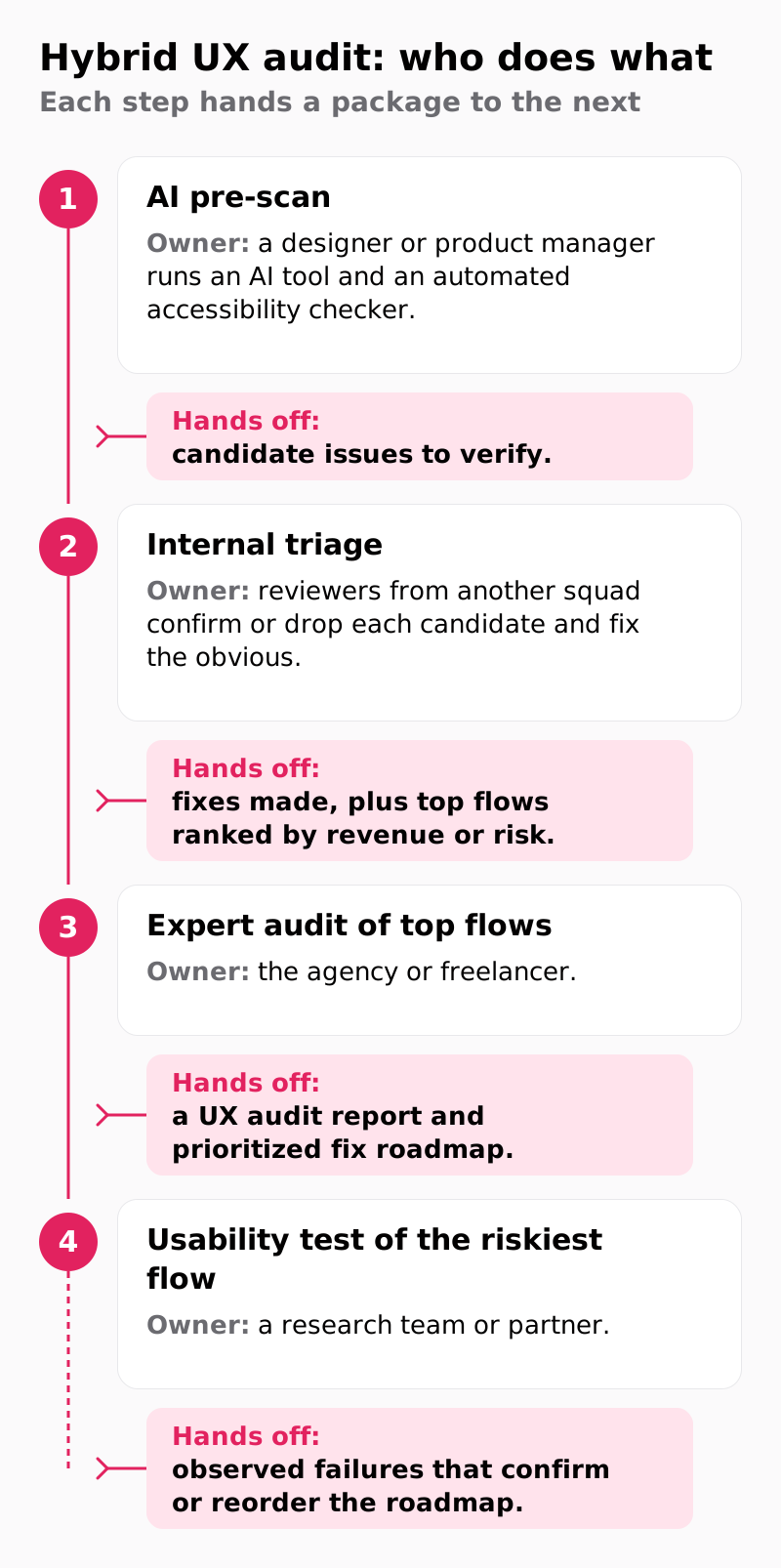
Run an AI pre-scan and an internal sweep first, fix the obvious items, then spend the paid audit on revenue or risk flows and test the riskiest with users.
Show as text
- AI pre-scan. Owner: a designer or product manager runs an AI tool and an automated accessibility checker. Hands off: candidate issues to verify.
- Internal triage. Owner: reviewers from another squad confirm or drop each candidate and fix the obvious. Hands off: fixes made, plus top flows ranked by revenue or risk.
- Expert audit of top flows. Owner: the agency or freelancer. Hands off: a UX audit report and prioritized fix roadmap.
- Usability test of the riskiest flow. Owner: a research team or partner. Hands off: observed failures that confirm or reorder the roadmap.
You avoid paying twice because the auditor does not bill hours for contrast fixes you already shipped. Never hand AI output to the auditor as findings; hand it over as a list to verify, or it anchors the review. For step 4, our usability testing services run the sessions if you lack a research team.
What should you send before asking for a quote?
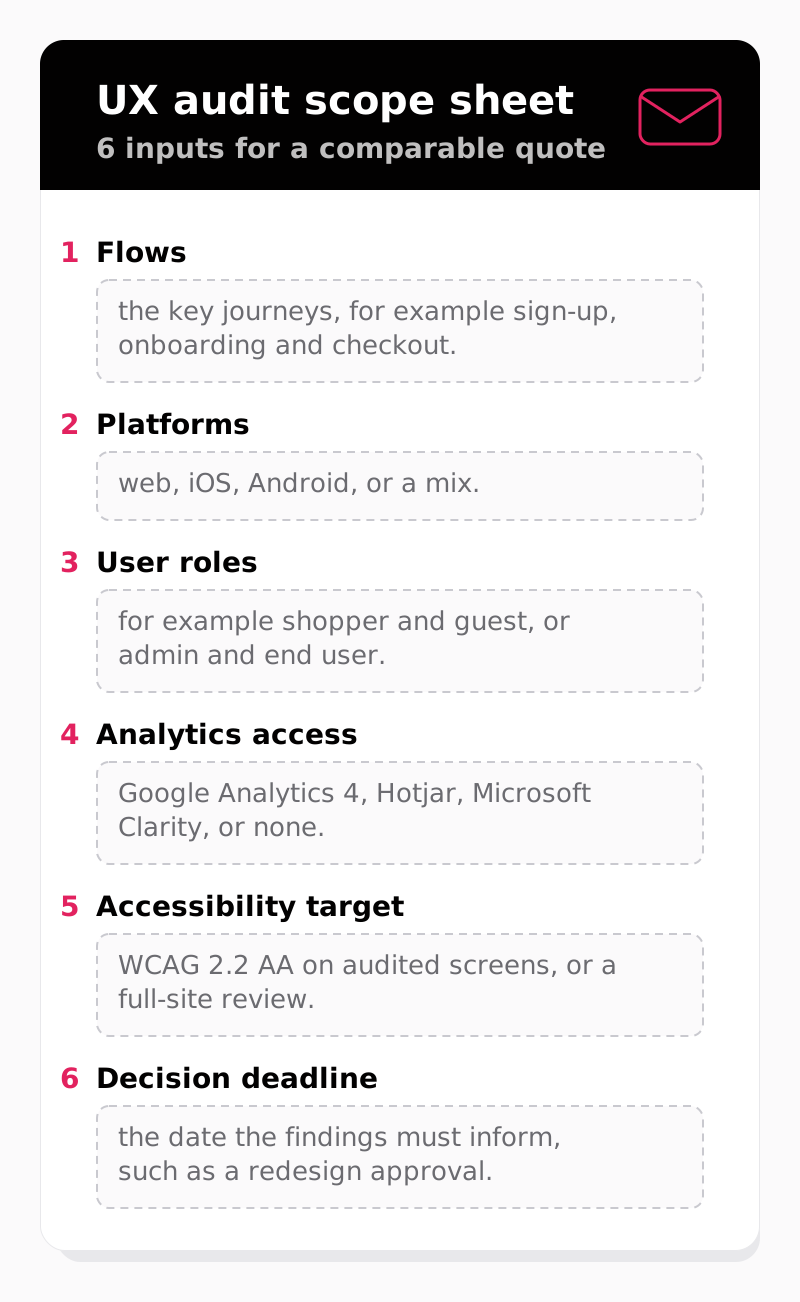
Send six inputs: flows, platforms, user roles, analytics access, accessibility target and decision deadline; with them, quotes from an agency, freelancer or tool become comparable.
Without them, the cheaper quote is often just a smaller audit.
Show as text
- Flows: the key journeys, for example sign-up, onboarding and checkout.
- Platforms: web, iOS, Android, or a mix.
- User roles: for example shopper and guest, or admin and end user.
- Analytics access: Google Analytics 4, Hotjar, Microsoft Clarity, or none.
- Accessibility target: WCAG 2.2 AA on audited screens, or a full-site review.
- Decision deadline: the date the findings must inform, such as a redesign approval.
For reference, our audits run $5,000–$15,000 over 2–3 weeks; the hub explains the UX audit pricing and scope factors that move a quote within that range. The sheet works with any provider: give the same six answers to each freelancer and agency on your shortlist, and their quotes line up row by row. When our column of the matrix matches your scope, share the sheet with our audit team; every project begins with a free consultation and a fixed-scope proposal.
FAQs
Is a freelance UX audit good enough for a startup?
Yes, when the product runs on one platform with 2–3 key flows and someone in-house owns the fixes. For riskier flows such as payments, add a second reviewer or a short usability test.
Can ChatGPT do a UX audit?
No, not as a replacement for expert review. In Baymard's 2023 test, GPT-4 was right about 20% of the time and found only 14% of live-page issues. Use it for a pre-scan and verify every item.
How many people should review a product in a UX audit?
Three to five, each reviewing independently: that is Nielsen Norman Group's recommendation for a heuristic evaluation. Ask any provider how many people review your product, and whether they review separately before the findings are merged.
Should the company that audits your UX also redesign it?
Yes, it can, provided the roadmap is ranked by impact and effort before any redesign is quoted. Buy the audit as a standalone, fixed-scope deliverable you own, so any team can build from the roadmap.
Can an in-house team run the accessibility part of a UX audit?
Yes, if someone is trained to test WCAG 2.2 AA with keyboard-only navigation and screen readers such as NonVisual Desktop Access (NVDA) or VoiceOver, alongside automated checkers. Automated tools cannot judge many criteria, such as whether alt text is meaningful. Treat this as a design check, not legal advice.