
Key takeaways
- One completed moderated session carries five cost lines: incentive, recruiting, a no-show share, researcher time and tools.
- In User Interviews' data, about three in four moderated consumer sessions paid $60–$100 per hour, and $100 was the most common rate.
- Published recruiting figures are dated: about $7–$10 per general consumer on a panel (an older MeasuringU article) and a $107 agency average (NN/g, 2003), so get current quotes; your own list costs staff hours.
- MeasuringU's newer data puts the average no-show rate for moderated studies at about 8%, so book floaters and spread their cost across completed sessions.
- Compare quotes per round, not per head, and check each quote for the analysis, design fixes and retest round that a per-head price leaves out.
Usability testing cost per participant is rarely the number on a panel's price page: the incentive is one line on a five-line bill. Picture the receipt for one completed 60-minute moderated session with a general consumer. The panel prints one or two of its lines, while the moderator's hours, the analysis and the empty slot a no-show leaves behind stay off it. This guide prices the lines that have published figures from named sources, shows how to price the rest at your own rates, then moves the unit from one head to one test round, which is how our usability testing services are scoped.
What is the full usability testing cost per participant?
The full usability testing cost per participant is the sum of five lines: incentive, recruiting, a no-show buffer, researcher time and tools.
A panel or recruiter quote prices the first two lines at most. Moderation, analysis and tooling arrive as hours on your own calendar, so they slip out of budgets; the receipt below prints researcher time as two lines, moderation and analysis.
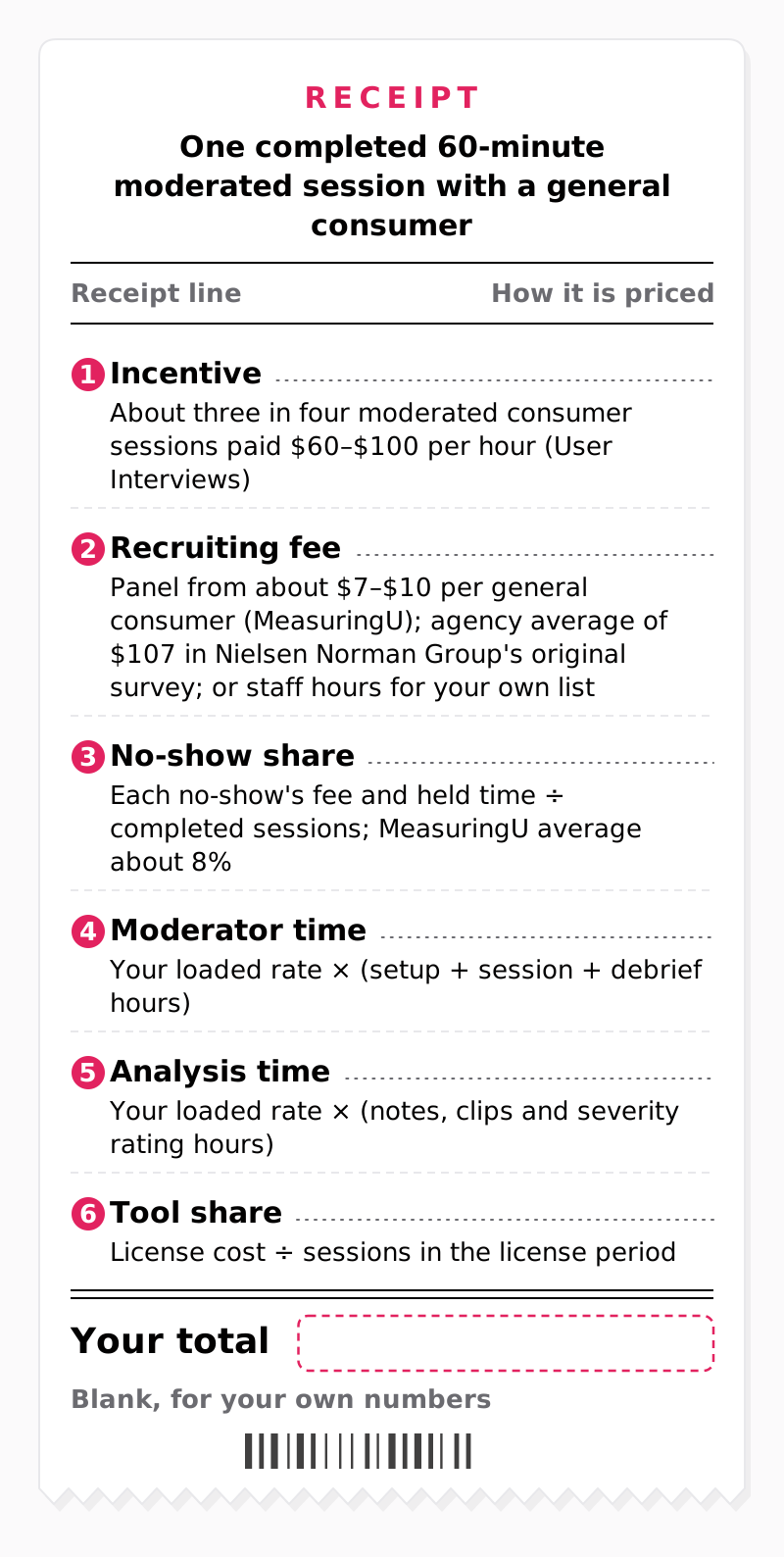
| Receipt line | How it is priced |
|---|---|
| Incentive | About three in four moderated consumer sessions paid $60–$100 per hour (User Interviews) |
| Recruiting fee | Panel from about $7–$10 per general consumer (MeasuringU); agency average of $107 in Nielsen Norman Group's original survey; or staff hours for your own list |
| No-show share | Each no-show's fee and held time ÷ completed sessions; MeasuringU average about 8% |
| Moderator time | Your loaded rate × (setup + session + debrief hours) |
| Analysis time | Your loaded rate × (notes, clips and severity rating hours) |
| Tool share | License cost ÷ sessions in the license period |
| Your total | Blank, for your own numbers |
The receipt covers formative, task-based usability testing in the US. Summative validation of regulated medical devices under Food and Drug Administration (FDA) human factors guidance follows its own sample-size rules and sits outside this guide. Copy the receipt into a sheet now; the next four sections fill its lines.
How much should you pay usability test participants?
Set the incentive by audience and session length: start from what moderated consumer studies pay per hour, then scale up for specialists and down for short unmoderated tasks.
User Interviews' guide to research incentives reports that about three in four completed moderated consumer sessions on its platform, all in the US and Canada, paid $60–$100 per hour, and $100 was the most common rate, at 25% of sessions.
A usability test participant incentive for a short unmoderated task is smaller. GitLab's published research incentive policy pays its own participants $20 for an unmoderated test of up to 10 minutes and $40 for 25–30 minutes, against $120 for a 60-minute interview.
Incentive size also touches attendance: in User Interviews' study data, higher incentives slightly reduced no-show rates, as the no-show section below shows.
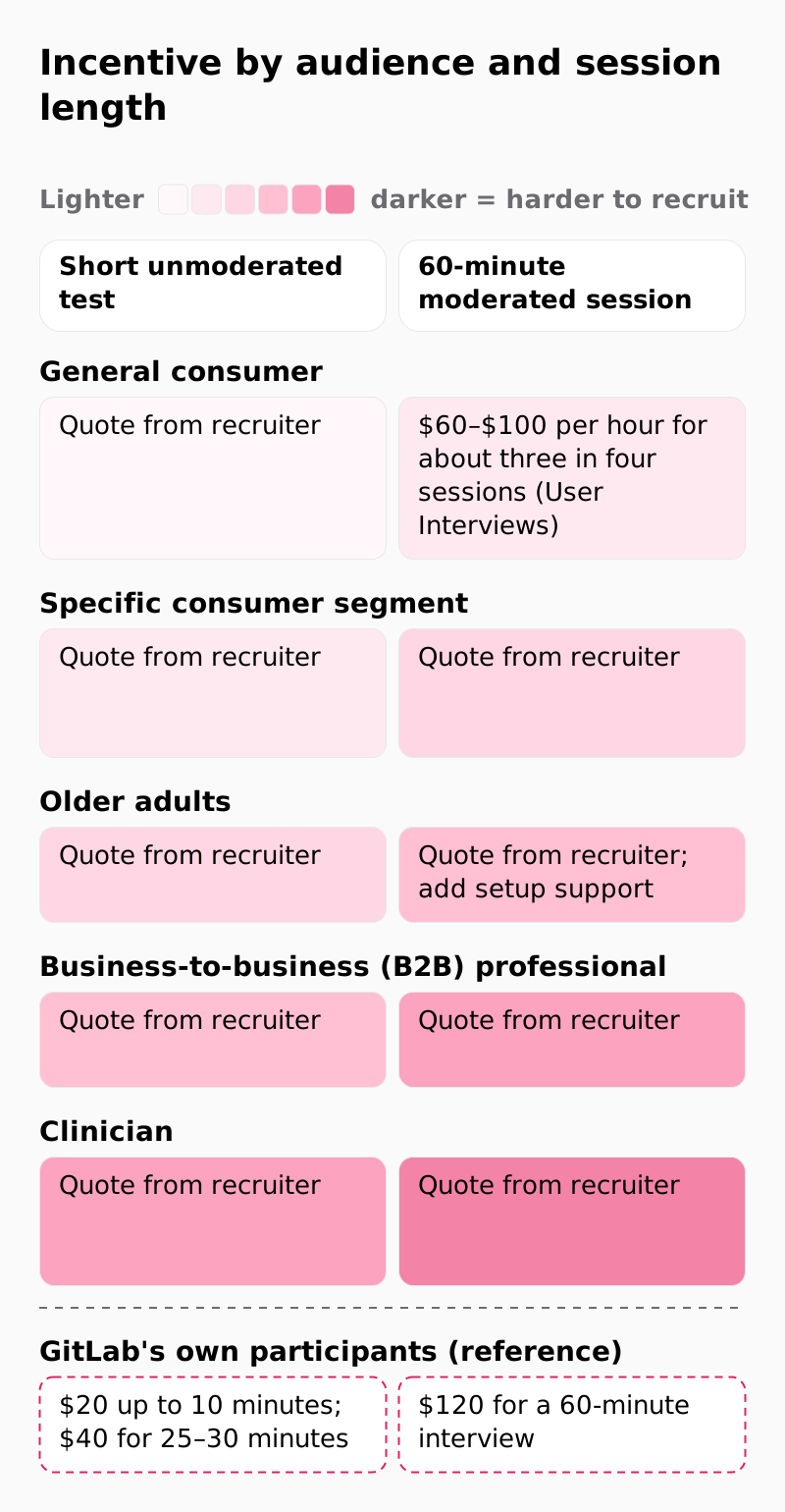
| Audience | Short unmoderated test | 60-minute moderated session |
|---|---|---|
| General consumer | Quote from recruiter | $60–$100 per hour for about three in four sessions (User Interviews) |
| Specific consumer segment | Quote from recruiter | Quote from recruiter |
| Older adults | Quote from recruiter | Quote from recruiter; add setup support |
| Business-to-business (B2B) professional | Quote from recruiter | Quote from recruiter |
| Clinician | Quote from recruiter | Quote from recruiter |
| GitLab's own participants (reference) | $20 up to 10 minutes; $40 for 25–30 minutes | $120 for a 60-minute interview |
Set the incentive per user group before you write the screener, because the amount goes into the invitation.
What does recruiting add to each participant?
Recruiting adds either a per-head fee or staff hours, and the amount climbs with how rare and how busy your participants are.
Usability testing recruitment cost depends on the channel:
- Research panel. MeasuringU's breakdown of usability test costs, an older article, lists panels from about $7–$10 per participant for a general consumer profile and $40–$100 for specialized profiles such as financial advisors. Ask whether that price includes the incentive, so you do not budget it twice.
- Recruiting agency. Nielsen Norman Group (NN/g)'s article on recruiting test participants reported an average agency recruiting fee of $107 per participant in its survey of 201 usability professionals, published in January 2003, so treat it as a floor and get current quotes. Ask whether the fee is per recruited head or per completed session, because no-shows change the answer.
- Your own customer list. There is no fee, but your staff spend hours finding, screening and scheduling people: 1.15 staff hours per participant recruited, on average, in the same NN/g survey.
Every channel needs a screener: the short questionnaire that filters applicants on behavior, devices and role. In our engagements, participant recruitment is a 5–8 day step before the first round of sessions.
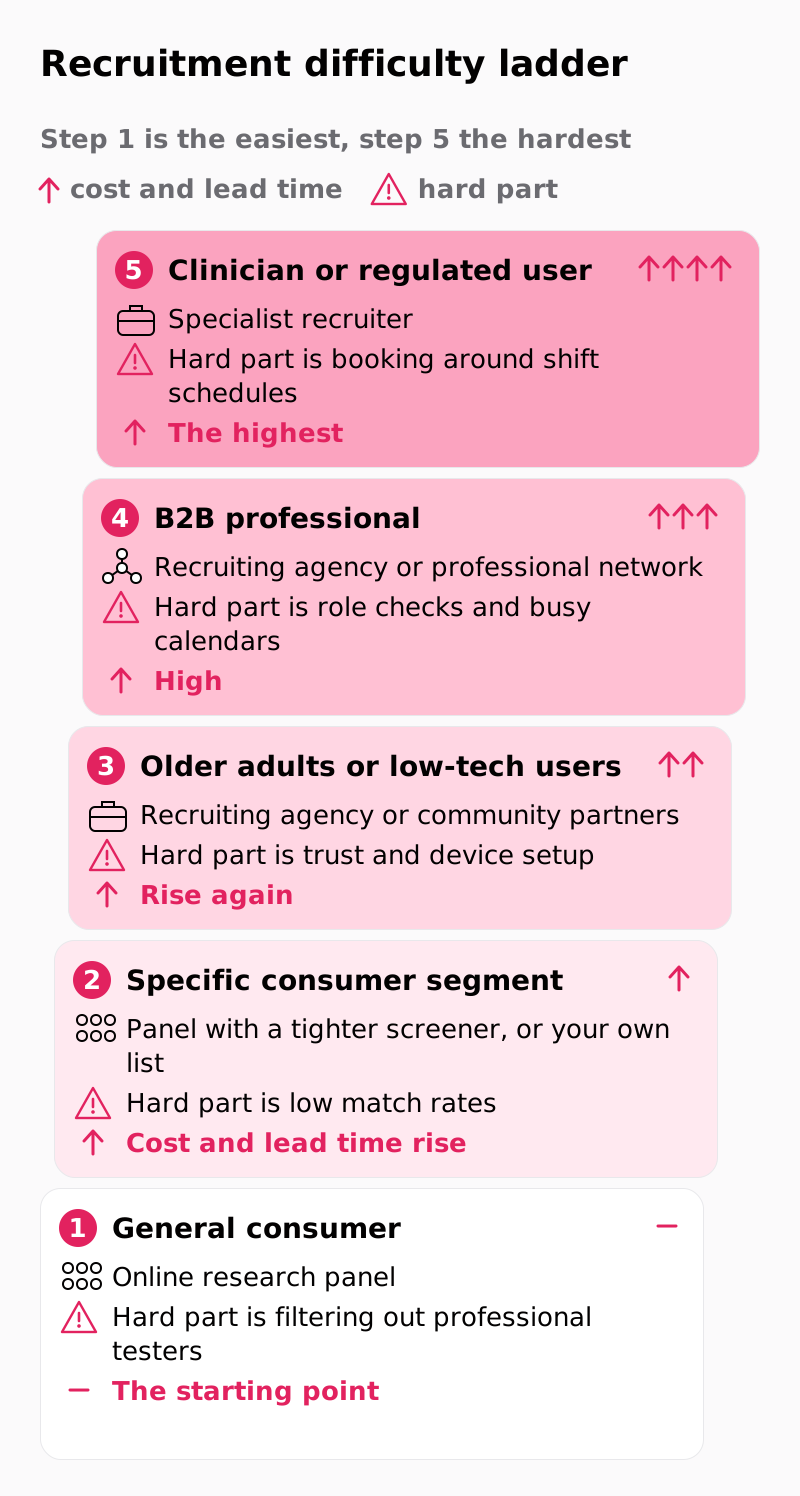
- General consumer: online research panel; hard part is filtering out professional testers; the starting point for cost and lead time.
- Specific consumer segment: panel with a tighter screener, or your own list; hard part is low match rates; cost and lead time rise.
- Older adults or low-tech users: recruiting agency or community partners; hard part is trust and device setup; rise again.
- B2B professional: recruiting agency or professional network; hard part is role checks and busy calendars; high.
- Clinician or regulated user: specialist recruiter; hard part is booking around shift schedules; the highest.
NN/g's guidance on usability testing with older adults recommends a screener that asks about technology experience and the devices people own, and stresses building trust in the session. When the team behind a 2021 study in JMIR mHealth and uHealth ("Going Remote") moved such testing to remote sessions, it mailed care packages to participants, and some needed a smartphone or home internet supplied: cost lines no panel quote shows.
Business-to-business (B2B) professionals are screened on role, company size and the tools they use at work, and their calendars are full, so offer shorter or after-hours slots. For panel pricing, one published reference is the older MeasuringU article's $40–$100 for specialized profiles such as financial advisors, so ask each recruiter for a current quote at your profile. Clinicians are recruited around shift schedules, which spreads sessions across more calendar days.
Place each user group on the ladder before you request quotes, and ask every recruiter for the lead time at that step.
Why do no-shows raise the cost of each session?
No-shows raise the cost of each session because you pay to recruit people who never join and to hold their slots, and those costs spread across the completed sessions.
MeasuringU's analysis of no-show rates blends User Interviews data from about 14,000 studies (9% no-show) with its own operations data (5%) into an average of about 8%, below the 10–20% it suggested in 2018. The same data shows higher incentives slightly reduce no-shows, and MeasuringU's over-recruiting advice treats no-shows as only one of the ways a booked session is lost.
So the real usability testing cost per participant includes the people who never show up:
Cost per completed session (illustrative formula) = (recruited heads × recruiting fee + incentives paid + moderator hours held × your rate) ÷ completed sessions
Over-recruiting is the fix: book one or two floaters per user group, so a missed slot does not cost you a session, and settle what each one is paid (see the FAQs).
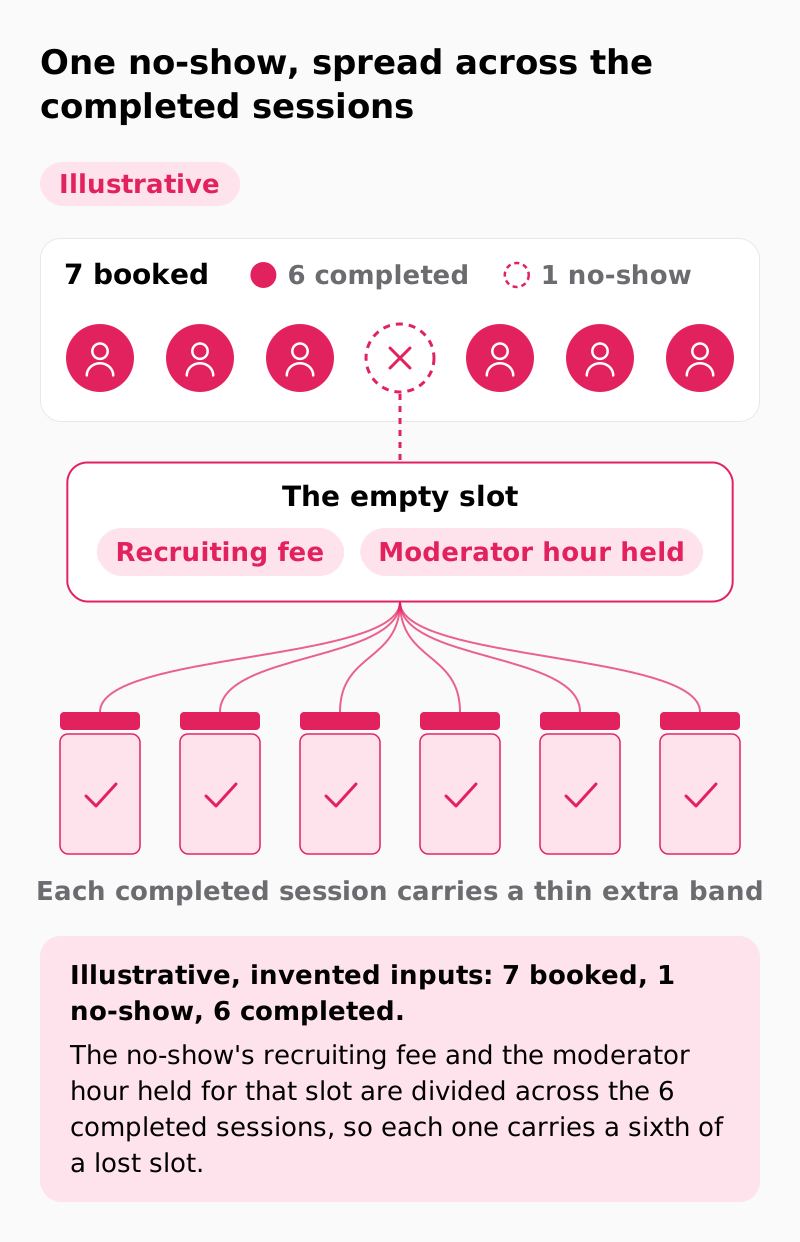
Illustrative, invented inputs: 7 booked, 1 no-show, 6 completed. The no-show's recruiting fee and the moderator hour held for that slot are divided across the 6 completed sessions, so each one carries a sixth of a lost slot.
Ask your recruiter for its no-show rate, size the booked heads from it, and ask every provider which side of the bill a no-show lands on.
How many researcher hours sit behind each session?
More hours than the session itself, because a moderated hour needs setup before it and a debrief, notes, clips and severity ratings after it.
In our moderated usability testing, a researcher runs 45–60 minute think-aloud sessions over Lookback or Zoom, for example on a clickable Figma prototype, and every participant answers the System Usability Scale (SUS) and the Single Ease Question (SEQ). In the usability test report, every finding gets a video clip, a severity rating and a recommended design fix. Put your own hours against each segment below, then multiply by your loaded rate.
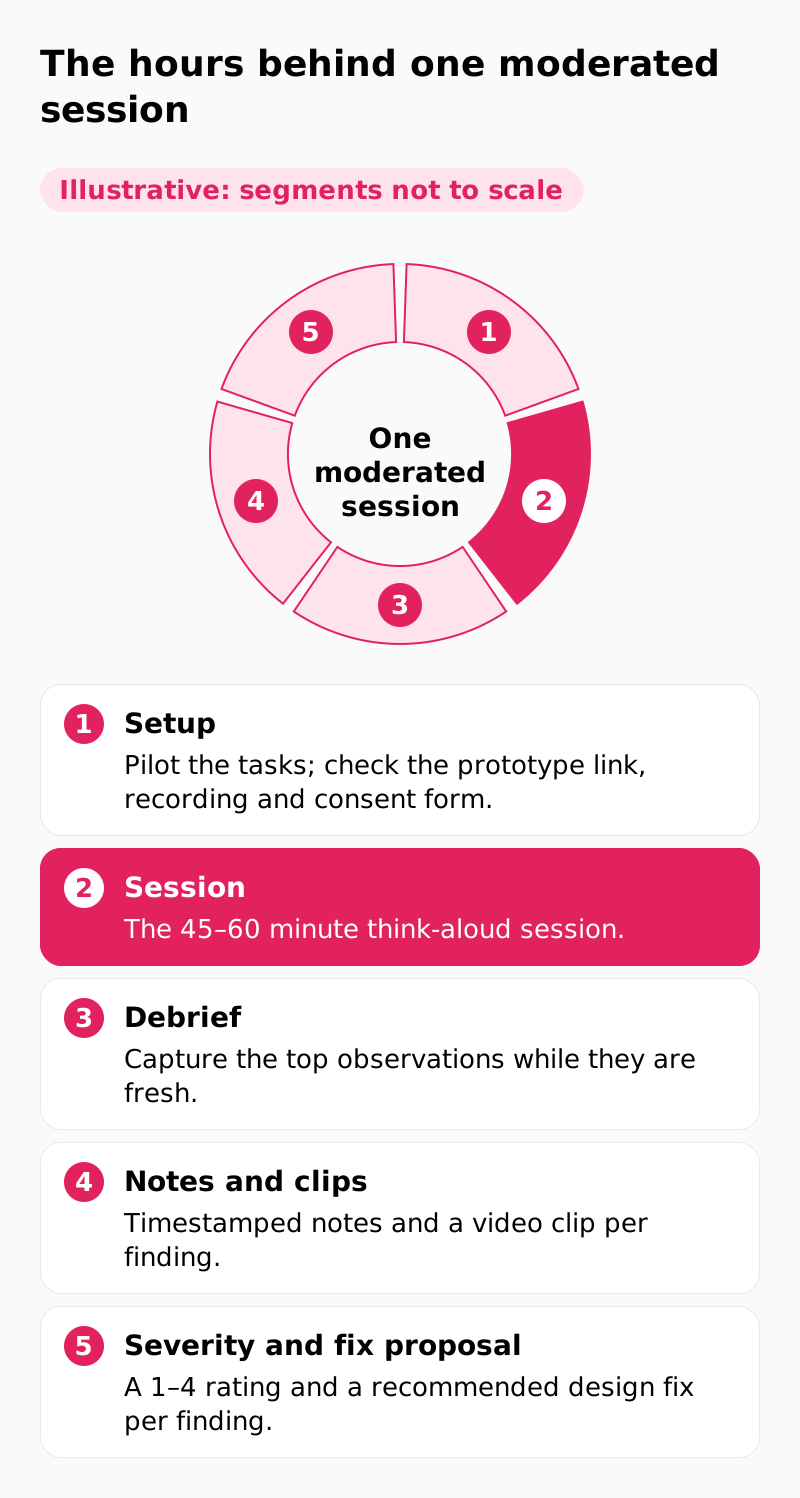
- Setup: pilot the tasks; check the prototype link, recording and consent form.
- Session: the 45–60 minute think-aloud session.
- Debrief: capture the top observations while they are fresh.
- Notes and clips: timestamped notes and a video clip per finding.
- Severity and fix proposal: a 1–4 rating and a recommended design fix per finding.
Unmoderated usability testing removes the moderator's hour, not the analysis: each unmoderated study in Maze or UserTesting needs more participants, every recording still needs watching, and nobody can ask a follow-up question when someone stalls.
Tools add the last cost line: a video tool such as Lookback or Zoom for moderated sessions, Maze or UserTesting for unmoderated studies, and Figma for the prototype. Price each one as a share of its plan: the cost of the seats the round uses for the plan period, divided by the sessions you run in that period. A team that runs one round a year carries the whole annual license on that round. Add the per-session share to line 6 of the receipt.
If nobody on your side can give a round these researcher hours, that is the part of the bill our usability testing engagement takes off your calendar.
Why is cost per participant the wrong unit for quotes?
Cost per participant is the wrong unit because it leaves out the moderator's hours and the work that turns findings into a better design, so compare quotes per round.
The cost per usability test round is the number to compare: two quotes for "5 users" can describe a set of unmoderated clips or a moderated round with analysis and design fixes. Once you know your usability testing cost per participant, multiply it by the participants in one round rather than by a whole study; in our process, round 2 uses new participants and measures the fixed design against the round 1 task success rate.
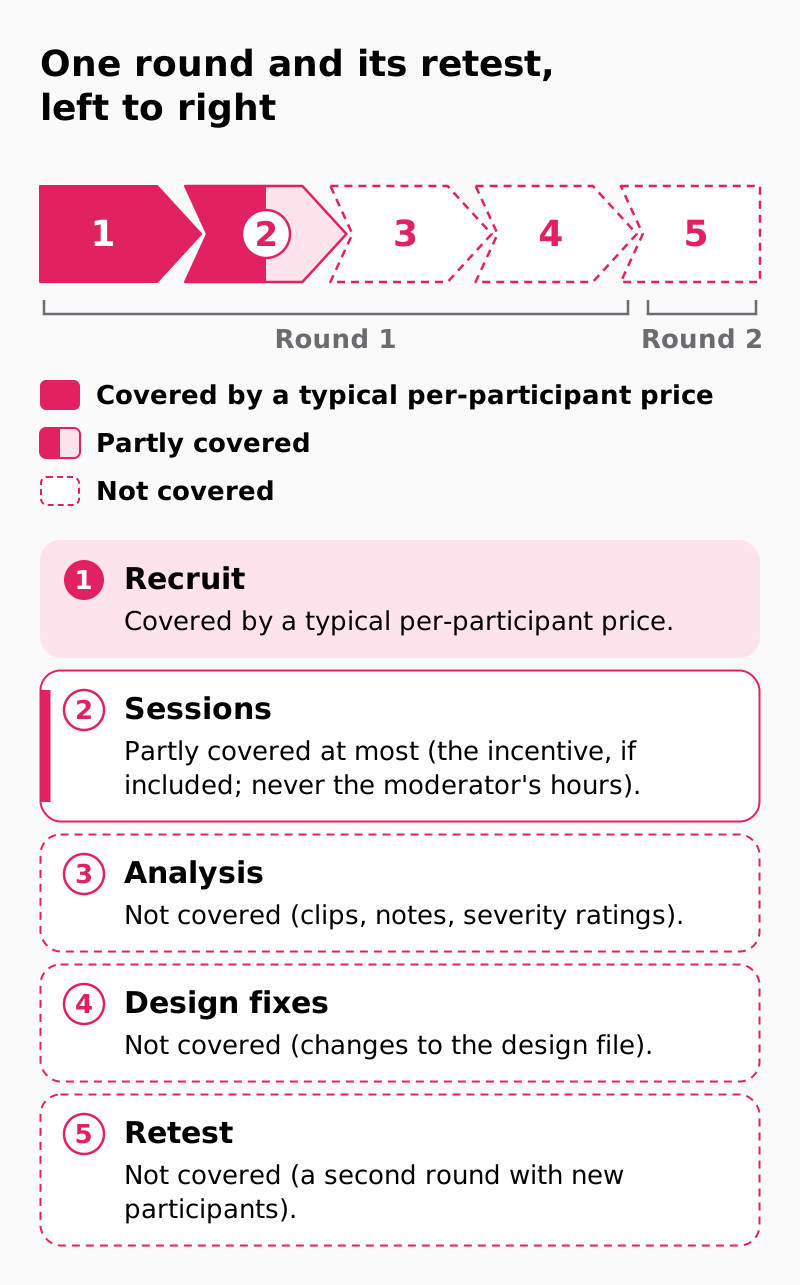
- Recruit: covered by a typical per-participant price.
- Sessions: partly covered at most (the incentive, if included; never the moderator's hours).
- Analysis: not covered (clips, notes, severity ratings).
- Design fixes: not covered (changes to the design file).
- Retest: not covered (a second round with new participants).
Four questions put any two quotes on the same footing:
- How many participants per round and per user group? Ask for both numbers, so two user groups are not quoted as one.
- Moderated, unmoderated or both? The quote should name the tool and session length, because a 15-minute recording and a 60-minute moderated session are different products.
- Who analyzes and writes the report? Look for a report where each finding has a clip and a severity rating.
- Are design fixes and a retest included? The answer should say who changes the design file between rounds and whether round 2 recruits new people.
Ask all four in writing, then set each provider's answers in one column before you look at any total.
What does a round cost when you run it yourselves?
Add the incentive, recruiting and researcher time for each completed session, then the no-show buffer and tool cost, then the design hours spent fixing what the round found.
Use this bill for one round and one user group, plus the retest round that checks its fixes, and copy it for each extra group. Every row uses your rates, not a market average.
| Line | How to price it | Your number |
|---|---|---|
| Incentives | Incentive × completed sessions, plus any no-show or late-cancellation payments | ______ |
| Recruiting | Fee × recruited heads, or staff hours × your rate for your own list | ______ |
| No-show buffer | Floaters booked × any standby payment (their recruiting fee is already in the Recruiting row) | ______ |
| Moderation | (Setup + session + debrief hours) × loaded rate × booked sessions, including slots held for no-shows | ______ |
| Analysis | (Notes, clips and severity hours) × loaded rate × completed sessions | ______ |
| Tools | License cost ÷ rounds run in the license period | ______ |
| Design fixes | Designer hours to fix the high-severity findings × rate | ______ |
| Retest | The rows above again for round 2, with new participants | ______ |
The last two rows are the ones a per-head panel price leaves out, and they decide whether the round changed anything. If the design-fix row has no owner, settle who fixes the design before you book a session.
What is included in our usability testing price?
Our usability testing engagement costs $25,000–$60,000 over 4–8 weeks and runs 2–3 rounds with design fixes between them.
Four factors set where a proposal lands in that range; see what moves the price of a usability testing engagement for all four. Our usability testing services include six deliverables: a test plan, participant recruitment, moderated sessions, unmoderated studies, SUS and SEQ scoring, and a report with a clip, severity rating and fix for every finding. Between rounds, designers fix the highest-severity issues in Figma.
Specialist audiences are not new to us: in the TradeZella trading dashboard redesign, the visuals "follow industry best practices for financial dashboards and were tested with traders before launch," in the case study's words.
Your usability testing cost per participant is where the bill starts; the round is the whole of it. Send us your audience and number of rounds with each user group placed on the ladder above, since recruitment difficulty is one of the four price factors. Every project begins with a free consultation and a fixed-scope proposal.
FAQs
What happens to the incentive when a participant does not show up?
It follows the policy you write before recruiting, because no published norm settles it. Decide three cases: a no-show, a late cancellation inside an agreed window, and a floater on standby. Put each answer into the invitation and consent text, so nobody argues about payment afterward.
Is unmoderated testing cheaper per participant?
Yes, per head, because no moderator sits in the session and shorter tasks carry smaller incentives. Our unmoderated Maze and UserTesting studies run 20–50 participants, though, and every recording still needs review, so price the round rather than the head.
Does testing with older adults or clinicians cost more?
Yes. Older adults need a screener built around their device habits and, in remote sessions, sometimes mailed care packages, as in the JMIR study above. Clinicians are booked around shift schedules, so ask each recruiter for a quote and lead time per group rather than applying a vendor's premium.
Can we recruit our own customers to cut the cost?
Yes, and it removes the recruiting fee, but the cost moves into staff time: respondents to NN/g's survey, published in January 2003, spent an average of 1.15 staff hours per participant recruited. Your list also leans toward loyal users, so add outsiders when a round tests first-time tasks, and still offer an incentive or a credit.
How many participants should we budget for per round?
We screen and schedule 5–8 participants per user group for the first round, so a product with two distinct groups is budgeted per group; add one or two floaters per group on top. If you cannot yet name your user groups, a round of discovery-focused user experience (UX) research defines them before the first test is booked.