

Key takeaways
- A UX strategy roadmap lists user problems as prioritized themes, not features with release dates.
- Collect the evidence first: 6–10 stakeholder interviews, analytics funnels, past research, support feedback and a UX maturity score.
- Score each theme by reach, impact, confidence and effort (RICE), and set confidence by the evidence level: tested or measured 100%, mixed 80%, opinion only 50%.
- Give every theme one success metric with a baseline and target, one theme owner and a now, next or later horizon.
- Agree on owners in a 2-hour roadmap workshop, check progress monthly and re-score at a quarterly review.
In user experience (UX) planning, a UX strategy roadmap fails the moment one of its rows reads like this: "Next quarter: redesign the settings page." Nobody can say who struggles or what proves success. Rewritten as a theme, the same row reads: "Workspace admins cannot invite their team without a support ticket; support tags show it weekly; success is invites finished alone; owner: the design lead."
Leadership funds the second row because it names a user, a problem, evidence, a metric and an owner. To build a roadmap of such rows, collect the evidence, score each theme with RICE (reach, impact, confidence and effort), pick a metric from the Google HEART framework (happiness, engagement, adoption, retention and task success), place it on a horizon and review the whole plan quarterly; a one-page example follows.
What is a UX strategy roadmap, and how does it differ from a product roadmap?
A UX strategy roadmap is a plan that turns a UX strategy into prioritized themes: user problems, each with evidence, a score, a metric, an owner and a horizon.
Teams still asking "what is UX strategy?" can start with one sentence: the user outcome the business will fund this year. The UX strategy document is the half page that holds it: goal, primary users, the core user problem and success metrics. The prioritized roadmap is the main output of our UX consulting services.
Nielsen Norman Group's Sarah Gibbons describes a user experience roadmap as a living, strategic plan that aligns a UX team on upcoming work and the problems to solve, built on user-focused themes rather than features.
A product roadmap lists features and release dates; a UX roadmap lists the user problems the product team will solve and how it will know. A fix roadmap from a UX audit ranks interface issues, and a product backlog orders the tasks engineering pulls into each sprint. The table compares the four plans by row, time span, owner and measure.
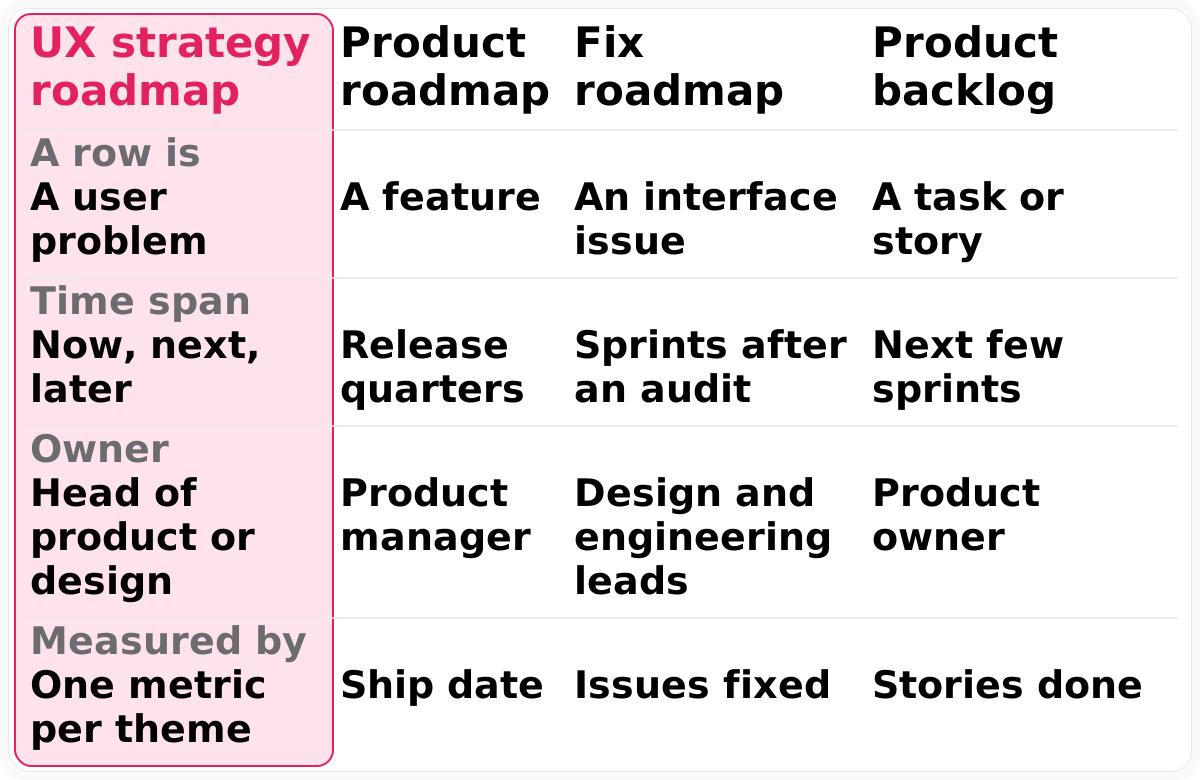
| UX strategy roadmap | Product roadmap | Fix roadmap | Product backlog | |
|---|---|---|---|---|
| A row is | A user problem | A feature | An interface issue | A task or story |
| Time span | Now, next, later | Release quarters | Sprints after an audit | Next few sprints |
| Owner | Head of product or design | Product manager | Design and engineering leads | Product owner |
| Measured by | One metric per theme | Ship date | Issues fixed | Stories done |
If your plan reads like the product roadmap column, rebuild it with the next two sections.
What evidence does a UX strategy roadmap need first?
A UX strategy roadmap needs five inputs before the product team writes a single theme: stakeholder interviews, analytics funnels, past research, support feedback and a UX maturity score.
First fix the roadmap scope: the products, teams and time span the plan covers. Stakeholder interviews come next; we set the interview count at 6–10 leads across product, engineering, sales and support. In Google Analytics 4 (GA4), a funnel exploration shows where users drop out between steps and sets the activation rate baseline. The ledger tags each input with an evidence level (research, analytics or opinion), which later becomes the confidence score in RICE.
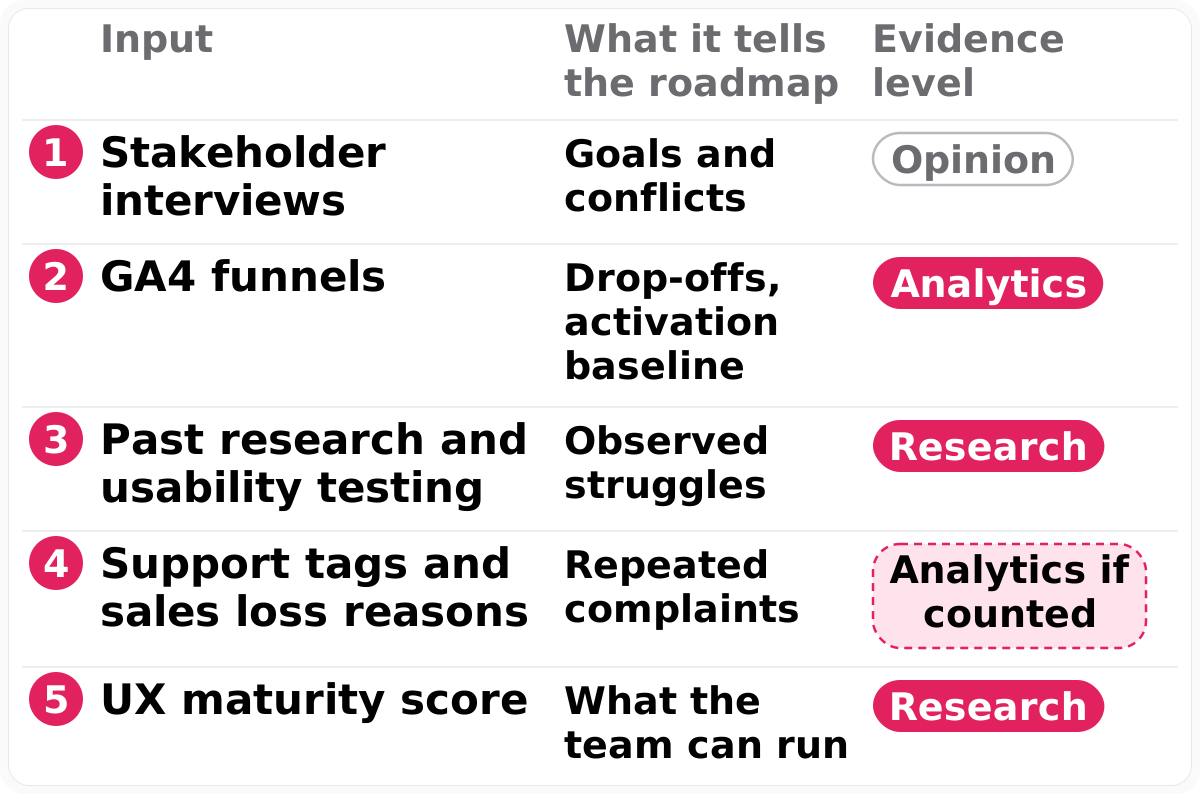
- Stakeholder interviews: goals and conflicts. Opinion.
- GA4 funnels: drop-offs, activation baseline. Analytics.
- Past research and usability testing: observed struggles. Research.
- Support tags and sales loss reasons: repeated complaints. Analytics if counted.
- UX maturity score: what the team can run. Research.
UX maturity measures a company's desire and ability to deliver user-centered design, judged on its strategy, culture, process and outcomes. The Nielsen Norman Group UX maturity model has six stages: Absent, Limited, Emergent, Structured, Integrated and User-driven. A company at Limited or Emergent needs research and process themes before redesign themes, because it lacks the evidence to score them.
Leaders who disagree are hard to interview from inside, since every interviewer is also a stakeholder; on our engagements, these interviews run in the first 2–3 days. In the TradeZella trading journal revamp, we ran discovery sessions with the stakeholders to understand their long-term vision, then rebuilt the user flows. List the inputs you already hold and mark the missing ones.
How do you turn user problems into roadmap themes?
On a UX roadmap, the prioritized themes are user problems, not features: group the evidence into five to eight themes, each naming a person and an unmet need.
Sort the evidence by person and struggle, not by screen; clusters that recur across sources become roadmap themes. Write each user problem in Jobs to be Done form, which describes the progress a person is trying to make: "When I add a new hire, I want to invite them in a minute, so they start work the same day."
Our running example is an invented business-to-business (B2B) software as a service (SaaS) invoicing product. The rewrite turns four of its feature rows into themes, each with its evidence.
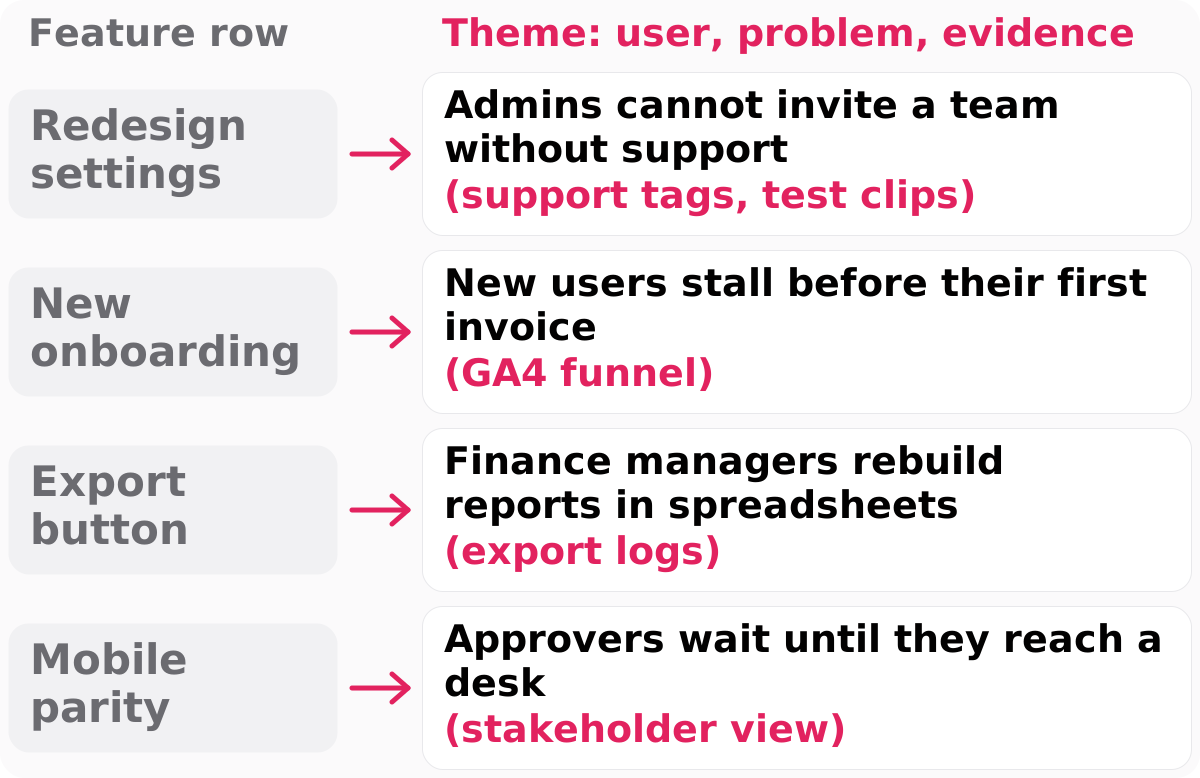
| Feature row | Theme: user, problem, evidence |
|---|---|
| Redesign settings | Admins cannot invite a team without support (support tags, test clips) |
| New onboarding | New users stall before their first invoice (GA4 funnel) |
| Export button | Finance managers rebuild reports in spreadsheets (export logs) |
| Mobile parity | Approvers wait until they reach a desk (stakeholder view) |
Design debt, the inconsistent patterns that pile up when features outpace shared components, earns a theme only when it causes a user problem. Here, mismatched invoice tables slow task success for users finding past invoices, so that becomes the fifth theme. Five to eight themes is our working rule, a number leadership can hold in one meeting. Rewrite your own feature rows before you score anything.
How do you score a UX strategy roadmap with RICE?
Score each of the prioritized themes on a UX roadmap with RICE: reach times impact times confidence, divided by effort, with confidence set by the evidence level.
RICE prioritization comes from Intercom, where Sean McBride defined the RICE scoring scales: reach as people affected per period, impact per user from 3 (massive) to 0.25 (minimal), and confidence as 100%, 80% or 50%. He set the effort estimate in person-months; for UX themes we count reach as users per quarter and effort in person-weeks of design and engineering.
We tie confidence to the evidence ledger: usability testing or analytics earns 100%, mixed evidence such as a few support mentions with no test earns 80%, and stakeholder opinion alone earns 50%. That mapping is our practice, not Intercom's. The highest RICE score goes first unless a dependency blocks it, as the card shows for the five example themes.
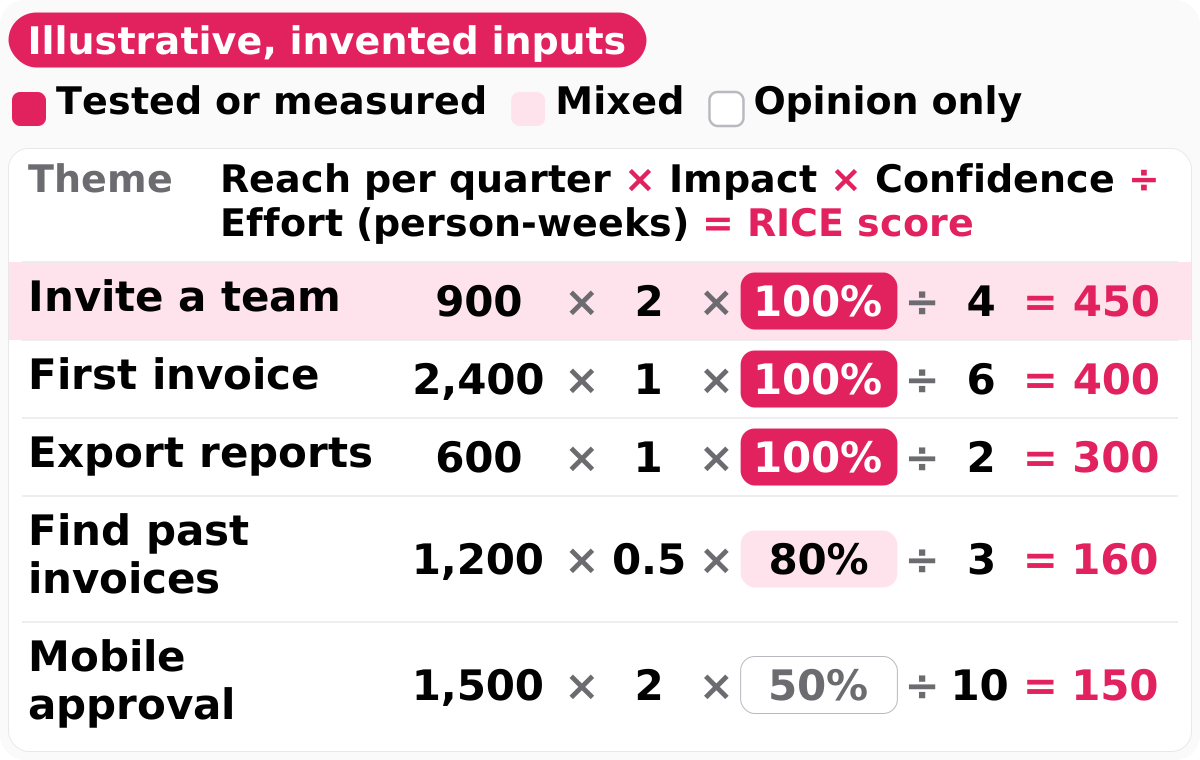
Illustrative, invented inputs:
| Theme | Reach per quarter | Impact | Confidence | Effort (person-weeks) | RICE score |
|---|---|---|---|---|---|
| Invite a team | 900 | 2 | 100% | 4 | 450 |
| First invoice | 2,400 | 1 | 100% | 6 | 400 |
| Export reports | 600 | 1 | 100% | 2 | 300 |
| Find past invoices | 1,200 | 0.5 | 80% | 3 | 160 |
| Mobile approval | 1,500 | 2 | 50% | 10 | 150 |
Mobile approval has the largest reach times impact on the card, yet at 50% confidence and 10 person-weeks it ranks last. A must-have sort or a value-versus-effort grid is faster, but neither gives the product team one shared number.
Effort agreed by engineering is what in-house roadmaps usually skip. Our maturity scoring and strategy step turns findings into RICE-scored initiatives in 2–4 days. Score your top five themes with engineering in the room.
Which success metric proves each theme worked?
Each of the prioritized themes on a UX roadmap gets one success metric from the Google HEART framework, with a baseline and target set before work starts.
The Google HEART framework comes from a 2010 paper by Google's Kerry Rodden, Hilary Hutchinson and Xin Fu, presented at the Conference on Human Factors in Computing Systems (CHI); it names five categories of user-centered metrics. Happiness is attitude, such as a survey score.
Engagement is how often, how intensely or how deeply people use the product, such as invoices sent per user per week. Adoption is new users of a product or feature, such as activation rate, the share of new users who reach the first key action. Retention is who comes back, and task success covers efficiency, effectiveness and errors, such as the share of admins finishing an invite without help.
The paper's Goals-Signals-Metrics process picks the number: state the theme's goal, name the user behavior or attitude that would show success, then turn that signal into a metric you track in GA4 or a survey. The grid applies it to three example themes.
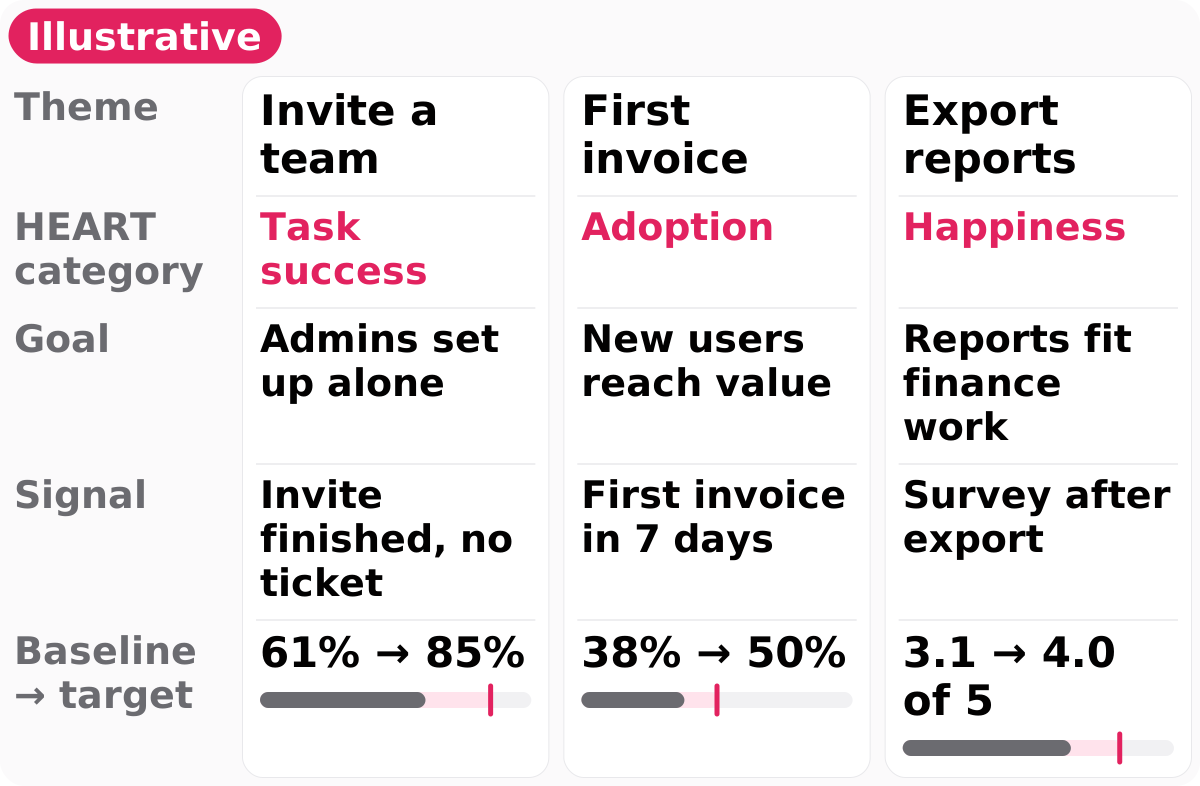
Illustrative:
| Theme | HEART category | Goal | Signal | Baseline → target |
|---|---|---|---|---|
| Invite a team | Task success | Admins set up alone | Invite finished, no ticket | 61% → 85% |
| First invoice | Adoption | New users reach value | First invoice in 7 days | 38% → 50% |
| Export reports | Happiness | Reports fit finance work | Survey after export | 3.1 → 4.0 of 5 |
Each theme metric then becomes a key result the product team reports under its objectives and key results (OKRs). Write the baseline from the last full quarter of data before a theme enters now.
How do you place themes on now, next and later horizons?
A UX roadmap puts a theme in now only with high confidence, a named owner and product team capacity this quarter; next waits on capacity, later on research.
Nielsen Norman Group splits roadmap time into now, next and future; we call the last column later and set each roadmap horizon in quarters. Three rules place themes on a now, next, later board:
- Now (this quarter): 100% confidence from evidence, a theme owner, a baseline and effort that fits capacity, because a theme missing one of them stalls mid-quarter.
- Next (the following quarter): scored themes waiting on capacity or a dependency, plus research tasks that lift a low score, so the queue is ready.
- Later (two or more quarters out): themes at 50% confidence (opinion only), because their first task is research, not design.
A later theme does not wait idle: its usability testing round or interview study sits in next, and once confidence rises, the theme is re-scored. Beyond now, keep time horizons in quarters, not dates. Sort your scored list into the three columns before the roadmap workshop.
Who owns the roadmap, and what does the workshop decide?
One roadmap owner, usually the head of product or design, keeps the UX roadmap; each of the prioritized themes has one theme owner, agreed on in a 2-hour roadmap workshop.
The roadmap owner keeps the document current and runs the reviews; a theme owner is one named person who answers for a theme's metric. Write down three decision rights:
- Add a theme: anyone, with evidence attached, because an opinion-only idea enters at 50% confidence.
- Move a theme between horizons: the roadmap owner, at a review, so priorities do not shift in hallway conversations.
- Retire a theme: both owners together, when the metric hits target or new evidence removes the problem.
The roadmap workshop is a working session with stakeholders, not a UX strategy training course. On our engagements, the roadmap is presented in a 2-hour workshop where owners and dates are agreed on; a FigJam board or one slide is enough. A five-block agenda:
- Evidence recap: the ledger and the top user problems.
- Scores: the RICE table, with engineering's effort estimate.
- Objections: each leader challenges one score with evidence.
- Owners and horizons: one theme owner and a now, next or later slot per theme.
- The next review date, set before anyone leaves.
In the Mass Media Co. discovery workshop, we brought the client's stakeholders and users together to align the product revamp strategy with the business goals, covering product definition, information architecture and user flows. That was a product revamp, not a roadmap engagement, but the order carries over: goals first, screens later. Send the scored table a day ahead so objections arrive with evidence.
UX strategy roadmap example: one page, five themes
This UX strategy roadmap example fits on one page: a UX strategy statement on top, then five prioritized themes across now, next and later, each with score, metric and owner.
The one-page plan below is a UX strategy example built for the invented B2B SaaS invoicing product, so every number is illustrative. Its top band is the UX strategy document:
Goal: more new accounts send their first invoice without help this year. Users and problem: admins and finance managers at small firms who need support to get set up. Success measures: activation rate and invite task success.
The product team has 10 person-weeks this quarter, enough for the invite (4) and first-invoice (6) themes, so export waits despite its 100% confidence. The board shows each theme's horizon, score, metric and owner.
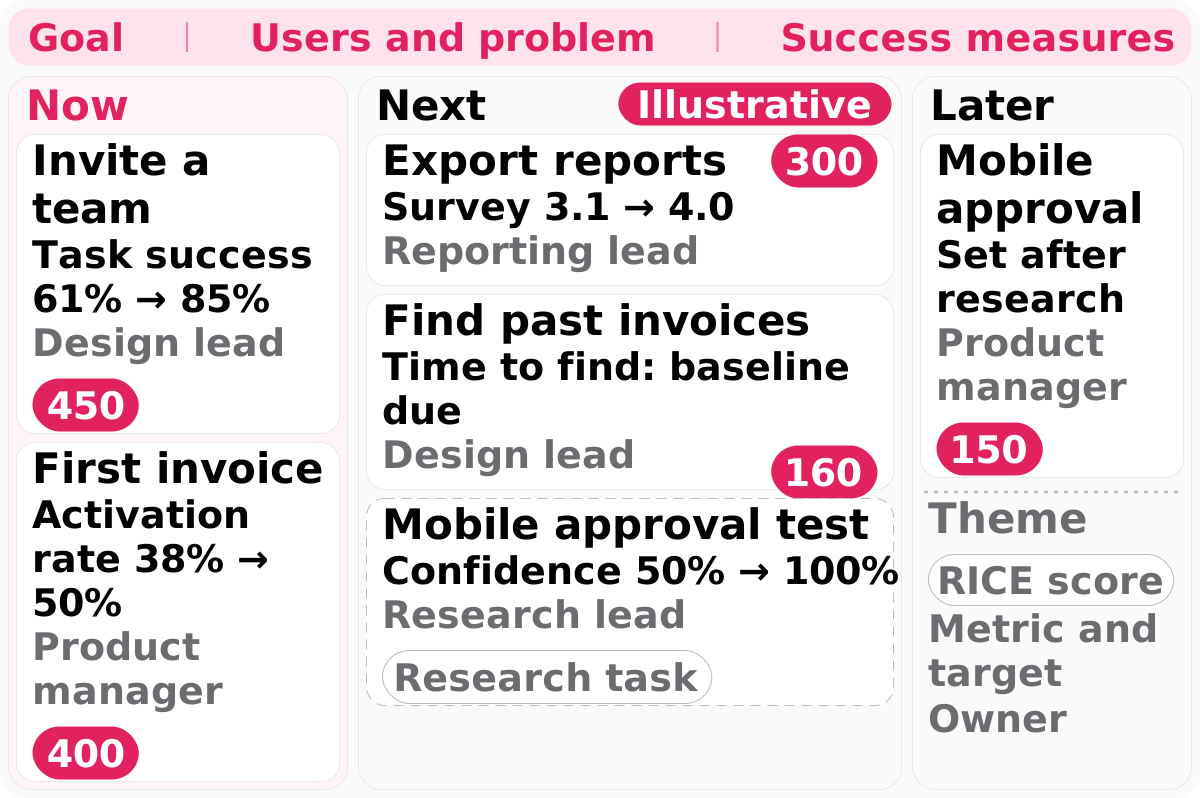
Illustrative:
| Theme | Horizon | RICE score | Metric and target | Owner |
|---|---|---|---|---|
| Invite a team | Now | 450 | Task success 61% → 85% | Design lead |
| First invoice | Now | 400 | Activation rate 38% → 50% | Product manager |
| Export reports | Next | 300 | Survey 3.1 → 4.0 | Reporting lead |
| Find past invoices | Next | 160 | Time to find: baseline due | Design lead |
| Mobile approval test | Next | Research task | Confidence 50% → 100% | Research lead |
| Mobile approval | Later | 150 | Set after research | Product manager |
Copy two habits. The mobile research task sits in next, so a 50% theme earns its way up with evidence instead of argument. Every theme in now carries a baseline, so the quarterly review can say whether it worked. Write your own top band before you fill the lanes.
When do you review a UX strategy roadmap or get help?
Review the UX strategy roadmap with the product team every quarter, check it monthly, and get outside help when leaders disagree on the prioritized themes.
The review cadence has two parts:
- Monthly check: 30 minutes (our practice) on the themes in now and anything blocked, so problems surface before the quarter ends.
- Quarterly review: re-score themes with new evidence, move them between horizons, retire themes that hit target and re-check the UX maturity stage. In ongoing advisory, quarterly roadmap reviews develop a company's UX maturity one stage at a time on the Nielsen Norman Group model.
Six mistakes undo a UX design roadmap:
- Features instead of problems, because a feature row cannot be measured or challenged.
- No baseline, so nobody can tell whether a theme worked.
- Every theme in now, which spreads capacity thin and finishes nothing.
- Scores set by the loudest stakeholder, because confidence then reflects rank, not evidence.
- No theme owner, so the metric belongs to no one.
- A roadmap never revisited, because scores go stale as new evidence arrives.
Outside help earns its fee when leaders disagree on priorities, nobody has time to collect evidence or the backlog has no shared scoring method. Our engagement delivers the interviews, the RICE and HEART work and the roadmap workshop at an engagement price of $5,000–$15,000 and an engagement duration of 2–3 weeks; our breakdown of what a UX strategy engagement costs shows the four factors that move the price. Ongoing advisory adds weekly sessions and quarterly roadmap reviews, and interface design work is quoted separately.
Before you book anything, run the intro's test on your own plan: count the rows that name a user, a problem, evidence, a metric and an owner. Every project begins with a free consultation and a fixed-scope proposal, so send us your current roadmap or backlog with that count; in the consultation we point out which rows are still features and what evidence is missing.
FAQs
What should a UX roadmap include?
A UX roadmap includes a UX strategy statement on top, then themes written as user problems. Each theme carries its evidence level, RICE score, one success metric with a baseline and target, a theme owner and a roadmap horizon, plus the next review date.
Who should create the UX roadmap?
The head of product or design creates it and owns it as the roadmap owner. Designers, product managers, researchers and engineers contribute evidence and effort estimates, and leadership agrees on owners and horizons in the roadmap workshop.
How long does it take to build a UX strategy roadmap?
Our engagement takes 10–15 working days from the first stakeholder interview to the roadmap workshop. A team that already holds interviews, funnel data and research findings can draft one faster, because the product and process review is the longest step.
Is a UX roadmap the same as a UX research roadmap?
No. A UX research roadmap plans studies only, while the strategy roadmap described here holds both research and design themes. Its research items exist to raise confidence in a theme before design starts.
Can a UX strategy roadmap work with OKRs?
Yes. Each theme's success metric becomes a key result under a company objective, and the roadmap shows which themes serve which objective. The quarterly roadmap review and the OKR check-in then read the same numbers.